AI estimate as of July 23, 2025 · verify with a professional before acting
AI-Generated · Verify before acting
Everything on this page is generated by AI for informational purposes only. AI can make mistakes — the AI may misidentify items or misattribute them (artist, maker, brand, designer, origin, era). This is not an official valuation and should not be used for insurance, sale, tax, estate, legal, or lending purposes — or any decision requiring a certified appraisal. It is not an authoritative claim about any person, brand, or rights holder — do not share or rely on it as a factual statement about a third party. Always consult qualified professionals before making financial decisions.
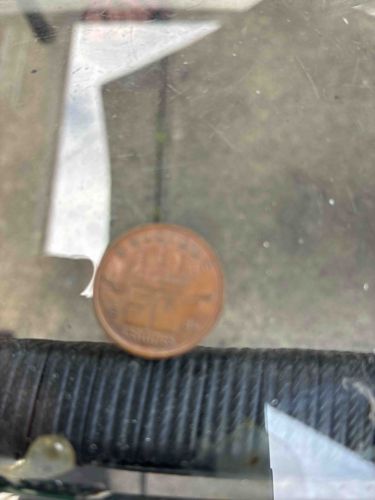
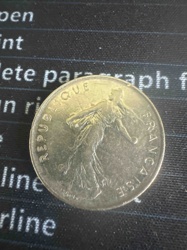
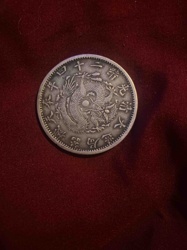
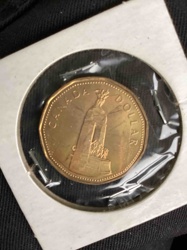
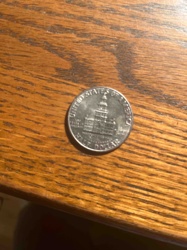
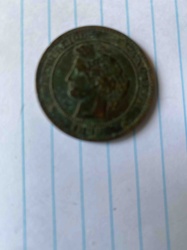
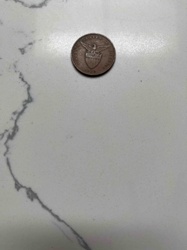
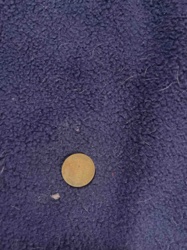
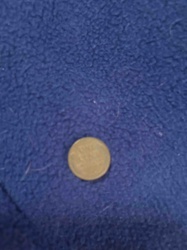
The item is a small, circular metal coin, predominantly copper in color, indicating it is likely composed of a copper alloy or bronze. Its surface exhibits a brown patina, which appears relatively uniform across the visible obverse, suggesting natural aging rather than aggressive cleaning. The coin's edge is visible, showing a consistent thickness around its circumference. In terms of physical characteristics, it appears to be of standard coin size, likely falling within the range of smaller denominations.
Observable details on the obverse include a central design, though not clearly discernible due to image blurriness and resolution limitations. However, there seem to be raised elements forming what could be a crest, building, or similar intricate motif. Below this central design, text or numerals are faintly visible, possibly indicating a date or denomination, but specific characters cannot be accurately identified. The overall condition of the coin appears to be 'Good' to 'Very Good' based on numismatic grading standards; while there is wear commensurate with circulation, significant scratches, dents, or corrosion are not immediately apparent from the provided image. The fields of the coin show some subtle signs of handling or environmental exposure, contributing to the patination. No distinctive mint marks or specific manufacturing details are clearly visible, nor are any unique or unusual aspects distinguishable from this single image. Its appearance suggests it could be a European or Commonwealth coin, possibly from the mid to late 20th century, given the common use of copper alloys for low denominations during that period.
AI Appraisal Report
Based on my visual examination of the provided image, this copper alloy coin appears to be in 'Good' to 'Very Good' numismatic condition. The uniform brown patina suggests natural aging, and there are no immediately apparent signs of harsh cleaning, significant dents, or deep scratches. Authenticity, solely from this image, is highly probable for a common circulating coin, as there are no obvious indicators of gross counterfeiting. However, definitive authentication would require in-person examination to verify weight, diameter, thickness, metallic composition, and edge details. Provenance documentation, if available, would further strengthen its authenticity.
Market conditions for common copper alloy coins from the mid to late 20th century are generally stable but with low values, unless they possess specific rare varieties, mint errors, or unusually high grades (Uncirculated to Mint State). Currently, there is insufficient detail to identify any such rarity factors. Demand for common circulating coins is typically driven by entry-level collectors or those seeking type sets. Given the blurriness of key details like the central motif and faint text/numerals, specific identification of country, denomination, and date is impossible, which severely limits a precise valuation. Without these key identifiers, assessing rarity or specific market comparables is speculative.
Factors significantly impacting value, which cannot be determined from this image, include the coin's precise country of origin, denomination, year, and any unique mint marks or varieties. Without this information, it's impossible to check for mintage figures, known errors, or collector demand for specific issues. Therefore, the primary limitation is the lack of clear identifying features and the inability to conduct a physical inspection. A full appraisal would necessitate clear, high-resolution images of both obverse and reverse, and ideally, an in-hand inspection to confirm all physical attributes and identify all inscriptions.