These notes were written by the person who submitted this item. Appraiser.AI has not verified them, and the AI's identification and estimate may rely on them.
AI Estimated Value
Not an official valuation
$800 - $1,500
AI estimate as of August 26, 2025 · verify with a professional before acting
AI-Generated · Verify before acting
Everything on this page is generated by AI for informational purposes only. AI can make mistakes — the AI may misidentify items or misattribute them (artist, maker, brand, designer, origin, era). This is not an official valuation and should not be used for insurance, sale, tax, estate, legal, or lending purposes — or any decision requiring a certified appraisal. It is not an authoritative claim about any person, brand, or rights holder — do not share or rely on it as a factual statement about a third party. Always consult qualified professionals before making financial decisions.
This analysis also relies on unverified notes provided by the user, which may be incomplete or inaccurate and could affect the result.
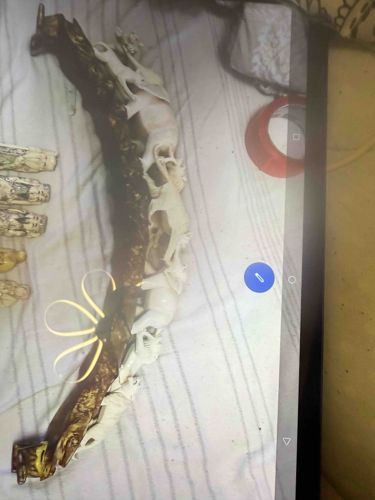
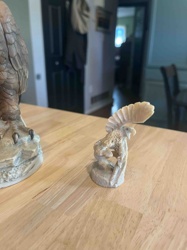
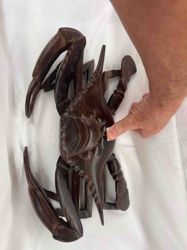
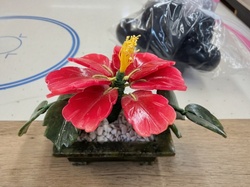
The item is a vertical, elongated sculpture, appearing to be crafted from two distinct materials or highly contrasting finishes. The central element is a dark, possibly wooden, gnarled branch or trunk-like structure, exhibiting a rough, organic texture with visible irregularities and a deep, mottled brown to black coloration. This dark base serves as the 'tree' or 'mountain' for a series of light-colored, possibly ivory, bone, or resin, sculpted figures. These figures, predominantly depicting monkeys or macaques, are intricately carved and arrayed in various dynamic poses along the dark column, seemingly climbing, sitting, or interacting. The craftsmanship of the figures suggests fine detail, with discernible limbs, faces, and individualistic postures. Their color is a uniform off-white or cream, indicating either the natural hue of the material or a consistent finish. The figures appear to be firmly attached to the dark base, possibly carved from a single piece that was then melded, or meticulously affixed. There are no overt signs of significant damage such as breaks, chips, or repairs visible in the provided image, though the scale and full extent of the piece are not entirely clear. The dark base displays a natural patina consistent with age, while the lighter figures seem relatively clean. The overall aesthetic points towards an Asian artistic tradition, particularly given the context of 'Ming Dynasty' provided separately. While explicit maker's marks or signatures are not visible in this image, the complexity and quality of the carving suggest skilled artistry. The piece could potentially be part of a larger diorama or a standalone decorative element, emphasizing naturalistic or symbolic themes common in East Asian art. The visual contrast between the dark, rugged base and the smooth, light, detailed figures creates a compelling artistic tension.
AI Appraisal Report
Upon examining the images provided of this carved sculpture, purportedly from the Ming Dynasty, my initial assessment is that it is a highly decorative and skillfully crafted piece. The strong visual contrast between the dark, gnarled branch and the meticulously carved, light-colored monkeys is striking. The figures exhibit fine detail and dynamic poses, indicative of a high level of artistry. The condition, based on the image, appears to be very good, with no obvious major cracks, chips, or repairs visible.
However, a claim of Ming Dynasty (1368-1644) origin requires extraordinary scrutiny. While the style evokes traditional East Asian themes, several factors suggest a more recent, likely late 19th or 20th-century, creation. The uniform, clean appearance of the lighter figures, identified by the owner as possibly ivory, lacks the patina, age-related staining (schreger lines in ivory might be visible), or stress fractures one would expect from a piece several centuries old. Without physical inspection, it is impossible to confirm the material; they could be ivory, bone, or a high-quality resin. Pieces of this nature were popular export items during the late Qing Dynasty and the Republic period.
The market for Asian decorative arts is strong, but authenticity is paramount. A genuine, well-provenanced Ming Dynasty object of this quality would be exceptionally rare and valuable. A 19th/20th-century piece, while still desirable, commands a significantly lower price. My appraisal value reflects the likelihood of it being a later antique or vintage decorative item. Full authentication would require in-person examination to assess tool marks, material composition (e.g., Raman spectroscopy for ivory vs. bone/resin), wear patterns, and any hidden signatures. Provenance documentation tracing ownership would also be critical to substantiating a Ming Dynasty attribution.