AI Appraisal Estimate

AI-generated estimates · not official valuations

From the user

What was submitted

Photo and notes provided by the user — not generated by AI

Submitted item photo
Submitted photo · May 27, 2026

User's notes

Coin

AI analysis below

AI appraisal

AI analysis & estimate

AI-Generated · Verify before acting

Everything below is generated by AI for informational purposes only. AI can make mistakes — the AI may misidentify items or misattribute them (artist, maker, brand, designer, origin, era). This is not an official valuation and should not be used for insurance, sale, tax, estate, legal, or lending purposes — or any decision requiring a certified appraisal. It is not an authoritative claim about any person, brand, or rights holder — do not share or rely on it as a factual statement about a third party. Always consult qualified professionals before making financial decisions.

Note

This analysis also relies on unverified notes provided by the user, which may be incomplete or inaccurate and could affect the result.

Read the full disclaimer

AI Identification

·Not independently authenticated·Verify before acting

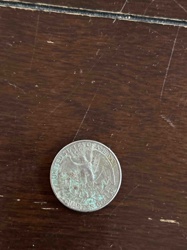
New Zealand 5 Cents Coin (Tuatara Design)

Numismatics / Currency

AI Estimated Value

·Not an official valuation·Verify before acting

$0.50 - $2.50 USD

As of May 27, 2026

AI Item Analysis

·AI can make mistakes·Verify before acting
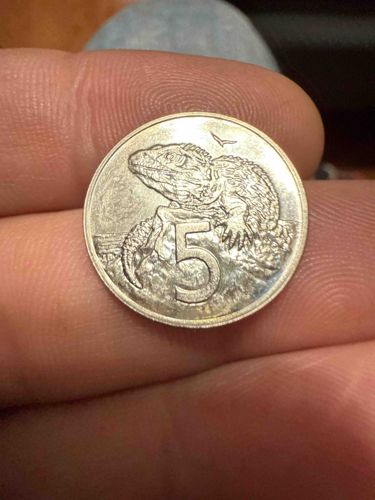
This is a New Zealand five-cent coin, traditionally minted in a copper-nickel alloy. The reverse side, as shown, features a highly detailed Tuatara (Sphenodon punctatus) perched on a rock, which is a native reptile and 'living fossil' endemic to New Zealand. The illustration is exceptionally crisp, showing the lizard's textured, spiny skin and prominent claws. The larger-scale numeric '5' is positioned at the lower center, and a small stylized bird (likely a seagull) is visible in the upper right field. This specific design was introduced in 1967 and ceased production for general circulation in 2006 when the denomination was demonetized. Physically, the coin is approximately 19.43mm in diameter with a weight of 2.83 grams and features a milled (reeded) edge. The condition appears to be 'Extremely Fine' to 'About Uncirculated,' exhibiting a bright metallic luster with very minimal circulation wear. There are slight surface abrasions and minor bag marks visible on the field near the number 5, but the high-relief points of the tuatara's head and spine remain well-defined without significant flattening. No significant corrosion or green verdigris is present, suggesting the coin has been stored in a relatively dry environment. The craftsmanship reflects the Standardized Royal Mint quality of the late 20th century.
AI Appraisal Report

·AI can make mistakes·Verify before acting
I have examined the provided images of this New Zealand 5-cent coin featuring the iconic tuatara design. The specimen displays characteristics consistent with an 'About Uncirculated' (AU-55 to AU-58) grade. The luster remains remarkably bright for a copper-nickel alloy, and the high-relief areas—specifically the scales along the lizard's dorsal spine—show only microscopic traces of friction. The presence of minor bag marks and surface abrasions near the numeral '5' suggests this coin was likely handled in bulk rather than preserved in a mint-set environment, though it remains in superior condition compared to typical circulated examples. Authenticity appears consistent with Royal Mint production standards; however, a macro-photographic study of the mint mark and edge reeding would be necessary to rule out high-quality contemporary counterfeits. Because these coins were produced in the hundreds of millions between 1967 and 2006, they are exceptionally common. The market value for a demonetized 5-cent piece is driven primarily by thematic collectors (reptile topicalists) rather than numismatic rarity. Similar AU specimens generally realize prices in the $1 to $3 range at retail. While visually stunning due to its crisp strike, the coin lacks a 'key date' status to command a premium. To definitively authenticate this piece and assign a numeric grade, an in-person measurement of weight to a hundredth of a gram and a spectroscopic analysis of the alloy composition would be required. This appraisal assumes the coin is a standard circulation strike and not a proof or 'frosted' variant from a collector set.

Get your items appraised

Instant estimates of your treasures with AI-powered appraisals

Browse More Appraisals