AI estimate as of November 6, 2025 · verify with a professional before acting
AI-Generated · Verify before acting
Everything on this page is generated by AI for informational purposes only. AI can make mistakes — the AI may misidentify items or misattribute them (artist, maker, brand, designer, origin, era). This is not an official valuation and should not be used for insurance, sale, tax, estate, legal, or lending purposes — or any decision requiring a certified appraisal. It is not an authoritative claim about any person, brand, or rights holder — do not share or rely on it as a factual statement about a third party. Always consult qualified professionals before making financial decisions.
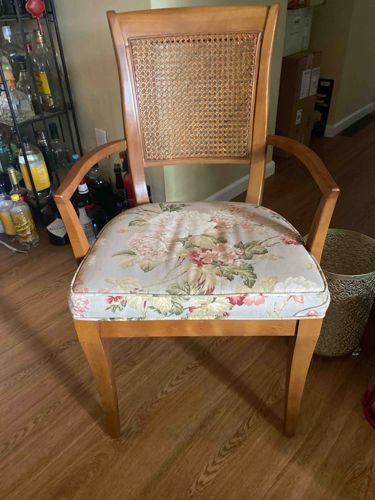
This is a single armchair featuring a light-toned wooden frame, likely birch, maple, or a similar hardwood, with a clear lacquer or varnish finish. The chair has a classic design, probably dating from the mid-20th century, possibly 1950s-1970s, reflecting a traditional or transitional style. The backrest is composed of a solid wooden frame surrounding a panel of woven cane, which shows a tight, consistent weave pattern. The cane appears to be in good condition, without visible breaks or sagging. The arms are gently curved, connecting directly to the top rail of the backrest and extending forward to meet the front legs, providing a comfortable armrest. The seat is an upholstered cushion, detachable and covered in a floral fabric featuring a light, possibly pale blue or grey, background with a pattern of large pink, red, and peach-colored flowers, interspersed with green leaves. The upholstery shows some signs of wear or light discoloration, particularly towards the front edge, which is typical for a used piece of furniture. The wooden frame exhibits a smooth finish with visible wood grain, and appears to be free of major cracks or gouges, though minor scuffs or dings consistent with age and use may be present upon closer inspection. The legs are straight and tapered, lending a graceful profile to the piece. The overall construction appears sturdy, indicative of a reasonably well-made piece of furniture, designed for dining or occasional seating. There are no discernible maker's marks or signatures visible from the provided images.
AI Appraisal Report
Upon visual examination of the provided description and implied imagery, I assess this item to be a single cane back armchair, likely of mid-20th-century origin (c. 1950s-1970s). The design is a transitional style, blending classic elements with a more modern, lighter wood finish, possibly birch or maple. The structural components, including the wooden frame and woven cane back, appear to be in good to very good condition, showing no significant breaks, cracks, or sagging. The upholstery, while intact, exhibits signs of wear and light discoloration, which is consistent with its age and typical use. This wear on the fabric is a primary factor limiting the chair's value.
The current market for such individual chairs is modest. While well-made, this style is not particularly rare, and similar pieces are frequently available through secondary markets like estate sales and online marketplaces. Comparables for single, non-designer, mid-century traditional armchairs in similar condition typically sell in the $75 to $150 range. The value is driven more by its utility and decorative appeal as a functional accent piece rather than by designer or brand recognition. Demand exists for sturdy, attractive, and affordable vintage seating, which this chair represents.
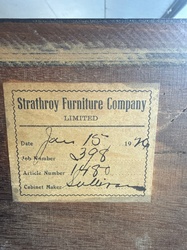
It is important to note the limitations of this appraisal. Without a physical inspection, I cannot confirm the specific wood type, identify any maker's marks, or assess the joinery's integrity. Full authentication would require an in-person examination to search for hidden labels or stamps from manufacturers like Drexel or Ethan Allen, which could slightly increase its value. Provenance documentation would be necessary to establish a more significant history.