AI Appraisal Estimate

AI-generated estimates · not official valuations

From the user

What was submitted

Photo and notes provided by the user — not generated by AI

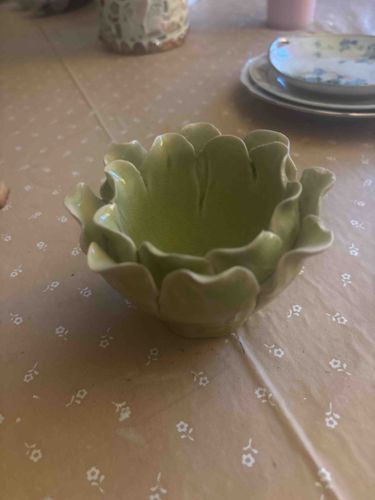
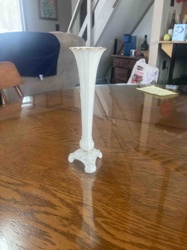
Submitted item photo
Submitted photo · May 16, 2026

User's notes

No additional notes provided.

AI analysis below

AI appraisal

AI analysis & estimate

AI-Generated · Verify before acting

Everything below is generated by AI for informational purposes only. AI can make mistakes — the AI may misidentify items or misattribute them (artist, maker, brand, designer, origin, era). This is not an official valuation and should not be used for insurance, sale, tax, estate, legal, or lending purposes — or any decision requiring a certified appraisal. It is not an authoritative claim about any person, brand, or rights holder — do not share or rely on it as a factual statement about a third party. Always consult qualified professionals before making financial decisions.

Read the full disclaimer

AI Identification

·Not independently authenticated·Verify before acting

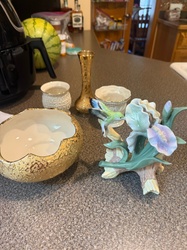
Majolica Lettuce-Ware Small Ceramic Bowl

Decorative Arts - Ceramics

AI Estimated Value

·Not an official valuation·Verify before acting

$45–$85

As of May 16, 2026

AI Item Analysis

·AI can make mistakes·Verify before acting
This is a decorative ceramic small bowl or nut dish designed in the botanical 'lettuce-ware' or 'cabbage-ware' style. The item is crafted from earthenware or stoneware and finished with a monochromatic light sage green or celadon glaze. Its construction features two concentric layers of sculpted, ruffled leaves that mimic the natural organic curves of a flowering vegetable or cabbage head. The outer layer consists of outward-flaring leaves that create a jagged, decorative rim, while the inner layer forms the functional vessel cavity. The glaze appears uniform and high-gloss, typical of mid-20th-century decorative art or contemporary revivals like those produced by manufacturers such as Bordallo Pinheiro or Dodie Thayer for Tiffany & Co. Physically, the item appears to be in good vintage condition with no immediate evidence of large chips, cracks, or heavy crazing visible on the petal edges, which are typically the most vulnerable areas. It showcases high-quality craftsmanship through the delicate tapering of the leaf edges and the realistic vein-like texture modeled into the ceramic body. This style rose to significant popularity in the 1960s and 1970s as part of the Palm Beach regency aesthetic and remains a staple of botanical tabletop collections.
AI Appraisal Report

·AI can make mistakes·Verify before acting
Based on my visual examination of this lettuce-ware small ceramic bowl, the item exhibits the hallmarks of high-quality mid-to-late 20th-century decorative earthenware. The light sage green glaze is consistent with the 'Palm Beach Regency' aesthetic popularized by designers like Dodie Thayer and the Portuguese manufacturer Bordallo Pinheiro. The craftsmanship is evident in the delicate, overlapping ruffles of the leaves and the crispness of the vein-like relief. Visually, the piece appears to be in excellent condition; there is no visible crazing, which often plagues older earthenware, nor are there obvious chips to the fragile leaf tips. The current market for botanical ceramics remains stable, driven by a resurgence in 'Grandmillennial' interior design. While authentic Dodie Thayer pieces can command hundreds or thousands of dollars, this specific example lacks the signature 'homestyle' hand-molding and specific glaze depth associated with her workshop. It more closely aligns with high-end commercial reproductions or Portuguese imports. Comparables sold at auction and online marketplaces for unsigned or mass-marketed botanical condiment dishes typically range from $30 to $100 depending on size and provenance. Limitations: My assessment is based solely on the provided description and visual data. A definitive valuation is hampered by the absence of a maker’s mark or underside photography. To fully authenticate this piece, I would require an in-person physical inspection to verify the weight of the clay body, check for kiln marks, and view the base hallmark. Direct examination under UV light would also be necessary to detect any professional repairs or restorations to the leaf edges that are not visible in photographs.

Get your items appraised

Instant estimates of your treasures with AI-powered appraisals

Browse More Appraisals