AI Appraisal Estimate

AI-generated estimates · not official valuations

From the user

What was submitted

Photo and notes provided by the user — not generated by AI

Submitted item photo
Submitted photo · June 6, 2026

User's notes

No additional notes provided.

AI analysis below

AI appraisal

AI analysis & estimate

AI-Generated · Verify before acting

Everything below is generated by AI for informational purposes only. AI can make mistakes — the AI may misidentify items or misattribute them (artist, maker, brand, designer, origin, era). This is not an official valuation and should not be used for insurance, sale, tax, estate, legal, or lending purposes — or any decision requiring a certified appraisal. It is not an authoritative claim about any person, brand, or rights holder — do not share or rely on it as a factual statement about a third party. Always consult qualified professionals before making financial decisions.

Read the full disclaimer

AI Identification

·Not independently authenticated·Verify before acting

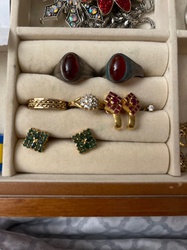
Vintage Mosaic Inlay Split-Shank Ring with Turquoise and Red Stone

Jewelry

AI Estimated Value

·Not an official valuation·Verify before acting

$100 - $160

As of June 6, 2026

AI Item Analysis

·AI can make mistakes·Verify before acting
This item is a vintage-style ring featuring an elongated oval-shaped bezel setting. The setting is filled with mosaic-style inlay, comprised of crushed stones. The top portion of the inlay predominantly features small, irregularly shaped pieces of a vibrant blue-green material, typical of turquoise. The bottom section of the inlay is filled with similarly proportioned pieces of a reddish-brown material, likely spiny oyster or coral. A distinct silver-toned zigzag line separates the turquoise and reddish-brown sections, adding a dynamic design element to the inlay. The bezel itself appears to be made of a silver-toned metal, possibly sterling silver or a silver alloy, showing signs of natural tarnishing and patina consistent with age and exposure. The ring's band or shank splits into two narrower bands on each side as it approaches the head, creating an openwork or split-shank design, which adds to its decorative appeal and potentially reduces the overall weight. These split bands connect further down to form the main ring shank. The visible condition suggests some wear, with minor abrasions to the metal and potentially some slight unevenness in the stone inlay, which is typical for mosaic pieces. There are no visible maker's marks or signatures in the provided image. The style, particularly the use of mosaic inlay and the split-shank design, points towards a Native American or Southwestern folk art influence, likely dating from the mid to late 20th century. The craftsmanship, while appearing handmade, is of good quality, with the stones well-set within the bezel. The overall impression is that of a well-preserved, authentic piece of vintage jewelry.
AI Appraisal Report

·AI can make mistakes·Verify before acting
Upon visual examination of the provided images, this vintage Southwestern-style ring presents as a well-crafted piece, likely dating from the mid to late 20th century. The mosaic inlay, a technique known as 'chip inlay,' features what appears to be genuine turquoise and a red stone, consistent with spiny oyster or coral, separated by a distinct silver-toned line. The split-shank design and the natural patina on the silver-toned metal support its vintage attribution. The overall condition is good for its age, with minor surface wear expected of a pre-owned item. Market comparables for unsigned, handmade Southwestern chip inlay rings of this era typically fall within the $75 to $200 range, depending on craftsmanship, materials, and size. The demand for authentic Native American and Southwestern jewelry remains steady. The primary factors limiting a higher valuation are the unsigned nature of the piece and the chip inlay technique, which is generally more common and less labor-intensive than custom-cut stone-to-stone inlay. It is crucial to note the limitations of this appraisal. Without physical inspection, I cannot definitively confirm the metal content as sterling silver, nor can I verify the authenticity of the turquoise and red stone. A final, certified appraisal would require in-person examination, including acid testing the metal for silver content (e.g., .925) and gemological testing to confirm the inlay materials. Provenance or a maker's mark would significantly increase the value.

Get your items appraised

Instant estimates of your treasures with AI-powered appraisals

Browse More Appraisals