These notes were written by the person who submitted this item. Appraiser.AI has not verified them, and the AI's identification and estimate may rely on them.
AI Estimated Value
Not an official valuation
$75-125
AI estimate as of August 28, 2025 · verify with a professional before acting
AI-Generated · Verify before acting
Everything on this page is generated by AI for informational purposes only. AI can make mistakes — the AI may misidentify items or misattribute them (artist, maker, brand, designer, origin, era). This is not an official valuation and should not be used for insurance, sale, tax, estate, legal, or lending purposes — or any decision requiring a certified appraisal. It is not an authoritative claim about any person, brand, or rights holder — do not share or rely on it as a factual statement about a third party. Always consult qualified professionals before making financial decisions.
This analysis also relies on unverified notes provided by the user, which may be incomplete or inaccurate and could affect the result.
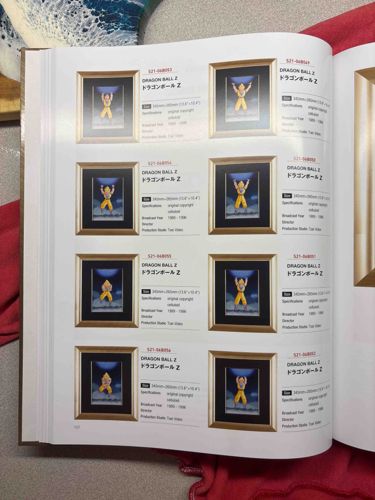
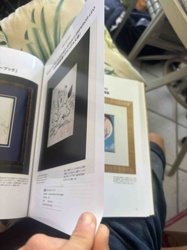
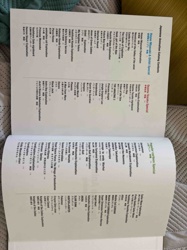
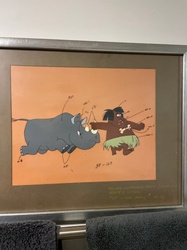
This item is an open catalog or reference book showcasing various framed animation cel or genga artworks, specifically from the "Dragon Ball Z" series. The catalog displays eight individual entries on the visible page, each featuring what appears to be a framed production cel of the character Goku in a state of high energy, possibly charging a 'Spirit Bomb' or similar attack, given his raised arms. Each framed piece is presented within a square, dark-matted frame with a metallic, possibly gold-toned, outer border. The background of the artwork inside the frames varies slightly in color and intensity, suggesting different stages or moments of the animation. The catalog entry for each piece includes identification numbers (e.g., "S21-04B053"), the title "DRAGON BALL Z" in English and Japanese, and details such as "Size: 340mm x 260mm (13.4" x 10.4")", "Specifications: original copyright", "Broadcast Year: 1989-1996", and "Production Studio: Toei Video". The item is a printed publication, likely a high-quality catalog for collectors or archives, showing no significant wear, tears, or damage, implying it is in good to very good condition. The paper appears to be thick and glossy, typical of art catalogs. The repetitive nature of the displayed art (Goku in a similar pose across multiple frames) indicates a possible thematic collection or variations of a key animation sequence. The craftsmanship of the catalog itself appears professional, with clear printing and organized layout. The estimated age of the catalog aligns with the broadcast years of Dragon Ball Z, suggesting it could be from the late 1990s or early 2000s.
AI Appraisal Report
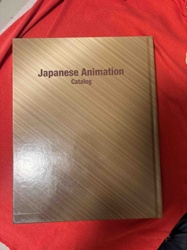
Upon examining the provided image of the Dragon Ball Z Production Cel Catalog Page, I assess this item to be a high-quality, likely official, printed catalog. The visual condition appears very good, with no discernible tears, creases, or major wear, consistent with a carefully preserved publication. The glossy paper and clear printing suggest a professional production.
From the image alone, I cannot definitively authenticate every detail of the catalog's production method (e.g., paper weight, ink quality), but its overall presentation aligns with legitimate Japanese animation catalogs. The repetitive nature of the 'Goku Spirit Bomb' pose across multiple entries suggests either a thematic collection showcasing variations of a key animation sequence or a display of multiple cels from the same scene, which is common in production art catalogs.
Market conditions for anime production art catalogs, particularly those from highly popular series like Dragon Ball Z, are generally stable. While not as valuable as actual production cels, such catalogs are sought after by collectors for their historical reference and visual appeal. Comparables include other vintage anime artbooks and catalogs from series like Sailor Moon, Gundam, or Bubblegum Crisis. Demand is moderately high among dedicated Dragon Ball Z fans and animation art collectors, but supply is also consistent, leading to a balanced market rather than extreme rarity.
Factors impacting value include the catalog's excellent apparent condition, its direct association with a globally recognized franchise, and its potential as a historical reference for animation production. However, it is important to note that this is a printed catalog, not original animation artwork. Its value is derived from its informational and collectible status rather than inherent artistic originality.
For full authentication, an in-person examination would be necessary to assess paper quality, binding integrity, and print resolution firsthand. Provenance documentation, such as where and when the catalog was acquired, could also provide additional layers of authenticity, though for a catalog, this is less critical than for original artwork. Scientific testing is generally not applicable or necessary for printed catalogs.