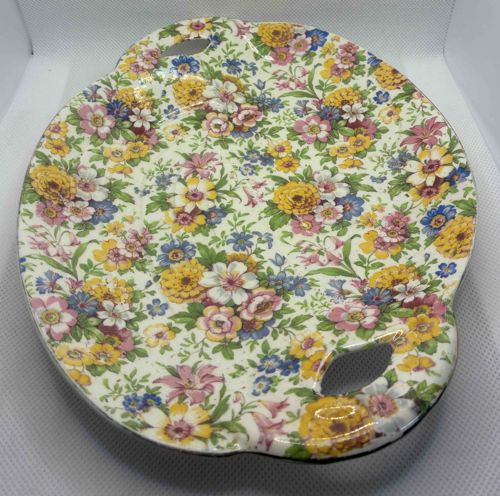
Royal Winton Summertime Floral Chintz Cake Plate
Antique and Vintage Ceramics

Royal Winton Summertime Floral Chintz Cake Plate

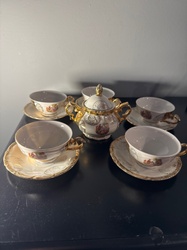
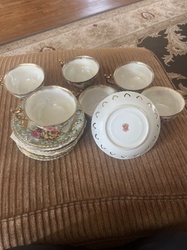
This is a vintage earthenware sandwich or cake plate featuring the iconic ‘Summertime’ chintz pattern by Royal Winton (Grimwades), England. The plate is characterized by its dense, all-over transfer-printed floral design consisting of yellow marigolds, pink wild roses, and blue forget-me-nots against a creamy white background. Structurally, the piece an elongated oval shape with two integrated open-work handles at either end. The edges and handle interiors are finished with a fine hand-painted gold gilt trim. Notable features include the intricate 'chintz' style which was popularized in the early to mid-20th century, specifically between the 1930s and 1950s. The glaze appears bright and glossy, though typical of this age and maker, fine surface crazing may be present under close inspection. There are no visible chips or major cracks in the primary image, though the gold gilding shows slight thinning near the handle grips, indicative of light domestic use. The craftsmanship reflects the high-quality lithograph transfer techniques synonymous with the Staffordshire potteries of that era.
Estimated Value

$45.00 - $65.00

Basic Information

Category

Antique and Vintage Ceramics

Appraised On

April 8, 2026

Estimated Value

$45.00 - $65.00

Item Description

This is a vintage earthenware sandwich or cake plate featuring the iconic ‘Summertime’ chintz pattern by Royal Winton (Grimwades), England. The plate is characterized by its dense, all-over transfer-printed floral design consisting of yellow marigolds, pink wild roses, and blue forget-me-nots against a creamy white background. Structurally, the piece an elongated oval shape with two integrated open-work handles at either end. The edges and handle interiors are finished with a fine hand-painted gold gilt trim. Notable features include the intricate 'chintz' style which was popularized in the early to mid-20th century, specifically between the 1930s and 1950s. The glaze appears bright and glossy, though typical of this age and maker, fine surface crazing may be present under close inspection. There are no visible chips or major cracks in the primary image, though the gold gilding shows slight thinning near the handle grips, indicative of light domestic use. The craftsmanship reflects the high-quality lithograph transfer techniques synonymous with the Staffordshire potteries of that era.
Get Your Items Appraised

Instant estimates of your treasures with AI-powered instant appraisals

Browse More Appraisals