Paleolithic Unifacial Chert Scraper-Knife
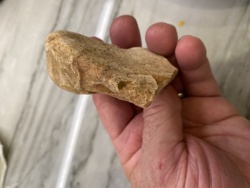
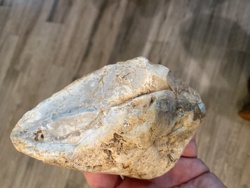
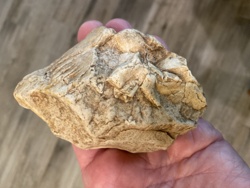
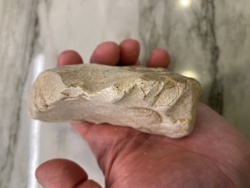
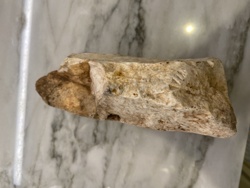
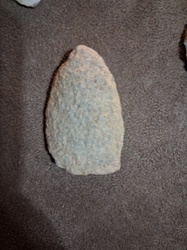
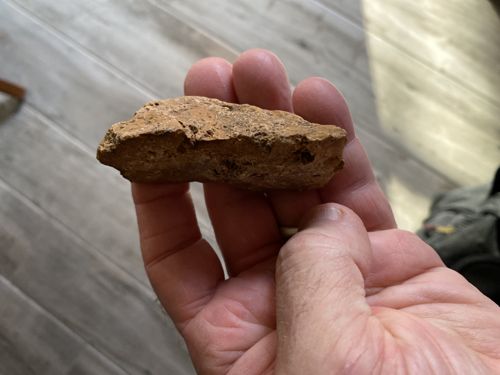
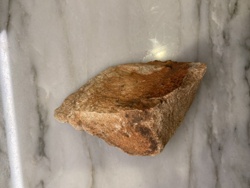
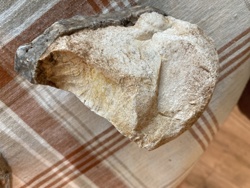
This artifact is a lithic tool measuring approximately 2.25 inches in length and 1.25 inches in width, identified as a scraper-knife found in Guthrie, OK. The material is a local chert characterized by an earthy, yellowish-tan to light brown ochre coloration, likely influenced by iron-oxide staining from the regional soil. Its construction is primarily unifacial, showing evidence of intentional percussion flaking along one primary margin to create a sharp, functional edge for processing hides or wood. The dorsal surface exhibits a rugged, cortex-like texture with visible micro-pitting and some dark mineral inclusions. The cross-section is thick and irregular, providing a sturdy grip appropriate for handheld use without hafting. Condition-wise, the piece shows significant 'desert varnish' and a heavy patina consistent with long-term environmental exposure. The edges show signs of use-wear in the form of step-fracturing and dulling, though the original flake morphology remains discernible. The lack of standardized symmetrical retouch suggests an expedient tool design typical of very early prehistoric inhabitants or hunter-gatherer groups. There are no modern signatures or maker's marks, as is standard for such Paleo-era artifacts, and the craftsmanship reflects a pragmatic mastery of lithic reduction techniques using local raw materials.
AI-Generated Appraisal Disclaimer
Estimated Value
$45.00 - $85.00
Basic Information
Category
Prehistoric Lithic Artifacts / Archaeological Native American Tools
Appraised On
February 23, 2026
Estimated Value
$45.00 - $85.00
Additional Details Provided By Owner
User Provided Information
Paleolithic chert scraper knife found in Guthrie OK measuring 2.25 x 1.25
Item Description
This artifact is a lithic tool measuring approximately 2.25 inches in length and 1.25 inches in width, identified as a scraper-knife found in Guthrie, OK. The material is a local chert characterized by an earthy, yellowish-tan to light brown ochre coloration, likely influenced by iron-oxide staining from the regional soil. Its construction is primarily unifacial, showing evidence of intentional percussion flaking along one primary margin to create a sharp, functional edge for processing hides or wood. The dorsal surface exhibits a rugged, cortex-like texture with visible micro-pitting and some dark mineral inclusions. The cross-section is thick and irregular, providing a sturdy grip appropriate for handheld use without hafting. Condition-wise, the piece shows significant 'desert varnish' and a heavy patina consistent with long-term environmental exposure. The edges show signs of use-wear in the form of step-fracturing and dulling, though the original flake morphology remains discernible. The lack of standardized symmetrical retouch suggests an expedient tool design typical of very early prehistoric inhabitants or hunter-gatherer groups. There are no modern signatures or maker's marks, as is standard for such Paleo-era artifacts, and the craftsmanship reflects a pragmatic mastery of lithic reduction techniques using local raw materials.
Get Your Items Appraised
Instant estimates of your treasures with AI-powered instant appraisals