AI identification & appraisal estimate

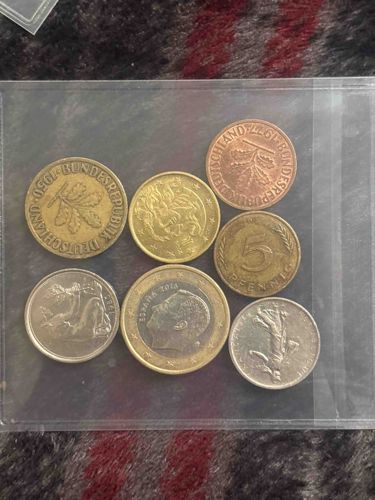
Mixed Collection of European Coins

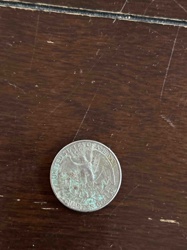
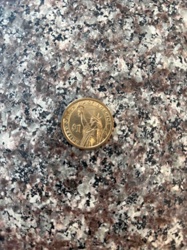
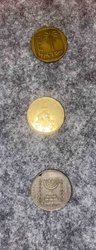
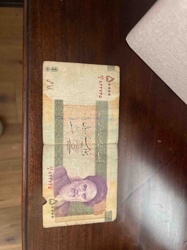
Submitted photo of Mixed Collection of European Coins
Photo submitted by the user — not generated by AI

AI Estimated Value

Not an official valuation

$1.50-$3.00

AI estimate as of February 10, 2026 · verify with a professional before acting

AI-Generated · Verify before acting

Everything on this page is generated by AI for informational purposes only. AI can make mistakes — the AI may misidentify items or misattribute them (artist, maker, brand, designer, origin, era). This is not an official valuation and should not be used for insurance, sale, tax, estate, legal, or lending purposes — or any decision requiring a certified appraisal. It is not an authoritative claim about any person, brand, or rights holder — do not share or rely on it as a factual statement about a third party. Always consult qualified professionals before making financial decisions.

Read the full disclaimer

AI Item Analysis

This is a collection of seven assorted European circulation coins housed in a transparent plastic sleeve. The assortment primarily includes German and Spanish currency from the late 20th and early 21st centuries. Notable pieces feature three West German coins: a 1950 5 Pfennig (brass-clad steel) and a 1977 1 Pfennig (copper-clad steel), both displaying the characteristic oak seedling and 'BUNDESREPUBLIK DEUTSCHLAND' inscription. Central to the group is a bi-metallic 2014 Spanish 1 Euro coin portraying King Juan Carlos I, featuring a gold-colored outer ring and a silver-colored center. Also present is a 1974 silver-colored coin depicting a woman sowing seeds (the classic 'Semeuse' design), identifying it as a French Franc. The coins exhibit varying degrees of metallic composition, including copper, brass, and nickel-brass. Condition ranges from circulated to very fine, with visible surface oxidation, minor scratches, and biological residue consistent with age and hand-to-hand transactions. The 1950 German 5 Pfennig shows significant darkening of the brass finish, while the newer Euro and French Franc maintain a relatively bright metallic luster. There are no signs of high-grade numismatic preservation, as several pieces show softened details on the high points of the relief designs.
AI Appraisal Report

I have examined the digital images of this seven-coin European collection. The lot comprises common-date circulation coinage from Spain, Germany, and France. The primary value drivers are the 2014 Spanish 1 Euro coin and the 1974 French Franc, which maintain their face value or modest numismatic premium. The West German Pfennig pieces (1950 and 1977) are extremely high-mintage issues; in their current circulated state with visible oxidation and softened relief, they hold negligible value above their nominal historical interest. The 1950 5 Pfennig shows significant environmental toning, and the French 'Semeuse' shows typical bag marks consistent with a 'Very Fine' grade at best. Market demand for these specific types is low, as they were produced in the millions and are frequently found in bulk 'world coin' bins sold by the pound. The total value is essentially the sum of the exchangeable Euro currency and a small premium for the out-of-circulation specimens. Please note that while the coins appear authentic based on strike characteristics and wear patterns, a definitive authentication would requires physical weighing, diameter measurements with a micrometer, and a magnetism test to verify metallic composition. I cannot rule out high-quality contemporary counterfeits, particularly for the Euro coin, without performing a physical edge-lettering inspection and density test.

Keep exploring

More numismatics / currency appraisals

Get your items appraised

Instant AI-powered appraisal estimates from a photo

Browse More Appraisals