Akan Goldweight (Abrammuo) - Figural Fist and Vessel
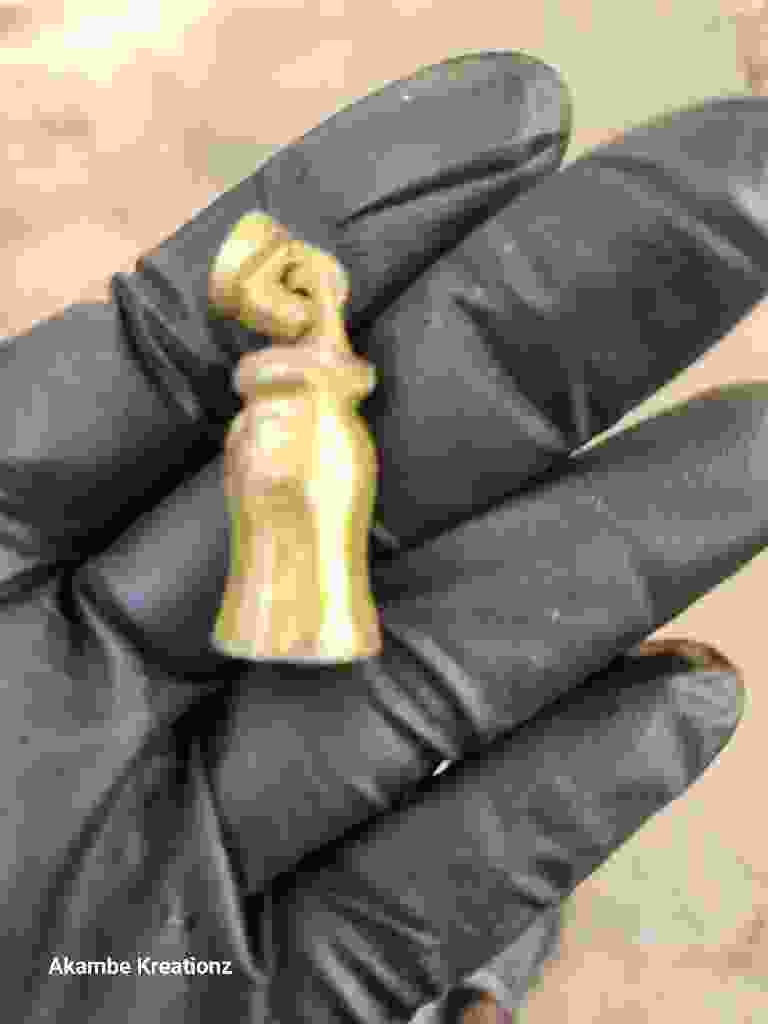
This is a small, hand-cast brass or bronze sculpture known as an Akan goldweight, traditionally used by the Akan people of Ghana and the Ivory Coast for weighing gold dust. The item is approximately 1 to 2 inches in height, featuring a rich, dull gold-colored finish characteristic of cast copper alloys. The design features a stylized clenched fist at the top, which transitions into a bell-shaped or vessel-like base. The construction demonstrates the 'lost-wax' (cire perdue) casting technique, evidenced by the slightly irregular, organic surfaces and lack of industrial seams. The piece shows a moderate level of patina, with localized darkening and subtle wear on the higher relief areas, suggesting age and frequent handling. There are no visible maker's marks, which is typical for these utilitarian yet artistic objects. The style is representative of 18th to 19th-century West African metalwork. The fist motif often carries proverbial meaning in Akan culture, likely symbolizing strength, unity, or a specific local aphorism. Despite its small scale, the craftsmanship is robust, with a balanced form that would have been calibrated for weight accuracy.
AI-Generated Appraisal Disclaimer
Estimated Value
$150 - $250
Basic Information
Category
African Tribal Art and Antiquities
Appraised On
April 22, 2026
Estimated Value
$150 - $250
Item Description
This is a small, hand-cast brass or bronze sculpture known as an Akan goldweight, traditionally used by the Akan people of Ghana and the Ivory Coast for weighing gold dust. The item is approximately 1 to 2 inches in height, featuring a rich, dull gold-colored finish characteristic of cast copper alloys. The design features a stylized clenched fist at the top, which transitions into a bell-shaped or vessel-like base. The construction demonstrates the 'lost-wax' (cire perdue) casting technique, evidenced by the slightly irregular, organic surfaces and lack of industrial seams. The piece shows a moderate level of patina, with localized darkening and subtle wear on the higher relief areas, suggesting age and frequent handling. There are no visible maker's marks, which is typical for these utilitarian yet artistic objects. The style is representative of 18th to 19th-century West African metalwork. The fist motif often carries proverbial meaning in Akan culture, likely symbolizing strength, unity, or a specific local aphorism. Despite its small scale, the craftsmanship is robust, with a balanced form that would have been calibrated for weight accuracy.
Related Tags
Explore similar items and categories:
Get Your Items Appraised
Instant estimates of your treasures with AI-powered instant appraisals