AI estimate as of December 16, 2025 · verify with a professional before acting
AI-Generated · Verify before acting
Everything on this page is generated by AI for informational purposes only. AI can make mistakes — the AI may misidentify items or misattribute them (artist, maker, brand, designer, origin, era). This is not an official valuation and should not be used for insurance, sale, tax, estate, legal, or lending purposes — or any decision requiring a certified appraisal. It is not an authoritative claim about any person, brand, or rights holder — do not share or rely on it as a factual statement about a third party. Always consult qualified professionals before making financial decisions.
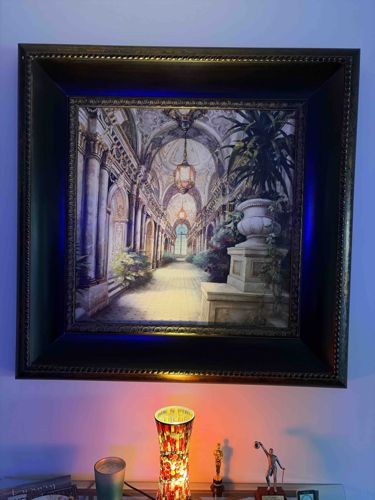
This item is a framed painting depicting a classical architectural hallway or arcade, likely an interior or covered exterior space. The artwork showcases a long, vaulted corridor with ornate columns, arches, and intricate ceiling details, suggesting a grand European palace, villa, or cloister. The perspective draws the viewer's eye towards a bright opening at the far end, creating a sense of depth and expansiveness. Verdant potted plants and statuary (a large urn on a pedestal is visible on the right) are interspersed along the pathway, adding elements of nature and classical aesthetics. A prominent hanging lantern functions as a central light source within the composition. The color palette primarily features muted tones of grey, beige, and soft blues, with subtle hints of green from the foliage and warm light emanating from the lantern and the distant opening. The painting appears to be rendered in a traditional style, possibly oil on canvas or a high-quality print thereof, given the visible texture and brushwork-like appearance. It is housed within a substantial, dark wooden or wood-colored frame. The frame features a multi-tiered profile with a raised, possibly gilded or bronzed, inner edge adorned with a repeating classical pattern, possibly acanthus leaves or a Greek key motif. The outer edge of the frame is broader and fluted or otherwise textured, contributing to its decorative and weighty appearance. The entire piece is well-preserved with no immediately apparent signs of damage, fading, or significant wear, though precise condition analysis would require closer inspection. The lighting effects in the image suggest an up-light directed at the bottom of the painting, casting a warm glow, and possibly cooler ambient blue light from the sides, which enhances the frame's texture but slightly alters the perception of the artwork's original colors. The overall aesthetic points to a classical revival, romantic, or academic style, possibly late 19th or 20th century. The craftsmanship, particularly of the frame, indicates a moderately high-quality decorative art piece.
AI Appraisal Report
This framed painting of a classical architectural hallway presents as a well-maintained decorative art piece. Visually, the condition appears excellent; I observe no discernible damage, fading, or significant wear to the artwork itself or its substantial, ornate frame. The visual texture suggests it could be an oil on canvas or a high-quality print, a distinction that significantly impacts value and cannot be definitively determined from images alone. An in-person examination would be crucial to assess the medium, brushwork, and surface integrity.
From a market perspective, classical architectural scenes, particularly those evoking grandeur and depth, maintain a steady demand within the decorative arts segment. Its aesthetic appeal aligns with traditional and classical interior design preferences. Comparables in the market for similar high-quality decorative paintings or framed prints of this size and subject matter, especially those with impressive framing, typically range from $400 to $1,200. This piece does not appear to be from a renowned artist, which would elevate its value considerably; therefore, its worth is primarily driven by its decorative quality, condition, and presentation.
Factors impacting value include the exceptional condition of both the artwork and the frame, the timeless appeal of the subject matter, and its substantial size (implied by the detail observed). Rarity is not a significant factor here; similar decorative pieces are available, though this example is particularly well-executed and framed. For full authentication and to ascertain if it is an original painting versus a print, I would require a physical examination to inspect brushwork, canvas weave, and pigment application. Provenance documentation and scientific testing (e.g., UV light examination) would further clarify its origin and authenticity, which currently limits a more precise valuation.