AI Appraisal Estimate

AI-generated estimates · not official valuations

From the user

What was submitted

Photo and notes provided by the user — not generated by AI

Submitted item photo
Submitted photo · May 18, 2026

User's notes

No additional notes provided.

AI analysis below

AI appraisal

AI analysis & estimate

AI-Generated · Verify before acting

Everything below is generated by AI for informational purposes only. AI can make mistakes — the AI may misidentify items or misattribute them (artist, maker, brand, designer, origin, era). This is not an official valuation and should not be used for insurance, sale, tax, estate, legal, or lending purposes — or any decision requiring a certified appraisal. It is not an authoritative claim about any person, brand, or rights holder — do not share or rely on it as a factual statement about a third party. Always consult qualified professionals before making financial decisions.

Read the full disclaimer

AI Identification

·Not independently authenticated·Verify before acting

Fijian Masa (Masi) Mixed Media Shadow Box

Oceanic Decorative Art & Mixed Media

AI Estimated Value

·Not an official valuation·Verify before acting

$450 - $650

As of May 18, 2026

AI Item Analysis

·AI can make mistakes·Verify before acting
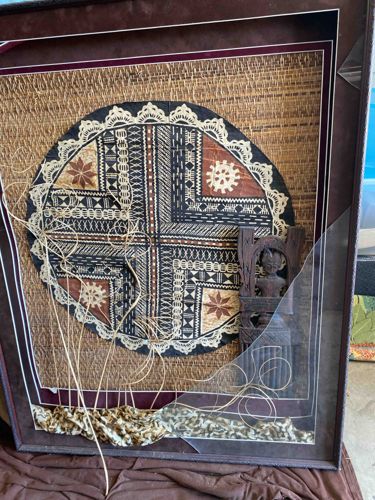
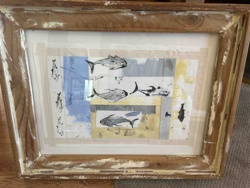
This is a large, square mixed-media shadow box featuring Pacific Islander motifs, specifically Fijian Masi (barkcloth) art. The central focal point is a circular disc covered in hand-painted tapa cloth, divided into quadrants with intricate geometric patterns in black, brown, and cream dyes. The perimeter of the disc is adorned with a delicate white scalloped lace trim. This central piece is mounted against a background of woven natural fiber matting. To the bottom right, there is a small, hand-carved wooden sculptural figure, possibly representing an ancestral spirit or deity, characteristic of Melanesian or Polynesian woodwork. The base of the display features draped leopard-print fabric and vertical dried natural fibers or reed-like strands that curve organically across the composition. The entire arrangement is housed in a deep, dark brown suede-covered shadow box frame with a multi-layered burgundy and cream mat. A significant condition issue is visible: the protective glass or acrylic glazing is severely shattered in the lower right corner, with large cracks radiating across the bottom third of the display. While the internal elements appear intact, the framing requires immediate repair to prevent damage to the delicate barkcloth and fibers from air exposure and dust.
AI Appraisal Report

·AI can make mistakes·Verify before acting
I have conducted a visual inspection of this Fijian Masi (barkcloth) mixed-media shadow box. The central tapa disc exhibits traditional geometric motifs hand-painted with organic dyes, characteristic of authentic Fijian craftsmanship. The integration of woven matting and the hand-carved miniature figure suggests a piece curated for the high-end Pacific tourist market or a boutique decorative gallery during the late 20th century. The composition is aesthetically strong, blending traditional Melanesian craft with contemporary shadow box presentation. However, the valuation is significantly impacted by the severe compromise of the glazing. The shattered glass in the lower right quadrant poses an immediate risk of mechanical damage to the delicate fibers and leopard-print textile, as well as potential UV and moisture degradation. A deduction of approximately $200-$300 from the 'mint' market value is reflected here to account for necessary professional reframing and cleaning. Market demand for Oceanic decorative art remains steady among interior designers, though unsigned mixed-media pieces lack the 'fine art' premium associated with known Pacific artists. Authenticity of the barkcloth appears genuine based on fiber texture, though a physical inspection is required to confirm if the pigments are traditional 'uhea' (clay) and 'sa' (mangrove bark) or modern acrylics. Furthermore, the wooden figure must be examined in person to determine the wood species and tool marks to differentiate between mass-produced souvenir carving and artisanal work. Full authentication would require provenance documentation or receipts from established galleries in Suva or regional Pacific art dealers. Without such documentation, the value remains in the decorative and craftsmanship category rather than high-ethnographic art.

Get your items appraised

Instant estimates of your treasures with AI-powered appraisals

Browse More Appraisals