AI Appraisal Estimate

AI-generated estimates · not official valuations

From the user

What was submitted

Photo and notes provided by the user — not generated by AI

Submitted item photo
Submitted photo · June 1, 2026

User's notes

No additional notes provided.

AI analysis below

AI appraisal

AI analysis & estimate

AI-Generated · Verify before acting

Everything below is generated by AI for informational purposes only. AI can make mistakes — the AI may misidentify items or misattribute them (artist, maker, brand, designer, origin, era). This is not an official valuation and should not be used for insurance, sale, tax, estate, legal, or lending purposes — or any decision requiring a certified appraisal. It is not an authoritative claim about any person, brand, or rights holder — do not share or rely on it as a factual statement about a third party. Always consult qualified professionals before making financial decisions.

Read the full disclaimer

AI Identification

·Not independently authenticated·Verify before acting

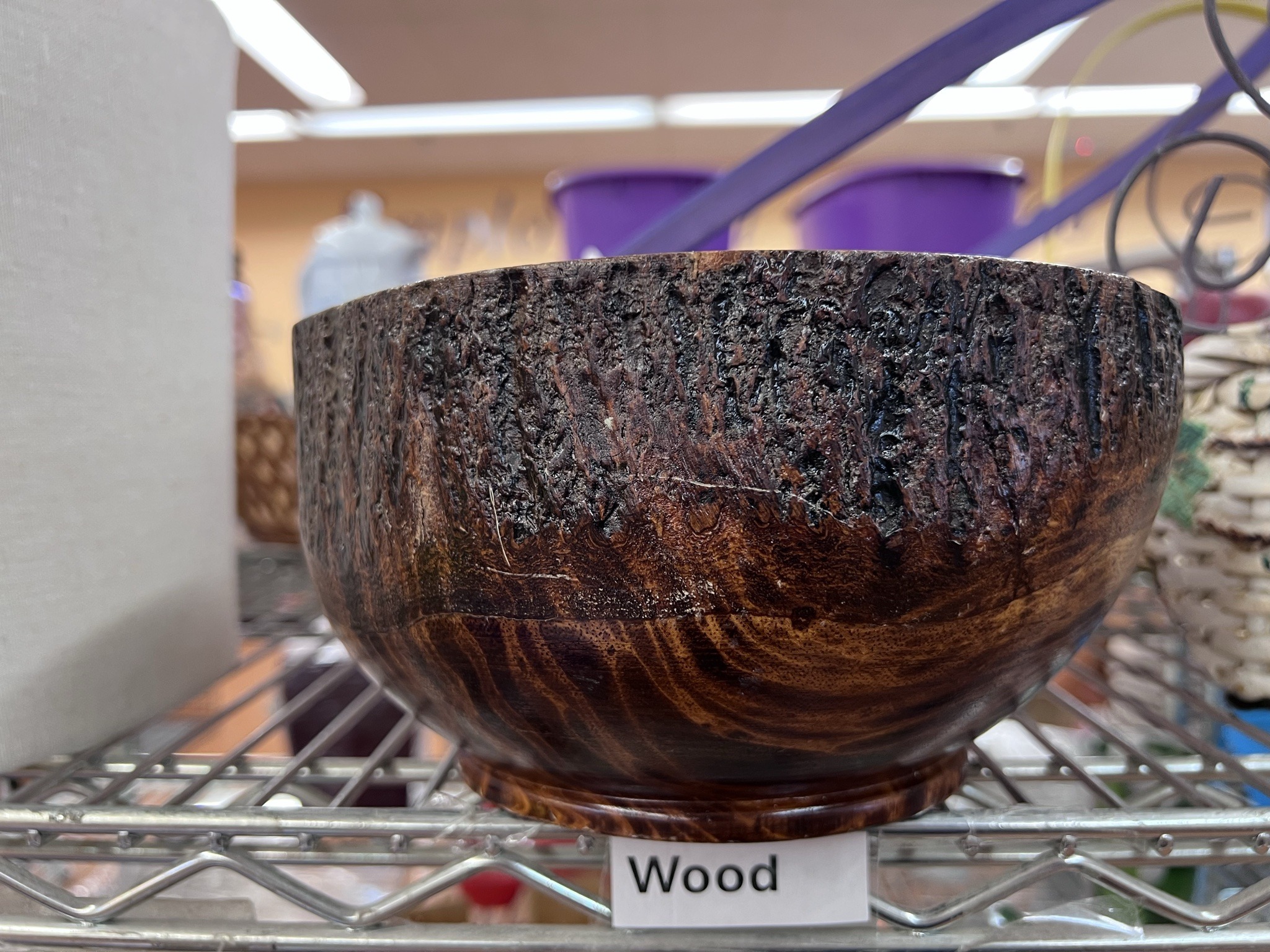
Hand-Turned Natural Edge Burl Wood Bowl

Decorative Arts / Studio Woodwork

AI Estimated Value

·Not an official valuation·Verify before acting

$450.00 - $650.00

As of June 1, 2026

AI Item Analysis

·AI can make mistakes·Verify before acting
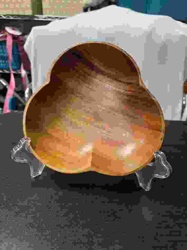
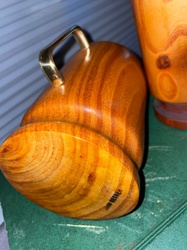
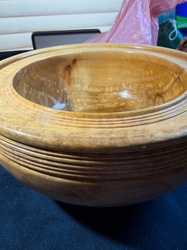
This is a hand-turned decorative wooden bowl showcasing a 'natural edge' design that retains the original tree bark around the rim. The vessel is crafted from a dense, highly figured hardwood burl, notable for its rich chocolate brown and deep amber tones with swirling grain patterns. The exterior features a dual-texture finish: the upper half retains the rugged, dark, and deeply fissured natural bark texture, while the lower portion has been turned and polished to a high-gloss sheen to highlight the chatoyancy of the wood grain. Structurally, the bowl sits on a small, integrated pedestal foot. The craftsmanship indicates a mid-to-late 20th-century or contemporary artisan piece. Condition-wise, the bowl appears robust, though there are visible surface scuffs and light white linear scratches on the polished section, likely from handling. The bark edge appears mostly intact, though natural shedding or minor chipping in the friable bark layer is common for this style. No maker's mark is visible in the primary view, but the quality of the turning suggests skilled lathe work typical of studio woodturning.

AI Appraisal Report

·AI can make mistakes·Verify before acting
I have conducted a visual examination of the hand-turned natural edge burl wood bowl. This piece is a fine example of studio woodturning, likely dating from the 1980s to the present. The use of a burl (an abnormal growth on a tree) is highly desirable due to the resulting erratic grain and chatoyancy. The technical execution—balancing the rugged, friable bark rim with a highly polished base—indicates a skilled artisan comfortable with the structural instabilities of burl wood. Condition Assessment: The bowl remains in good aesthetic condition. While the bark edge shows minor chipping characteristic of the medium, the polished body exhibits superficial scratches and handling marks. These 'white linear marks' suggest the finish may be a lacquer or friction polish that has suffered minor abrasions, which can be professionally buffed but currently detract slightly from a 'mint' valuation. Market Analysis: The market for studio woodturning remains steady, driven by collectors of organic modernism. Comparables by known artists like Ed Moulthrop or Bob Stocksdale reach thousands; however, without a visible signature, this piece is valued as 'anonymous' studio work. Similar unsigned high-quality burl bowls typically realize between $400 and $700 at specialized craft auctions. Limitations: This appraisal is based solely on digital images. A definitive valuation is hampered by the lack of a maker's mark or provenance records. For full authentication, an in-person inspection is required to check for a signature on the foot, identify the specific wood species (e.g., Walnut or Mesquite), and assess whether the surface scratches penetrate the wood fibers. Scientific wood ID or documentation of the artist's studio would be necessary to elevate this to a higher price bracket.

Get your items appraised

Instant estimates of your treasures with AI-powered appraisals

Browse More Appraisals