AI estimate as of December 3, 2025 · verify with a professional before acting
AI-Generated · Verify before acting
Everything on this page is generated by AI for informational purposes only. AI can make mistakes — the AI may misidentify items or misattribute them (artist, maker, brand, designer, origin, era). This is not an official valuation and should not be used for insurance, sale, tax, estate, legal, or lending purposes — or any decision requiring a certified appraisal. It is not an authoritative claim about any person, brand, or rights holder — do not share or rely on it as a factual statement about a third party. Always consult qualified professionals before making financial decisions.
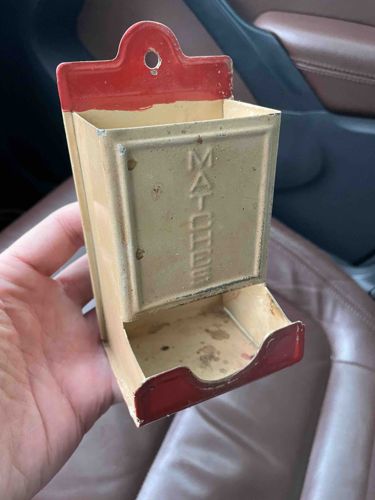
This is a vintage wall-mountable match holder, likely dating from the early to mid-20th century. Constructed from stamped metal, it features a cream or pale yellow enameled body with contrasting red painted accents on the top hanging tab and the lower match strike/catch tray. The overall design is simple and functional, typical of utilitarian household items from its era. The holder is designed to store wooden matches, indicated by the embossed word "MATCHES" prominently displayed vertically on the front face of the main compartment. The upper section includes a small, circular punched hole for hanging on a nail or hook. Below the main match storage compartment, there is an integrated, shallow tray, which historically would have been used to catch spent matches or potentially as a striking surface (though no specific striking surface texture is clearly visible).
Physical characteristics show common wear for its age, including numerous small chips and scratches in the enamel finish, particularly on the edges and corners, revealing the underlying metal. There are also visible stains and discoloration, especially within the lower tray, suggesting prolonged use and potential exposure to moisture or soot. The red paint on the top and bottom sections also exhibits chipping and fading. The construction appears sturdy, indicating a functional and durable piece. Its size is compact, designed to be unobtrusive in a kitchen or utility area. The item reflects a period when matches were a primary source for ignition in homes before the widespread adoption of gas or electric igniters. The craftsmanship is utilitarian but solid, characteristic of mass-produced yet durable household goods of the period.
AI Appraisal Report
Upon examining the provided image of this vintage wall-mount match holder, I assess its condition as fair to good, consistent with a utilitarian item of its age, likely early to mid-20th century. The stamped metal construction with a cream/pale yellow enamel body and red painted accents appears authentic to the era for household goods. The embossed 'MATCHES' lettering is a clear indicator of its original purpose. Wear is evident in numerous chips and scratches to the enamel, particularly on edges and corners, revealing the underlying metal. This wear pattern is expected from decades of regular use. There's also visible discoloration and staining in the lower tray, suggesting exposure to spent matches, soot, or moisture, which is common for such items. The red paint on the top and bottom shows fading and chipping.
Market conditions for vintage utilitarian household collectibles like this match holder are generally stable but do not command high prices unless they possess exceptional design, rarity, or provenance. Comparables typically sell in the $20-$60 range, with condition being a significant factor. Demand is niche, primarily from collectors of vintage kitchenware, advertising ephemera, or farmhouse decor enthusiasts, but the item itself is not exceedingly rare. Factors impacting value negatively include the extensive enamel loss and staining, while its intact functionality and clear embossed lettering are positives.
My assessment of authenticity is based solely on visual characteristics from the image provided. Without a physical inspection, precise manufacturing marks, material composition, or paint analysis cannot be confirmed. An in-person examination would allow for closer inspection of the metal gauge, enamel application technique, and paint composition to further verify age and authenticity, though for an item of this value, such detailed testing is rarely pursued.