AI estimate as of August 15, 2025 · verify with a professional before acting
AI-Generated · Verify before acting
Everything on this page is generated by AI for informational purposes only. AI can make mistakes — the AI may misidentify items or misattribute them (artist, maker, brand, designer, origin, era). This is not an official valuation and should not be used for insurance, sale, tax, estate, legal, or lending purposes — or any decision requiring a certified appraisal. It is not an authoritative claim about any person, brand, or rights holder — do not share or rely on it as a factual statement about a third party. Always consult qualified professionals before making financial decisions.
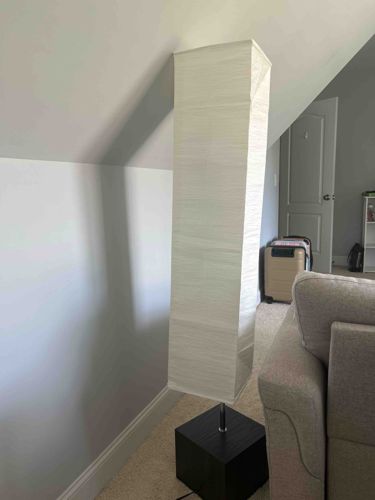
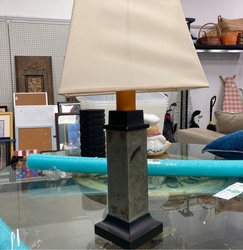
This is a contemporary-style floor lamp, designed to stand tall and project ambient light. Physically, it features a tall, rectangular fabric shade, which appears to be made from a translucent material, possibly rice paper, linen, or a synthetic fabric, exhibiting a light, off-white or cream color with subtle horizontal linear textures suggesting a woven construction. The shade is supported by a slender, cylindrical metal rod, likely chrome or brushed nickel, which extends from a solid, cube-shaped base. The base is dark, likely black or dark brown, with a wood-grain finish, indicating it could be made of wood, medium-density fiberboard (MDF) with a veneer, or a dark composite material. The lamp stands significantly tall, reaching close to the ceiling in the depicted attic or sloped-ceiling room. There are no visible condition issues such as tears, stains, or significant dents; the fabric shade appears to be in good, taut condition, and the base seems stable. No visible maker's marks or signatures are discernible from the image. Its minimalist and geometric design suggests a modern or contemporary style, likely manufactured within the last 20-30 years. The overall craftsmanship appears standard for mass-produced contemporary lighting, with clean lines and functional design contributing to its quality.
AI Appraisal Report
I have carefully examined the provided image of this Modern Rectangular Floor Lamp. From a visual standpoint, the lamp appears to be in very good condition. The fabric shade, whether rice paper, linen, or synthetic, shows no discernible tears, stains, or sagging, maintaining its taut rectangular form. The off-white to cream color is consistent throughout. The slender cylindrical metal rod, likely chrome or brushed nickel, shows no immediate signs of bending or significant scratches, suggesting it is well-maintained or relatively new. The solid, cube-shaped base, with its dark wood-grain finish, also appears robust and stable, exhibiting no visible chips, cracks, or scuffs that would detract from its appearance or stability.
Authenticity, based solely on this image, refers to the lamp's material integrity and design. It aligns with contemporary minimalist aesthetics, consistent with mass-produced lighting from the last 20-30 years. Without visible maker's marks or signatures, a definitive brand attribution is impossible. The craftsmanship appears standard for the genre, with clean lines and functional design.
Market conditions for similar contemporary floor lamps are generally stable, driven by interior design trends favoring clean, uncluttered spaces. Comparable new items from retail chains like CB2, West Elm, or even larger home goods stores such as Target or IKEA, would range from $100 to $400, depending on materials and brand perception. This specific lamp's quality appears to place it in the mid-range of this spectrum. Demand for such functional and aesthetically versatile lighting is consistent. However, due to its likely mass-produced nature and lack of distinctive artistic or historical significance, it is not rare.
Factors significantly impacting value include its good condition, which preserves its aesthetic and functional appeal. The lack of brand identification, premium materials (such as solid brass or artisanal glass), or designer provenance limits its potential for appreciation. Without these, it remains a functional piece of modern home decor rather than a collectible.
Limitations exist without a physical inspection. I cannot definitively verify the actual material of the shade (e.g., distinguishing high-quality linen from a synthetic blend) or the base (solid wood vs. MDF with veneer). A tactile examination would also confirm stability and reveal minor imperfections not visible in the image. For full authenticity verification, especially if this were claimed to be a designer piece, in-person examination, provenance documentation (purchase receipts, design blueprints), and potentially even scientific material analysis would be crucial.