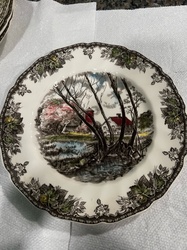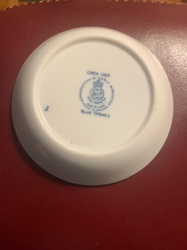
W.H. Grindley Antique Ironstone Milk Bowl
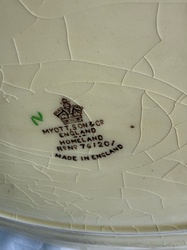
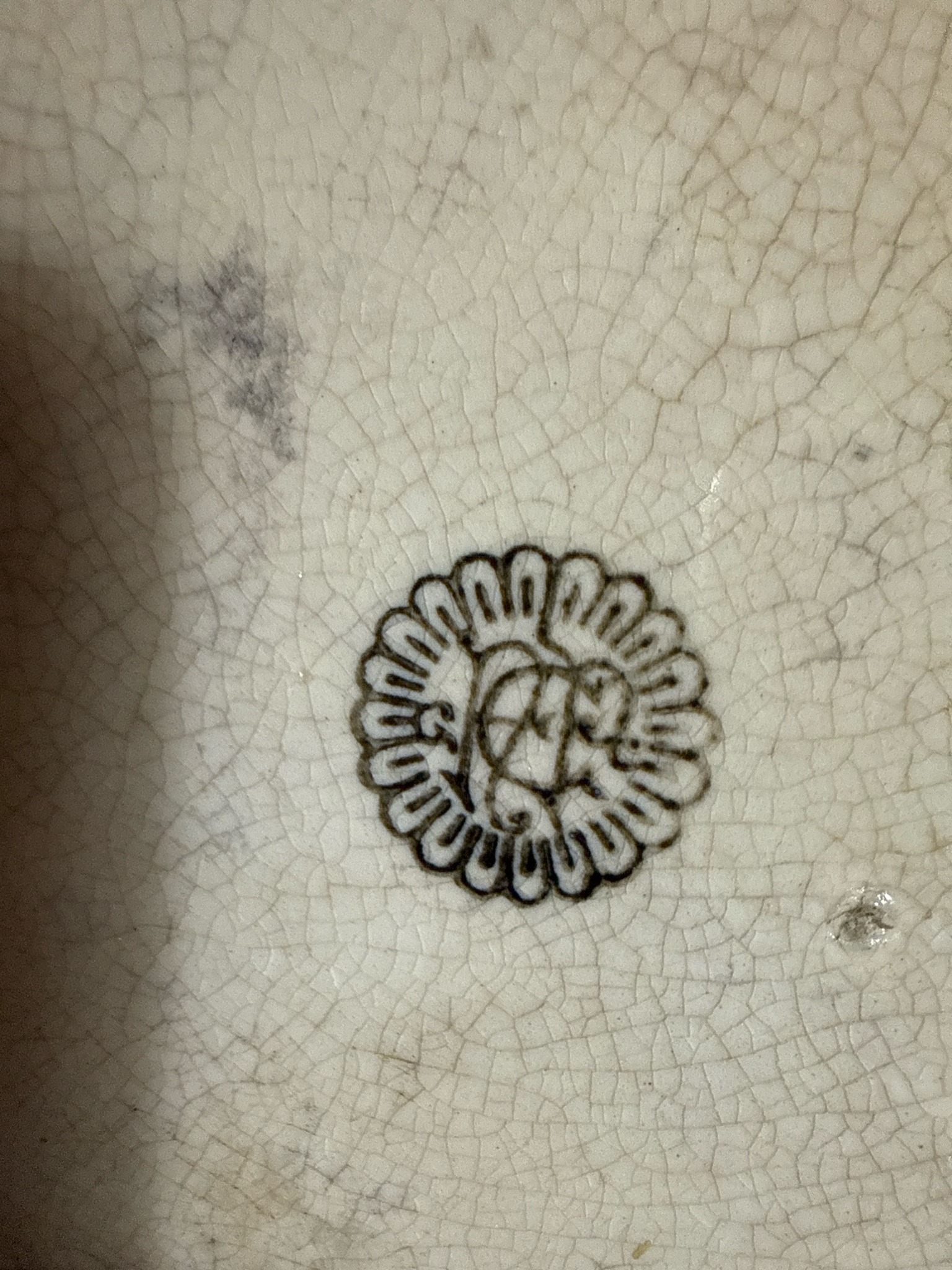
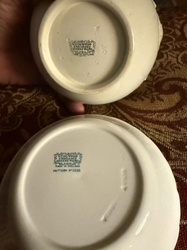
This is a detailed view of an antique ironstone ceramic milk bowl or pan, featuring a prominent underglaze maker's mark. The surface is characterized by a creamy off-white or light ivory color with a heavy, all-over network of 'crazing' (fine cracks in the glaze). This crazing is extensive and indicates significant age, likely dating the piece to the late 19th or early 20th century. The maker's mark is a stylized floral or sunburst rosette containing the intertwined monogram 'WHG', identifying it as a product of W.H. Grindley, a renowned Staffordshire pottery company from England established in 1880. The mark is applied in a dark brownish-black pigment. Notably, the surface shows signs of authentic wear including kiln stilt marks (a small triangular indentation where the piece was supported during firing) and faint grayish discolorations/staining within the crazing lines, often caused by the absorption of liquids or fats over decades of use. The heavy construction and utilitarian nature of the glaze suggest this was a high-quality, durable piece of Victorian or Edwardian kitchenware designed for heavy daily use.
AI-Generated Appraisal Disclaimer
Estimated Value
$45.00 - $75.00
Basic Information
Category
Antique English Ceramics
Appraised On
April 22, 2026
Estimated Value
$45.00 - $75.00
Additional Details Provided By Owner
User Provided Information
Milk bowl or pan
Item Description
This is a detailed view of an antique ironstone ceramic milk bowl or pan, featuring a prominent underglaze maker's mark. The surface is characterized by a creamy off-white or light ivory color with a heavy, all-over network of 'crazing' (fine cracks in the glaze). This crazing is extensive and indicates significant age, likely dating the piece to the late 19th or early 20th century. The maker's mark is a stylized floral or sunburst rosette containing the intertwined monogram 'WHG', identifying it as a product of W.H. Grindley, a renowned Staffordshire pottery company from England established in 1880. The mark is applied in a dark brownish-black pigment. Notably, the surface shows signs of authentic wear including kiln stilt marks (a small triangular indentation where the piece was supported during firing) and faint grayish discolorations/staining within the crazing lines, often caused by the absorption of liquids or fats over decades of use. The heavy construction and utilitarian nature of the glaze suggest this was a high-quality, durable piece of Victorian or Edwardian kitchenware designed for heavy daily use.
Get Your Items Appraised
Instant estimates of your treasures with AI-powered instant appraisals