AI estimate as of September 6, 2025 · verify with a professional before acting
AI-Generated · Verify before acting
Everything on this page is generated by AI for informational purposes only. AI can make mistakes — the AI may misidentify items or misattribute them (artist, maker, brand, designer, origin, era). This is not an official valuation and should not be used for insurance, sale, tax, estate, legal, or lending purposes — or any decision requiring a certified appraisal. It is not an authoritative claim about any person, brand, or rights holder — do not share or rely on it as a factual statement about a third party. Always consult qualified professionals before making financial decisions.
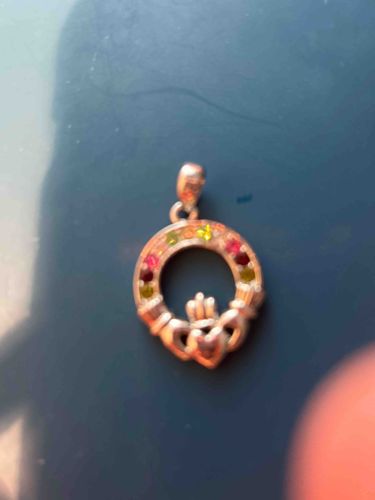
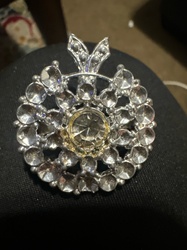
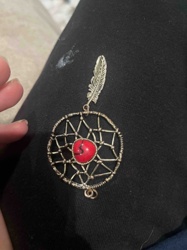
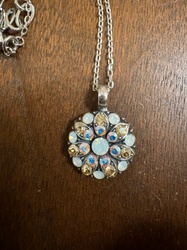
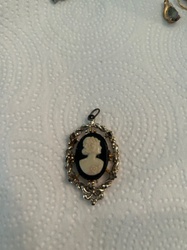
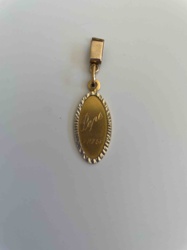
This is a small, circular pendant crafted from what appears to be a silver-toned metal, possibly sterling silver or a silver alloy, given its reflective, somewhat polished surface. The prominent design element is a stylized Claddagh symbol, composed of two hands holding a crowned heart, integrated into the lower portion of an open circular frame. The top half of the circular frame is adorned with a series of small, round cut gemstones, each set individually. The gemstones exhibit a variety of colors, including green, yellow, red, and possibly purple or pink, suggesting they might be cubic zirconia, glass, or low-cost natural stones. The setting style for these stones appears to be prong or bead setting, securing them firmly within the metal rim. Above the circular design, a small, integrated bail is present, indicating its function as a charm or pendant to be worn on a necklace or bracelet. The overall construction appears solid, with no immediate signs of significant damage such as bends or breaks. There are some minor surface scratches typical of normal wear, and the metallic luster suggests it could benefit from a light cleaning or polishing. The craftsmanship appears to be of a mass-produced standard, common for contemporary jewelry. This piece likely dates from the late 20th century to the present day, given its style and the use of multi-colored, smaller stones. There are no visible maker's marks or distinguishing hallmarks in the provided image. The quality is indicative of an everyday wearable piece of fashion jewelry.
AI Appraisal Report
Based on my visual examination of the provided image, this Multi-Gemstone Claddagh Pendant appears to be a mass-produced fashion jewelry item. The silver-toned metal, likely sterling silver or a base metal alloy, combined with what seem to be multi-colored cubic zirconia or similar synthetic stones, places it in the lower end of the jewelry market. Its condition is consistent with normal wear, showing minor surface scratches but no significant structural damage. Authenticity of material (e.g., sterling silver) cannot be definitively confirmed without hallmarks or physical testing.
Market conditions for this type of modern Claddagh pendant are generally robust but competitive, with many similar items available from various retailers. Comparables would include new or used fashion jewelry pieces sold at costume jewelry stores, online marketplaces, or gift shops. Demand for Claddagh jewelry is steady due to its cultural significance, but rarity for a piece of this nature is very low; such designs are widely produced. Factors significantly impacting value include the material composition (sterling silver would be higher than base metal), the actual gemstone type (natural vs. synthetic), and the presence of any maker's marks, none of which are discernible here.
Limitations are significant: I cannot verify metal purity, stone authenticity (natural vs. synthetic, cut quality), or definitively identify any maker's marks from images alone. A physical examination would allow for hallmark inspection, specific gravity testing for metal composition, and gemstone identification via magnification and refractometer. Provenance documentation, though unlikely for an item of this type, would provide historical context. Without these, my appraisal is based on common material assumptions for visually similar examples.