AI Appraisal Estimate

AI-generated estimates · not official valuations

From the user

What was submitted

Photo and notes provided by the user — not generated by AI

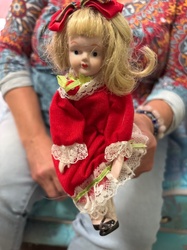
Submitted item photo
Submitted photo · June 17, 2026

User's notes

No additional notes provided.

AI analysis below

AI appraisal

AI analysis & estimate

AI-Generated · Verify before acting

Everything below is generated by AI for informational purposes only. AI can make mistakes — the AI may misidentify items or misattribute them (artist, maker, brand, designer, origin, era). This is not an official valuation and should not be used for insurance, sale, tax, estate, legal, or lending purposes — or any decision requiring a certified appraisal. It is not an authoritative claim about any person, brand, or rights holder — do not share or rely on it as a factual statement about a third party. Always consult qualified professionals before making financial decisions.

Read the full disclaimer

AI Identification

·Not independently authenticated·Verify before acting

Antique Wicker Doll Carriage

Antique Toys and Dolls

AI Estimated Value

·Not an official valuation·Verify before acting

$350.00 – $550.00

As of June 17, 2026

AI Item Analysis

·AI can make mistakes·Verify before acting
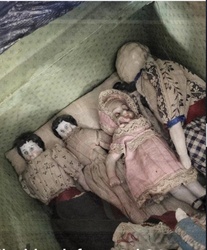
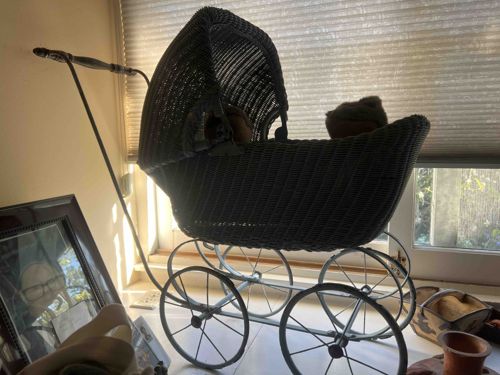
This is an antique doll carriage or pram, likely dating from the late Victorian to Early Edwardian era (circa 1890-1915). The carriage features a hand-woven wicker body and adjustable hood, finished in a dark, possibly original, black or dark forest green paint. The body exhibits a rolled-rim design and tight weave, indicating high-quality craftsmanship characteristic of early manufacturing. It is mounted on a bent iron undercarriage with four large, spoked metal wheels. The wheels feature thin hubs and a classic C-spring suspension system for the body, which was typical for the period to provide a smooth ride for dolls or small children. A long, angled metal push handle extends from the rear, capped with a turned wooden grip showing signs of age and patina. The overall condition appears stable, though there is visible surface wear to the paint on the wicker and metal components, and light oxidation present on the undercarriage. The wicker shows some minor fraying around the hood mechanism, but the structural integrity remains intact. The carriage currently holds dolls, showcasing its scale as a piece of high-end toy furniture. No maker's marks are immediately visible in the image, but the design is consistent with renowned makers of the era like Gendron or Whitney.
AI Appraisal Report

·AI can make mistakes·Verify before acting
I have virtually examined this antique wicker doll carriage, dating it to approximately 1895–1910. The piece displays the hallmark characteristics of the late Victorian aesthetic, specifically the rolled-edge wicker work and C-spring iron suspension. The craftsmanship suggests a high-end manufacturer such as the Whitney Reed Chair Co. or Gendron Wheel Co. The dark finish appears authentic to the period, though it shows expected surface abrasions and minor oxidation on the spoke wheels, which I consider honest wear that does not significantly detract from its display value. Market demand for large-scale Victorian doll furniture has stabilized since its peak in the early 2000s, but pieces with intact woven hoods and original hardware remain desirable among 'doll hospital' restorers and serious collectors of period toys. This carriage is particularly valued for its 'antique' silhouette and structural integrity, though the lack of identifiable maker's marks slightly limits the upper-end valuation. Comparables sold at specialized toy auctions typically fall within the $300 to $600 range depending on the density of the wicker weave and the condition of the wooden handle grip. It is important to note that this appraisal is based on photographic evidence. A formal authentication would require an in-person inspection to check for hidden wicker rot, structural welds on the iron undercarriage, and the presence of any lead-based paint stabilizers. To confirm the manufacturer, I would need to inspect the underside of the bed for paper labels or stamped serial numbers. Provenance documentation, such as family records or period photographs showing the carriage, would further enhance the item's historical value.

Get your items appraised

Instant estimates of your treasures with AI-powered appraisals

Browse More Appraisals