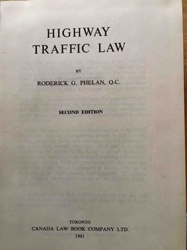
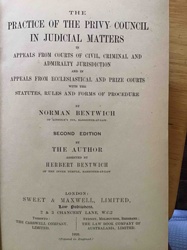
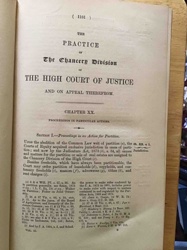
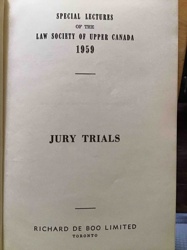
These notes were written by the person who submitted this item. Appraiser.AI has not verified them, and the AI's identification and estimate may rely on them.
AI Estimated Value
Not an official valuation
$40-70
AI estimate as of July 27, 2025 · verify with a professional before acting
AI-Generated · Verify before acting
Everything on this page is generated by AI for informational purposes only. AI can make mistakes — the AI may misidentify items or misattribute them (artist, maker, brand, designer, origin, era). This is not an official valuation and should not be used for insurance, sale, tax, estate, legal, or lending purposes — or any decision requiring a certified appraisal. It is not an authoritative claim about any person, brand, or rights holder — do not share or rely on it as a factual statement about a third party. Always consult qualified professionals before making financial decisions.
This analysis also relies on unverified notes provided by the user, which may be incomplete or inaccurate and could affect the result.
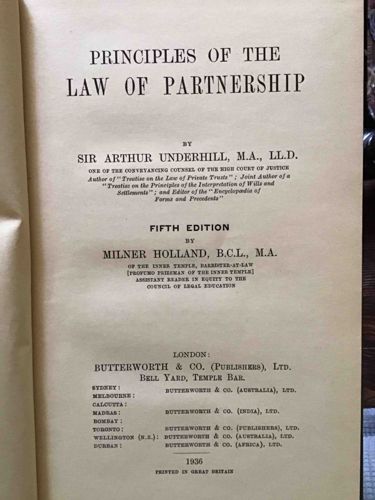
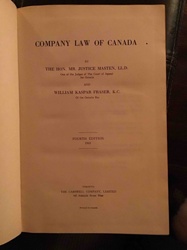
This item is the title page of a legal textbook titled 'Principles of the Law of Partnership'. It is the 'Fifth Edition', penned by Sir Arthur Underhill, M.A., LL.D., and updated by Milner Holland, B.C.L., M.A. The book was published in 1936 by Butterworth & Co. (Publishers), Ltd. in London, with various branch offices listed, including Sydney, Melbourne, Calcutta, Madras, Bombay, Toronto, Wellington (N.Z.), and Durban. The page itself appears to be made of off-white, slightly textured paper, typical of book paper from the early 20th century. The text is printed in black ink, featuring various font sizes and styles to differentiate sections such as the title, authors, edition, and publisher information. The overall physical condition, based solely on this image, appears good, with no visible tears, significant creases, or major discoloration. There is a slight impression on the paper where the text is printed, indicating a traditional printing method. The edges of the page visible in the image appear clean and relatively sharp. The 'Printed in Great Britain' notation at the bottom confirms its origin. The presence of multiple international branch offices indicates a broad distribution for this legal text.
AI Appraisal Report
Based on my visual examination of the provided image, this 1936 Fifth Edition of 'Principles of the Law of Partnership' by Sir Arthur Underhill appears to be in good condition. The off-white, slightly textured paper, typical of early 20th-century book stock, shows no visible tears, significant creases, or major discoloration. The text is sharp, and the impression from the printing process suggests a traditional, well-executed print run. The presence of 'Printed in Great Britain' and numerous international branch offices indicates a wide distribution, which can sometimes temper rarity.
Market comparables for specific legal texts of this vintage often show variability. While general legal histories or seminal works can command higher prices, standard treatises like this, even by respected authors, may not reach high values unless they represent a groundbreaking piece of legal scholarship or are exceedingly rare. Demand for this specific title would likely come from legal historians, academic institutions, or collectors specializing in early 20th-century British law.
Factors impacting value include its age, perceived good condition, and its nature as a historical legal text. However, such works are common. Without physical inspection, I cannot confirm the absence of foxing, binding issues, or previous owner's markings throughout the book, which would impact value. Full authentication would require a hands-on examination to verify paper quality, binding integrity, and overall completeness. Provenance documentation would add significant value, but is not typically available for such common texts. Scientific testing isn't usually warranted for books of this nature unless there's suspicion of forgery, which is not indicated here.