Paleolithic Mousterian Type Chert Hand Axe Scraper
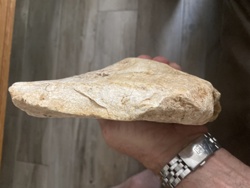
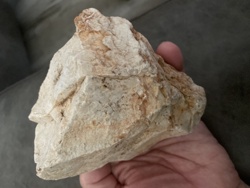
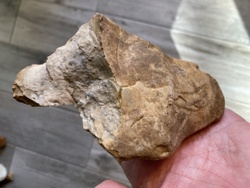
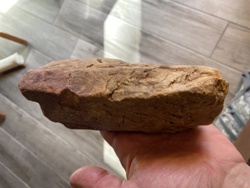
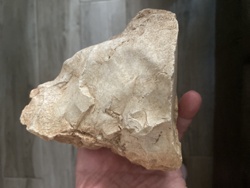
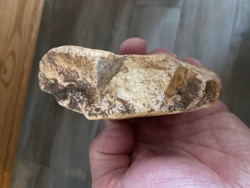
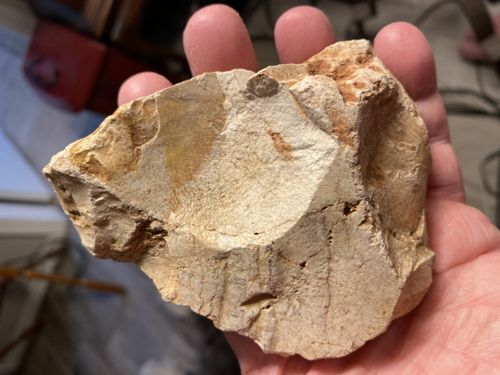
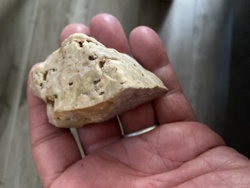
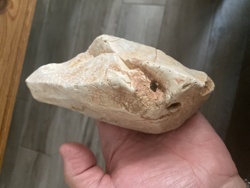
This is a significant lithic specimen identified as a Middle Paleolithic style hand axe or scraper tool, measuring approximately 5 inches by 3 inches. The artifact is crafted from chert, displaying a varied palette of earthy tones including tan, beige, and oxidized ochre-red. The physical construction features bifacial flaking and significant percussion scarring, indicative of intentional human manipulation for utilitarian purposes. Notable features include a prominent bulb of percussion and several flake scars along the distal and lateral edges, suggesting it was used for chopping or heavy scraping. The surface exhibits a heavy mineralized patina and some calcification, consistent with long-term burial in the soil of Guthrie, Oklahoma. There are visible step fractures and edge Wear from prehistoric use, though the overall structural integrity remains robust. The craftsmanship reflects the Levallois technique or similar Mousterian traditions, where a core is prepared to strike off specific flakes. Given its typological characteristics, it represents an ancient tool-making tradition, showing high-quality lithic reduction skills. The specimen's raw material shows natural pitting and some modern-era minor abrasions, which distinguish the original knapped surfaces from more recent environmental impacts.
AI-Generated Appraisal Disclaimer
Estimated Value
$450 - $650
Basic Information
Category
Prehistoric Lithic Artifacts
Appraised On
February 28, 2026
Estimated Value
$450 - $650
Additional Details Provided By Owner
User Provided Information
A middle Paleolithic Mousterian chert hand axe scraper tool found in Guthrie OK measuring 5" x 3"
Item Description
This is a significant lithic specimen identified as a Middle Paleolithic style hand axe or scraper tool, measuring approximately 5 inches by 3 inches. The artifact is crafted from chert, displaying a varied palette of earthy tones including tan, beige, and oxidized ochre-red. The physical construction features bifacial flaking and significant percussion scarring, indicative of intentional human manipulation for utilitarian purposes. Notable features include a prominent bulb of percussion and several flake scars along the distal and lateral edges, suggesting it was used for chopping or heavy scraping. The surface exhibits a heavy mineralized patina and some calcification, consistent with long-term burial in the soil of Guthrie, Oklahoma. There are visible step fractures and edge Wear from prehistoric use, though the overall structural integrity remains robust. The craftsmanship reflects the Levallois technique or similar Mousterian traditions, where a core is prepared to strike off specific flakes. Given its typological characteristics, it represents an ancient tool-making tradition, showing high-quality lithic reduction skills. The specimen's raw material shows natural pitting and some modern-era minor abrasions, which distinguish the original knapped surfaces from more recent environmental impacts.
Get Your Items Appraised
Instant estimates of your treasures with AI-powered instant appraisals