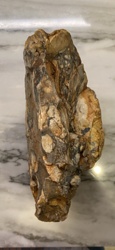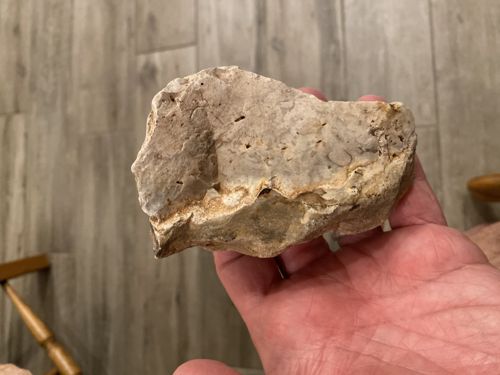
Lower Paleolithic Acheulean Chert Biface Hand Axe Scraper
Archaeological Artifacts / Prehistoric Stone Tools

Lower Paleolithic Acheulean Chert Biface Hand Axe Scraper

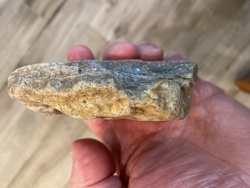
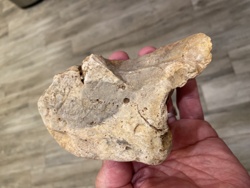
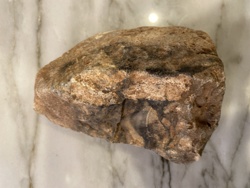
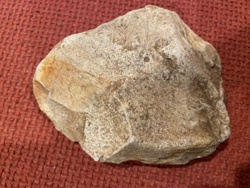
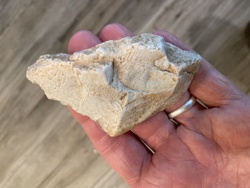
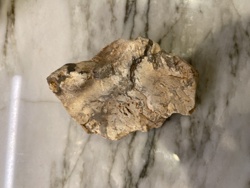
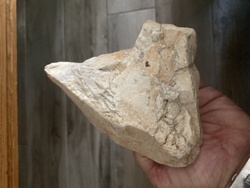
A significant prehistoric artifact, this biface hand axe and scraper tool is fashioned from chert and measures 4.25 inches by 3 inches. Attributed to the Lower Paleolithic Acheulean culture, the tool showcases characteristic knapping techniques, including intentional flaking to create a functional cutting or scraping edge. The material exhibits a variated color palette of tan, beige, and cream with subtle inclusions and a weathered, earthy patina consistent with its age and find-spot in Guthrie, Oklahoma. Physically, the item displays a rugged, asymmetrical form typical of early hominid craftsmanship, where the focus was utility over aesthetic symmetry. The surface is marked by numerous percussion scars and step fractures from its original manufacture. Its condition is remarkably intact for a stone tool of this magnitude, showing heavy natural weathering and edge wear that does not detract from its diagnostic features. This piece represents essential Stone Age technology, demonstrating the transition to more sophisticated bifacial utility tools. The lack of modern crush marks or mechanical grinding suggests an authentic antiquity. It serves as a prime example of early human innovation in raw material manipulation for survival activities.
Estimated Value

$450 - $700

Basic Information

Category

Archaeological Artifacts / Prehistoric Stone Tools

Appraised On

March 1, 2026

Estimated Value

$450 - $700

Additional Details Provided By Owner

User Provided Information

Lower Paleolithic Acheulean chert bi face hand axe scraper tool found in Guthrie OK measuring 4.25 x 3"

Item Description

A significant prehistoric artifact, this biface hand axe and scraper tool is fashioned from chert and measures 4.25 inches by 3 inches. Attributed to the Lower Paleolithic Acheulean culture, the tool showcases characteristic knapping techniques, including intentional flaking to create a functional cutting or scraping edge. The material exhibits a variated color palette of tan, beige, and cream with subtle inclusions and a weathered, earthy patina consistent with its age and find-spot in Guthrie, Oklahoma. Physically, the item displays a rugged, asymmetrical form typical of early hominid craftsmanship, where the focus was utility over aesthetic symmetry. The surface is marked by numerous percussion scars and step fractures from its original manufacture. Its condition is remarkably intact for a stone tool of this magnitude, showing heavy natural weathering and edge wear that does not detract from its diagnostic features. This piece represents essential Stone Age technology, demonstrating the transition to more sophisticated bifacial utility tools. The lack of modern crush marks or mechanical grinding suggests an authentic antiquity. It serves as a prime example of early human innovation in raw material manipulation for survival activities.
Get Your Items Appraised

Instant estimates of your treasures with AI-powered instant appraisals

Browse More Appraisals