AI estimate as of July 8, 2025 · verify with a professional before acting
AI-Generated · Verify before acting
Everything on this page is generated by AI for informational purposes only. AI can make mistakes — the AI may misidentify items or misattribute them (artist, maker, brand, designer, origin, era). This is not an official valuation and should not be used for insurance, sale, tax, estate, legal, or lending purposes — or any decision requiring a certified appraisal. It is not an authoritative claim about any person, brand, or rights holder — do not share or rely on it as a factual statement about a third party. Always consult qualified professionals before making financial decisions.
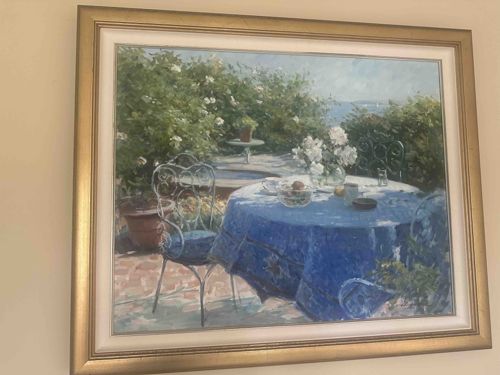
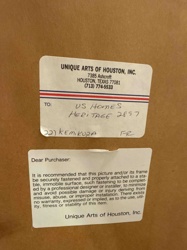
This item is a framed oil painting or acrylic painting on canvas, depicting an outdoor garden scene with a view of a body of water, likely a sea or large lake, in the background. The painting features a patio setting with a round table covered in a vibrant blue tablecloth, adorned with patterns. On the table, there is a vase with white roses, a fruit bowl, and other small items suggesting a meal or gathering. To the left of the table, a decorative metal garden chair with an intricate backrest is visible, its cushion appearing blue or light-colored. The foreground shows a brick or paved patio area. Lush green foliage and white blooming flowers, possibly roses, create a vibrant garden atmosphere around the patio. The background exhibits a serene blue sky meeting the distant water line, with what appear to be sailboats or ships in the far distance. The brushstrokes appear distinct and textured, typical of impressionistic or post-impressionistic styles. The color palette is bright and lively, dominated by blues, greens, whites, and earthy tones. The painting is housed in a substantial gold-colored wooden frame with a lighter, possibly white or cream-colored, inner liner or mat. The frame itself has a smooth, slightly glossy finish and appears to be in good condition with no obvious signs of significant wear or damage. No visible artist's signature or specific manufacturing details are discernible from the provided images, making an exact age difficult to ascertain, though the style suggests it could be from the late 20th century to present day. The overall craftsmanship of the painting appears competent, showcasing good use of light and shadow.
AI Appraisal Report
Upon visual examination of the provided image, this framed oil or acrylic painting on canvas depicts a vibrant garden patio seascape. The overall condition appears excellent; the canvas shows no obvious sagging, tears, or significant abrasions, and the paint layer seems stable. The gold-colored wooden frame with its inner liner also looks to be in very good condition, free from notable chips, cracks, or excessive wear.
Authenticity verification is limited without an in-person examination. While the style suggests a late 20th to 21st-century origin, the absence of a visible signature makes attribution challenging. Without provenance documentation (e.g., artist's records, sales receipts) or an in-person inspection for artist's marks, it's impossible to confirm authorship. An in-person examination would allow for closer inspection of brushwork, pigment analysis, and canvas type, which could help narrow down a potential artistic school or period.
Market conditions for decorative framed artwork of this nature are generally stable but do not command high values unless attributed to a recognized artist. This piece appears to be a competently executed decorative work. Comparables would include similar unsigned, attractively framed oil or acrylic landscape or garden paintings sold in online marketplaces or regional auctions. Demand for such pieces is driven by aesthetic appeal and how well they complement interior decor rather than intrinsic artistic value or rarity.
The primary factor impacting value is the lack of artist attribution, which places it firmly in the decorative art category. Had a signature been present and attributable to a known artist, the value would significantly increase. Given its decorative nature and good condition, it holds appeal for home decorators. Rarity is not a factor here; many similar works are available.
To fully authenticate, a physical inspection by a conservator or art historian would be required to analyze pigments, canvas, and brushwork. Additionally, research into potential blind stamps or hidden signatures, along with provenance research, would be essential.