AI estimate as of September 28, 2025 · verify with a professional before acting
AI-Generated · Verify before acting
Everything on this page is generated by AI for informational purposes only. AI can make mistakes — the AI may misidentify items or misattribute them (artist, maker, brand, designer, origin, era). This is not an official valuation and should not be used for insurance, sale, tax, estate, legal, or lending purposes — or any decision requiring a certified appraisal. It is not an authoritative claim about any person, brand, or rights holder — do not share or rely on it as a factual statement about a third party. Always consult qualified professionals before making financial decisions.
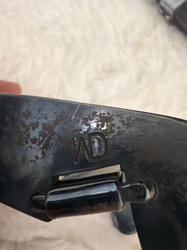
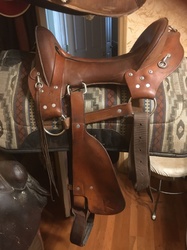
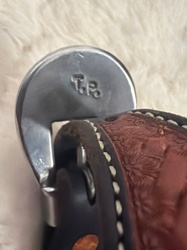
This appears to be a heavily tooled Western parade saddle, crafted from medium to dark brown leather. The saddle features extensive floral and foliate tooling across the entire skirt, fenders, and cantle, showcasing intricate craftsmanship. The seat also exhibits a similar, though less intricate, embossed or carved pattern along its perimeter. The horn is a prominent feature, typical of Western saddles, and appears to be wrapped or covered in leather. Fenders and stirrup leathers are visible, suggesting a functional riding saddle. The overall construction points to a traditional Western style, possibly designed for show or parade due to the elaborate tooling rather than heavy-duty ranch work. Visible condition issues include significant wear and some discoloration on the leather, particularly on raised areas of the tooling where the surface appears lighter, indicating rubbing or age. There are also what look like areas of scuffing and potential patina build-up, especially on the edges and high-contact points. No clear manufacturer's marks or signatures are discernible from the image. Given the style and tooling, it likely dates from the mid-20th century to possibly late 20th century. The quality of the tooling, while showing age, suggests a piece made with considerable skill. The leather itself seems substantial, indicating durability, although its current state implies need for cleaning and conditioning to restore its luster and prolong its life. This specific type of saddle, with its decorative nature, falls into a higher aesthetic category within equestrian equipment.
AI Appraisal Report
Based on my visual examination of the provided image, this heavily tooled Western parade saddle presents as a genuine piece of equestrian equipment, likely dating from the mid to late 20th century. The extensive floral and foliate tooling across the skirt, fenders, and cantle demonstrates significant craftsmanship, typical of saddles intended for show or parade rather than daily ranch work. The seat's embossed perimeter further enhances its decorative appeal.
Factual condition issues are evident. The leather exhibits considerable wear, discoloration, and scuffing, particularly on raised areas of the tooling and high-contact points. This suggests prolonged use and necessitate cleaning and conditioning to restore its aesthetic and preserve its integrity. Despite these issues, the substantial nature of the leather suggests good underlying durability.
In terms of market conditions, elaborately tooled Western saddles, even with wear, maintain a steady demand as decorative pieces, for light riding, or for collectors. Comparables on the secondary market for saddles of this vintage and condition, lacking specific maker's marks, typically range from good to very good. The absence of discernible maker's marks or signatures impacts value negatively, as branded saddles often fetch higher prices due to established quality. Its rarity is moderate; while custom tooling is unique, the style itself is not exceptionally rare.
Limitations in authenticity verification are significant from images alone. A physical inspection would be crucial to assess the leather's pliability, stitching integrity, tree soundness, and to identify any hidden repairs or maker's stamps not visible in the photo. Provenance documentation, if available, would provide invaluable context regarding its history, previous ownership, and original craftsmanship. Without these, the value remains somewhat speculative, reflecting an aesthetic and historical appreciation rather than a verified high-end collectible.