AI estimate as of October 3, 2025 · verify with a professional before acting
AI-Generated · Verify before acting
Everything on this page is generated by AI for informational purposes only. AI can make mistakes — the AI may misidentify items or misattribute them (artist, maker, brand, designer, origin, era). This is not an official valuation and should not be used for insurance, sale, tax, estate, legal, or lending purposes — or any decision requiring a certified appraisal. It is not an authoritative claim about any person, brand, or rights holder — do not share or rely on it as a factual statement about a third party. Always consult qualified professionals before making financial decisions.
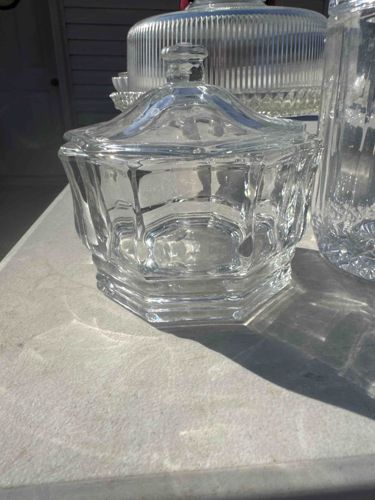
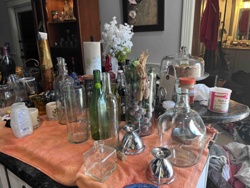
This item is a clear pressed glass covered candy or serving dish, characterized by its multifaceted, octagonal design. The dish itself features eight distinct sides, each with a slightly recessed, fluted or paneled pattern contributing to its reflective qualities. The base of the dish is also octagonal, providing a stable foundation, and appears to have a slightly raised lip or footed edge, although definitive feet are not visible. The lid is similarly octagonal and domed, fitting snugly over the main body of the dish. It features a decorative, solid glass finial or knob at its apex, designed for easy lifting. The overall construction suggests molded or pressed glass, indicated by the uniformity of the facets and the clear, somewhat thick appearance of the glass. There are visible reflections and refractions of light, suggesting good clarity in the glass without obvious clouding or major internal flaws. No significant damage such as chips, cracks, or repairs are immediately discernible from the image, but a thorough, direct inspection would be required to confirm this. The style appears consistent with mid-20th century pressed glass dinnerware or serving pieces, often associated with Depression-era glass or slightly later production. The craftsmanship is functional and decorative, typical of mass-produced but well-designed glassware from that period, intended for everyday use or casual entertaining. It is a classic piece for holding candies, sugar cubes, or small trinkets.
AI Appraisal Report
Based on my visual examination of the provided image, I assess this clear pressed glass covered candy dish. The item appears to be in very good to excellent condition, with no immediate indications of chips, cracks, or significant wear. The clarity of the glass is good, and the uniformity of the octagonal facets suggests a well-executed pressed glass manufacturing process, typical of its likely mid-20th century origin. The design is classic for functional decorative glassware of that era. Authenticity, based on the style and manufacturing technique, seems consistent with commonly produced Depression-era or slightly post-Depression pressed glass.
Market conditions for this type of commonplace pressed glass item are generally moderate. While collectible, it is not particularly rare, and many similar designs were mass-produced by various manufacturers. Comparable items frequently appear in antique shops, online marketplaces, and estate sales, typically priced within a modest range. Demand is stable but not high, primarily from collectors of vintage glassware or individuals seeking decorative serving pieces.
The primary factors impacting its value are its condition and aesthetic appeal. Given its apparent good condition and classic design, it holds decorative and functional value.
It is crucial to note that this assessment is based solely on visual inspection of an image. A definitive appraisal would require an in-person examination to verify the absence of hairline cracks, fleabites, internal flaws, or repairs that are not visible in photographs. Physical inspection would also allow for examination for manufacturing marks or pontil scars, which can sometimes provide clues regarding specific manufacturers or periods of production, thereby potentially refining the appraisal. Without direct handling, I cannot confirm the exact weight, feel, or subtle imperfections that affect value.