These notes were written by the person who submitted this item. Appraiser.AI has not verified them, and the AI's identification and estimate may rely on them.
AI Estimated Value
Not an official valuation
$250-450
AI estimate as of November 25, 2025 · verify with a professional before acting
AI-Generated · Verify before acting
Everything on this page is generated by AI for informational purposes only. AI can make mistakes — the AI may misidentify items or misattribute them (artist, maker, brand, designer, origin, era). This is not an official valuation and should not be used for insurance, sale, tax, estate, legal, or lending purposes — or any decision requiring a certified appraisal. It is not an authoritative claim about any person, brand, or rights holder — do not share or rely on it as a factual statement about a third party. Always consult qualified professionals before making financial decisions.
This analysis also relies on unverified notes provided by the user, which may be incomplete or inaccurate and could affect the result.
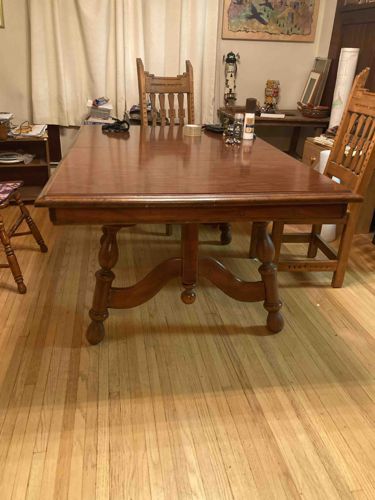
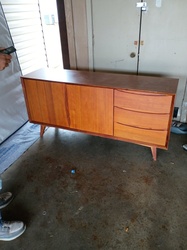
This is a substantial traditional-style dining table, measuring approximately 42 inches by 60 inches. The primary construction appears to be solid wood, likely a hardwood such as oak or mahogany, given its rich, reddish-brown stain and visible grain. The top surface, however, is specified as Formica, which is a laminate material known for its durability and ease of cleaning. This suggests a practical consideration in its design, possibly to protect the wood from spills and wear, or as a more economical alternative to a solid wood top. The edges of the tabletop feature a detailed ogee or similar decorative profile, framed by a continuous apron below. The table is supported by a robust pedestal base, characterized by four chunky, turned 'bulle-leg' supports that curve outwards and connect to a central stretcher with a decorative finial in the middle. The turning on the legs showcases traditional craftsmanship with bulbous and ringed sections. The overall finish is a medium to dark stain, exhibiting a moderate sheen. While the Formica top is intended for durability, careful inspection would be needed to assess its condition for scratches, delamination, or heat marks. The visible wooden components, including the legs and apron, show a consistent finish, suggesting good care, though minor dings or scuffs are common with age and use on furniture of this type. The design suggests a piece from the mid-20th century, possibly 1950s-1970s, aligning with styles that embraced sturdy construction and traditional forms, sometimes incorporating new materials like Formica for practicality. The overall impression is one of solid construction and traditional aesthetic, indicative of good quality for its period.
AI Appraisal Report
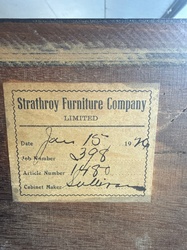
Based on my visual examination of the provided image and the owner's description, this Traditional Style Dining Table with a Bulle-Leg Pedestal Base appears to be a robust piece of furniture. The stated dimensions of 42" x 60" indicate a practical size for many dining areas. The primary construction in solid wood, likely a hardwood, suggests good initial quality and durability. The rich reddish-brown stain and visible grain are consistent with traditional aesthetics. The most significant feature impacting value is the Formica top. While practical for durability and ease of cleaning, it generally reduces the aesthetic and monetary value compared to a solid wood top. This feature, combined with the traditional 'bulle-leg' pedestal base, points to a likely manufacturing period between the 1950s and 1970s. The overall finish appears consistent, indicating reasonable care over its lifetime, though minor wear on the wooden components is expected. The Formica top would need a close in-person inspection for scratches, delamination, or heat marks, which are common issues. In today's market, traditional dining tables, especially those with laminate tops, tend to have moderate demand. While well-constructed, they are not particularly rare. Comparables for such tables, even in good condition, typically range from $200 to $500, with the Formica top usually placing them on the lower end of that spectrum. Without physical inspection, I cannot ascertain the exact condition of the Formica or hidden structural issues. Full authentication of the wood type or specific manufacturer would require in-person examination and potentially scientific testing or provenance documentation.