AI identification & appraisal estimate

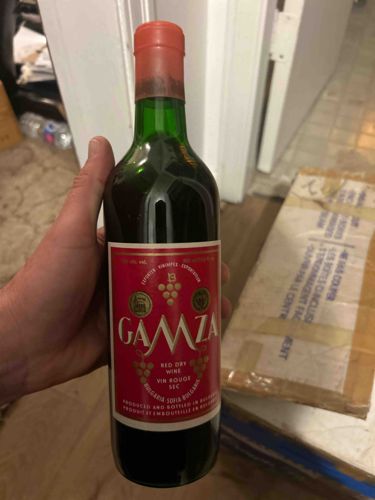
Gamza Red Dry Wine Bottle

This name is the AI's identification of the item — it may be incorrect.

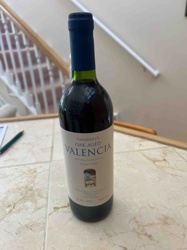
Submitted photo of Gamza Red Dry Wine Bottle
Photo submitted by the user — not generated by AI

User's notes

Wine

These notes were written by the person who submitted this item. Appraiser.AI has not verified them, and the AI's identification and estimate may rely on them.

AI Estimated Value

Not an official valuation

$50 - $100

AI estimate as of October 30, 2025 · verify with a professional before acting

AI-Generated · Verify before acting

Everything on this page is generated by AI for informational purposes only. AI can make mistakes — the AI may misidentify items or misattribute them (artist, maker, brand, designer, origin, era). This is not an official valuation and should not be used for insurance, sale, tax, estate, legal, or lending purposes — or any decision requiring a certified appraisal. It is not an authoritative claim about any person, brand, or rights holder — do not share or rely on it as a factual statement about a third party. Always consult qualified professionals before making financial decisions.

This analysis also relies on unverified notes provided by the user, which may be incomplete or inaccurate and could affect the result.

Read the full disclaimer

AI Item Analysis

This item is a bottle of 'Gamza' red dry wine, originating from Bulgaria. The bottle itself is made of dark green glass, a common choice for red wines as it helps protect the contents from light degradation. It features a standard wine bottle shape with a relatively short neck, culminating in a salmon-red or reddish-orange colored foil capsule that covers the cork and the top of the bottle neck. The capsule appears to be somewhat faded or discolored at the very top, possibly indicating age or exposure. The main label is prominently displayed in a vibrant red color with gold-colored text and detailing. The dominant text 'GAMZA' is presented in a stylized, somewhat elongated serif font. Above the 'GAMZA' text, there's a smaller inscription 'PRODUIT ET EMBALIE EN BULGARIE' or similar French text, indicating origin. Centrally located on the label, above 'GAMZA', are two circular emblems or medallions flanking a stylized bunch of grapes with the number '73' prominently displayed, likely indicating a vintage year of 1973. Below the main 'GAMZA' text, it clearly states 'RED DRY WINE' and 'VIN ROUGE SEC'. Further down, 'BULGARIA SOFIA BULGARIE' is visible, pinpointing the region and country of production. The bottom edge of the label includes 'PRODUCED AND BOTTLED IN BULGARIA' and 'PRODUIT ET EMBOUTEILLE EN BULGARIE'. The condition of the label appears good, with no major tears or significant creasing visible, though there might be minor edge wear. The wine level in the bottle appears high, close to the neck, which is generally a good sign for older wines. The overall aesthetic suggests a vintage Eastern European wine. The craftsmanship appears standard for mass-produced wine bottles of the era, focusing on functionality and clear branding.

AI Appraisal Report

I have examined the image of this Gamza Red Dry Wine bottle, originating from Bulgaria. The dark green glass bottle, standard shape, and salmon-red foil capsule are consistent with wines of the era. The presence of the dominant 'GAMZA' text, 'RED DRY WINE', and 'BULGARIA SOFIA BULGARIE' on the vibrant red label with gold detailing further authenticates it as a Bulgarian wine. The '73' prominently displayed within the circular emblems strongly suggests a 1973 vintage. The label condition appears good with minor edge wear, which is excellent for its age. Crucially, the wine fill level is high, close to the neck, indicating good storage conditions, a significant factor for the value of older wines. However, the slightly faded or discolored capsule top might suggest some environmental exposure. While this is an authentic vintage Eastern European wine, Gamza from Bulgaria is not widely known or highly sought after in the international collector's market compared to wines from more renowned regions like Bordeaux or Burgundy. The demand is niche, primarily among collectors interested in Eastern European wines or specific vintages. Comparable vintage Eastern European red wines, even with good fill levels, generally command modest prices. Limitations: My assessment of condition and authenticity is based solely on the provided image and description. A physical inspection would be crucial to verify the integrity of the cork, detect any leakage, assess sediment levels, and confirm the exact shade and condition of the capsule. Provenance documentation could further confirm storage history. Scientific testing, such as carbon dating, would be required for absolute vintage verification, though the '73' is a strong indicator.

Keep exploring

More alcoholic beverage appraisals

Get your items appraised

Instant AI-powered appraisal estimates from a photo

Browse More Appraisals