AI Appraisal Estimate

AI-generated estimates · not official valuations

From the user

What was submitted

Photo and notes provided by the user — not generated by AI

Submitted item photo
Submitted photo · May 25, 2026

User's notes

No additional notes provided.

AI analysis below

AI appraisal

AI analysis & estimate

AI-Generated · Verify before acting

Everything below is generated by AI for informational purposes only. AI can make mistakes — the AI may misidentify items or misattribute them (artist, maker, brand, designer, origin, era). This is not an official valuation and should not be used for insurance, sale, tax, estate, legal, or lending purposes — or any decision requiring a certified appraisal. It is not an authoritative claim about any person, brand, or rights holder — do not share or rely on it as a factual statement about a third party. Always consult qualified professionals before making financial decisions.

Read the full disclaimer

AI Identification

·Not independently authenticated·Verify before acting

Hand-Blown Art Glass End-of-Day Paperweight

Collectibles / Art Glass

AI Estimated Value

·Not an official valuation·Verify before acting

$45.00 - $75.00

As of May 25, 2026

AI Item Analysis

·AI can make mistakes·Verify before acting
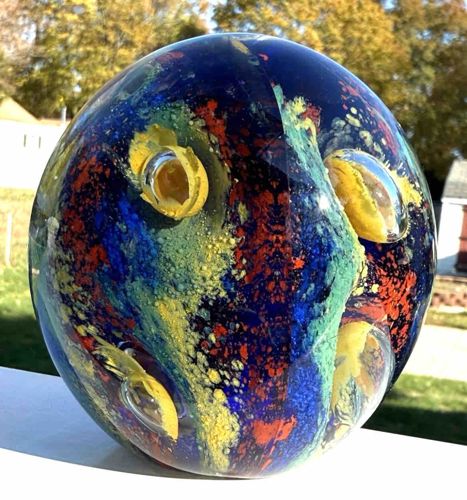
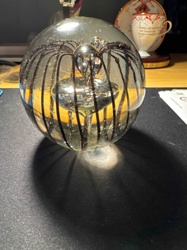
This item is a spherical, hand-blown art glass paperweight, commonly referred to as an 'end-of-day' or 'frit' glass piece. The object is constructed from solid, high-clarity clear glass encasing a vibrant inner core of multicolored glass shards and powders. The primary color palette consists of deep cobalt blue, bright sun-yellow, forest green, and hints of orange-red, creating a chaotic and energetic internal landscape. A notable feature is the presence of several controlled 'dimples' or indentations on the surface, which are lined with concentrated yellow frit, adding textural depth and visual interest through their concave shape. The paperweight exhibits characteristic marks of handmade glass, including slight internal seed bubbles and the smooth, rounded form achieved through hand-tooling. The exterior surface appears to be in good condition with a high polished gloss, showing no immediately visible cracks, chips, or significant scuffing. While no specific maker's mark is visible in the provided view, the style is reminiscent of 20th-century studio glass movement pieces from the 1970s to 1990s. The craftsmanship suggests a skilled artisan capable of managing high-heat internal layering without causing structural tension fractures. Its substantial weight and smooth bottom indicate it was designed for functional use as a desk accessory as well as more decorative purposes.
AI Appraisal Report

·AI can make mistakes·Verify before acting
I have virtually examined this hand-blown art glass 'end-of-day' paperweight. The piece features a vibrant, multi-colored internal core utilizing cobalt, yellow, and green frit encased in clear glass. My visual assessment confirms the item is in good vintage condition, exhibiting high gloss and typical artisan features such as seed bubbles and a polished base. The 'dimpled' surface treatment is a distinctive design choice that adds tactile appeal, though the absence of a signature suggests it is likely a studio production piece rather than a work by a high-profile master. The current market for unsigned 20th-century studio glass remains stable but saturated. Comparable pieces from known makers like Perthshire or Caithness fetch higher premiums, while anonymous high-quality studio pieces typically sell within the $40 to $80 range at boutique auctions or through vintage collectibles dealers. The rarity is considered low to moderate, as similar 'frit' styles were popular exports and studio staples during the 1970s and 80s. Factors impacting value include the lack of a pontil mark or maker’s etch, which limits the ceiling for collectors. Limitations: This appraisal is based strictly on visual media. Full authentication would require a physical inspection to check for micro-scratches on the base (consistent with age), refractive index testing to determine lead content, and weight verification to ensure structural integrity. Provenance or original retail labeling would significantly aid in narrowing the origin from 'general studio glass' to a specific regional school or artist.

Get your items appraised

Instant estimates of your treasures with AI-powered appraisals

Browse More Appraisals