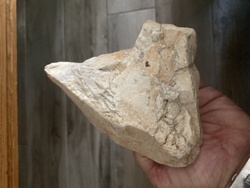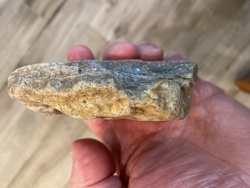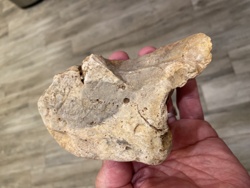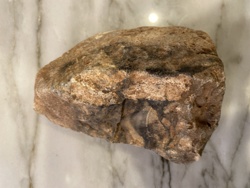
Paleolithic Chert Biface Hand Axe/Multi-tool
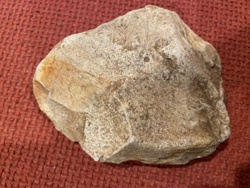
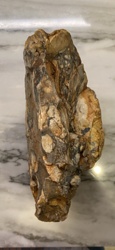
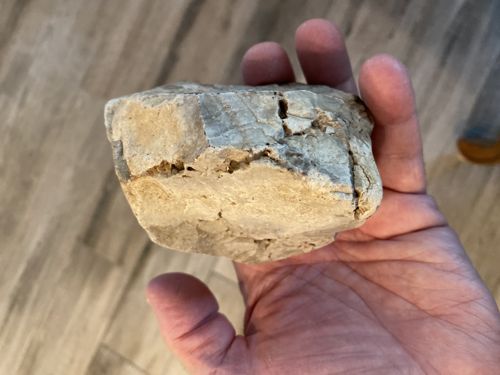
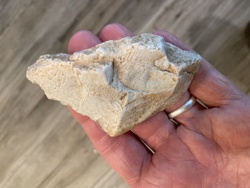
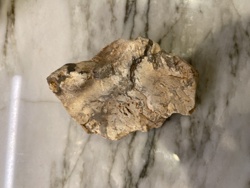
This is a Paleolithic-era stone tool, specifically a bifacial hand axe that likely served multi-purpose functions as a scraper and hammer. Measuring approximately 4.5 inches by 3 inches, the item is crafted from chert, a hard, sedimentary rock known for its predictable fracturing properties suitable for knapping. The color palette consists of earthy tans, creams, and grayish-white tones, with some darker inclusions and internal mineral veining visible. The piece exhibits characteristic percussion flaking along its edges, indicating intentional shaping by a human hand to create a usable grip and a functional working edge. The surface shows a significant degree of natural patina and weathering, with some areas appearing polished by centuries of soil exposure or handling. There are visible step fractures and smaller hinges, typical of ancient lithic technology. The tool features a thick, robust center tapering to thinner edges. Condition-wise, it shows ancient wear consistent with its age, including minor chips and abrasions that have been smoothed over time by natural processes. No modern tool marks or signatures are present, which is consistent with its origin as an early prehistoric artifact. The craftsmanship displays a functional mastery of lithic reduction, designed for durability and ergonomic use within a hunter-gatherer context.
AI-Generated Appraisal Disclaimer
Estimated Value
$150 - $250
Basic Information
Category
Archaeological Artifacts / Prehistoric Stone Tools
Appraised On
February 25, 2026
Estimated Value
$150 - $250
Additional Details Provided By Owner
User Provided Information
Paleolithic chert bi face hand axe scraper hammer tool found in Guthrie, OK measuring 4.5" x 3"
Item Description
This is a Paleolithic-era stone tool, specifically a bifacial hand axe that likely served multi-purpose functions as a scraper and hammer. Measuring approximately 4.5 inches by 3 inches, the item is crafted from chert, a hard, sedimentary rock known for its predictable fracturing properties suitable for knapping. The color palette consists of earthy tans, creams, and grayish-white tones, with some darker inclusions and internal mineral veining visible. The piece exhibits characteristic percussion flaking along its edges, indicating intentional shaping by a human hand to create a usable grip and a functional working edge. The surface shows a significant degree of natural patina and weathering, with some areas appearing polished by centuries of soil exposure or handling. There are visible step fractures and smaller hinges, typical of ancient lithic technology. The tool features a thick, robust center tapering to thinner edges. Condition-wise, it shows ancient wear consistent with its age, including minor chips and abrasions that have been smoothed over time by natural processes. No modern tool marks or signatures are present, which is consistent with its origin as an early prehistoric artifact. The craftsmanship displays a functional mastery of lithic reduction, designed for durability and ergonomic use within a hunter-gatherer context.
Related Tags
Get Your Items Appraised
Instant estimates of your treasures with AI-powered instant appraisals