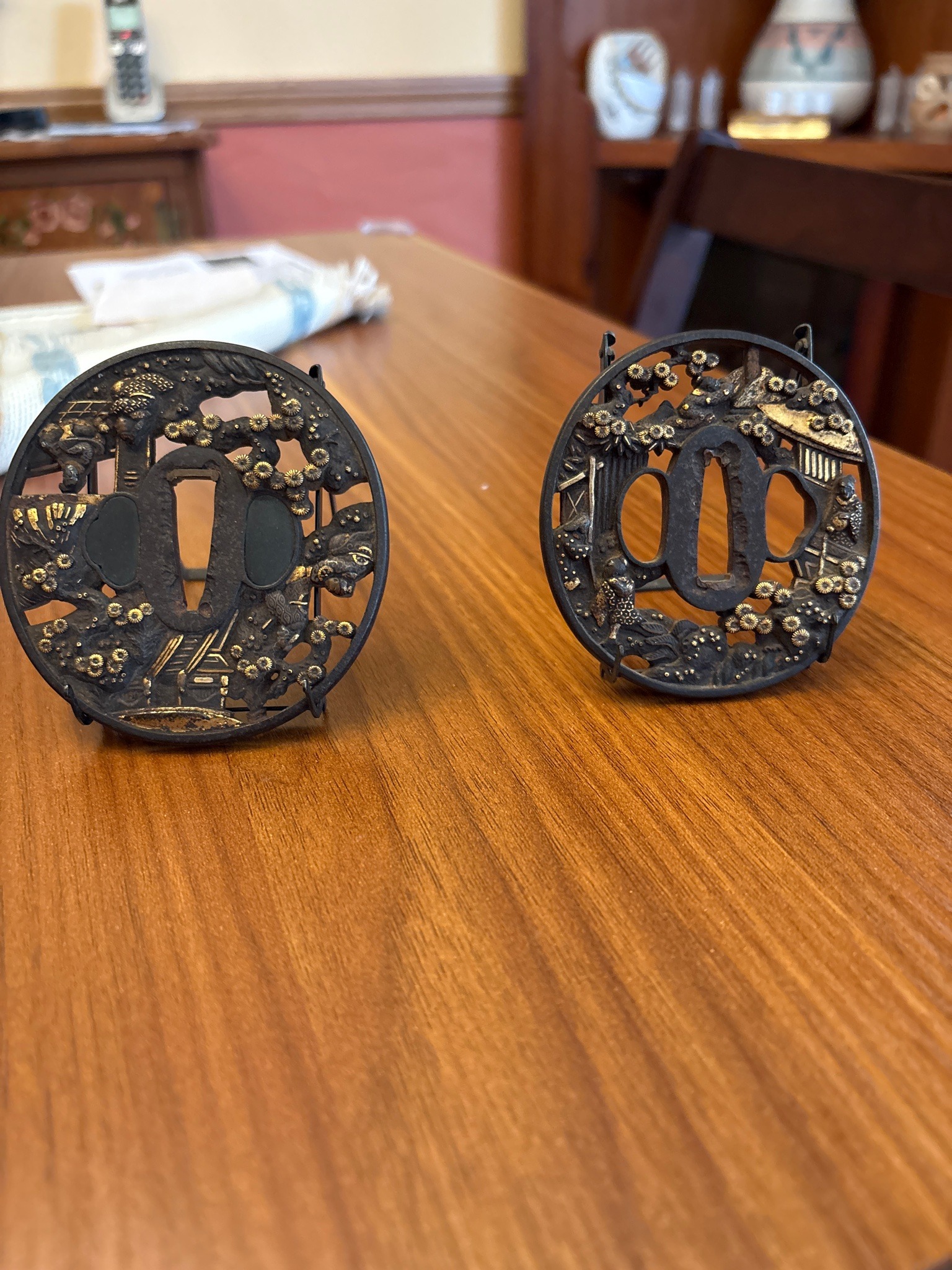
Japanese Edo Period Shakudo Tsuba Pair (Sword Guards)
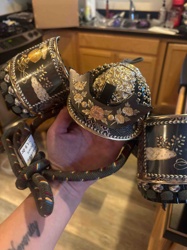
This pair of Japanese tsuba (sword guards) demonstrates the high-level craftsmanship characteristic of the late Edo period (18th-19th century). These circular and slightly oval-shaped guards are likely composed of shakudo, a copper-gold alloy treated to achieve a deep, satiny black-blue patina. The construction features intricate openwork (sukashi) combined with high-relief carving (takabori) and gold inlay (zogan). The decorative motif depicts classic Japanese architectural landscapes, featuring small cottages, traditional bridges, and blossoming cherry or plum trees. The gold accents are used effectively to highlight individual flowers and architectural features, creating a sense of depth and luxury. Each tsuba has a central nakago-ana (blade hole), with the left example featuring filled ryohitsubana (side holes) typical of a conversion for a different scale sword mount. The right piece retains its functional open ryohitsubana. Condition-wise, both show a rich, aged patina with minor surface wear consistent with age and handling. There is slight fading of the gold leaf in high-friction areas, but no structural cracks or major deformations are visible. The delicate fretwork remains remarkably intact, indicating high-quality forging and careful preservation by a collector.
AI-Generated Appraisal Disclaimer
Estimated Value
$4,500 - $6,500
Basic Information
Category
Japanese Arms and Armor / Fine Art Antiques
Appraised On
April 15, 2026
Estimated Value
$4,500 - $6,500
Item Description
This pair of Japanese tsuba (sword guards) demonstrates the high-level craftsmanship characteristic of the late Edo period (18th-19th century). These circular and slightly oval-shaped guards are likely composed of shakudo, a copper-gold alloy treated to achieve a deep, satiny black-blue patina. The construction features intricate openwork (sukashi) combined with high-relief carving (takabori) and gold inlay (zogan). The decorative motif depicts classic Japanese architectural landscapes, featuring small cottages, traditional bridges, and blossoming cherry or plum trees. The gold accents are used effectively to highlight individual flowers and architectural features, creating a sense of depth and luxury. Each tsuba has a central nakago-ana (blade hole), with the left example featuring filled ryohitsubana (side holes) typical of a conversion for a different scale sword mount. The right piece retains its functional open ryohitsubana. Condition-wise, both show a rich, aged patina with minor surface wear consistent with age and handling. There is slight fading of the gold leaf in high-friction areas, but no structural cracks or major deformations are visible. The delicate fretwork remains remarkably intact, indicating high-quality forging and careful preservation by a collector.
Get Your Items Appraised
Instant estimates of your treasures with AI-powered instant appraisals