AI estimate as of September 28, 2025 · verify with a professional before acting
AI-Generated · Verify before acting
Everything on this page is generated by AI for informational purposes only. AI can make mistakes — the AI may misidentify items or misattribute them (artist, maker, brand, designer, origin, era). This is not an official valuation and should not be used for insurance, sale, tax, estate, legal, or lending purposes — or any decision requiring a certified appraisal. It is not an authoritative claim about any person, brand, or rights holder — do not share or rely on it as a factual statement about a third party. Always consult qualified professionals before making financial decisions.
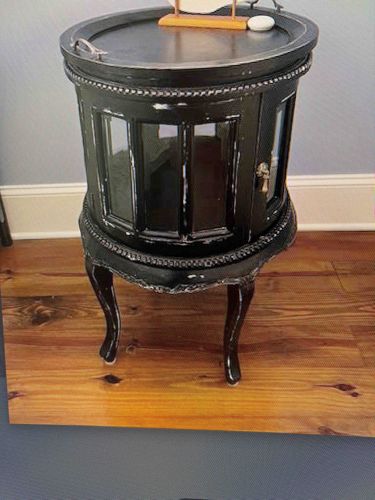
This item is a round, console-style cabinet, potentially functioning as an end table, rendered in a distressed black finish. The main body of the cabinet is cylindrical, featuring multiple glass-paned sections, suggesting its use as a display cabinet. One of these sections appears to be a hinged door, identifiable by a small, ornate brass-toned knob or handle on its right side, allowing access to the interior. The overall construction appears to be wood, painted black, with significant areas of wear and distressing, particularly along edges and raised elements, revealing hints of lighter wood or a previous finish beneath the black paint. This distressing contributes to a shabby chic or antique-inspired aesthetic.
The top surface is solid and flat, surrounded by a raised rim, implying it could serve as a tray or for containing items. A subtle, textured decorative molding, possibly a twisted rope or beaded design, runs along the edge of the top and also wraps around the lower part of the cylindrical body, just above where it transitions to the base. This decorative element has traces of the distressed finish, highlighting its detail. The cabinet is supported by four elegantly curved, cabriole-style legs, which are also finished in the distressed black paint. The base where the legs meet the cabinet body is distinctly shaped with a scalloped or undulating edge, further enhancing its decorative appeal.
The item displays deliberate signs of age and wear through its distressed paint, which is a key stylistic feature rather than actual damage, though some genuine scuffs or chips might be present upon closer inspection. The hardware, such as the top pull handle and door knob, appears to be made of metal with a somewhat aged or darkened finish. The craftsmanship suggests a piece designed to evoke vintage charm, likely from the late 20th or early 21st century, emulating styles from earlier periods.
AI Appraisal Report
Based on my visual examination of the Distressed Black Round Glass Display Cabinet / End Table, I assess its condition as good, consistent with its intended 'distressed' aesthetic. The significant areas of wear and 'chipping' in the black paint, revealing lighter wood or a previous finish, are clearly part of the design to evoke a shabby chic or antique-inspired look. While these are deliberate stylistic choices, I can't definitively rule out some genuine scuffs or minor chips without a close physical inspection. The glass panels appear intact, and the overall structure seems sound from the image. The ornate brass-toned knob and the top's decorative molding contribute positively to its decorative appeal.
From a market perspective, these types of decorative display cabinets and end tables with a distressed finish are readily available, both new and in the secondary market. Comparables—new pieces with similar features and styling—typically range from $300 to $600 from major retailers, while well-maintained vintage or second-hand distressed items usually fetch less, often between $150 and $400. Demand for 'shabby chic' and 'farmhouse' style furniture remains moderate but has softened slightly from its peak.
This item is not rare; its design, while charming, is not unique, and its likely late 20th or early 21st-century origin makes it a decorative piece rather than an antique collectible. Factors impacting its value include its good decorative condition, functional display aspect, and versatile use as both a cabinet and an end table. The distressed finish, while stylistic, could be a deterrent for buyers seeking a pristine look, but it's a selling point for those embracing the style.
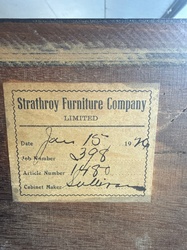
It is crucial to note that my assessment of authenticity is limited by examining images alone. I can confirm the item aligns with the described aesthetic. For full authentication of materials (e.g., confirming solid wood vs. veneer, type of metal hardware) and to definitively differentiate between intentional distressing and genuine damage, an in-person examination would be necessary. Provenance documentation could provide insights into its exact manufacturing origin or designer, which is not ascertainable from imagery.