Small Conglomerate Rock with Quartz Inclusions
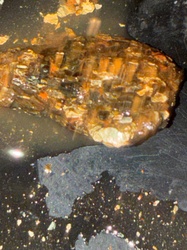
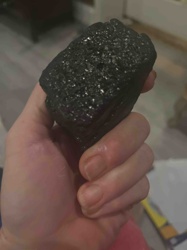
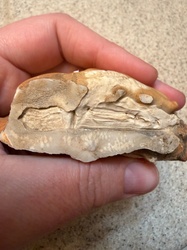
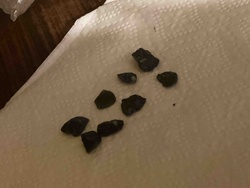
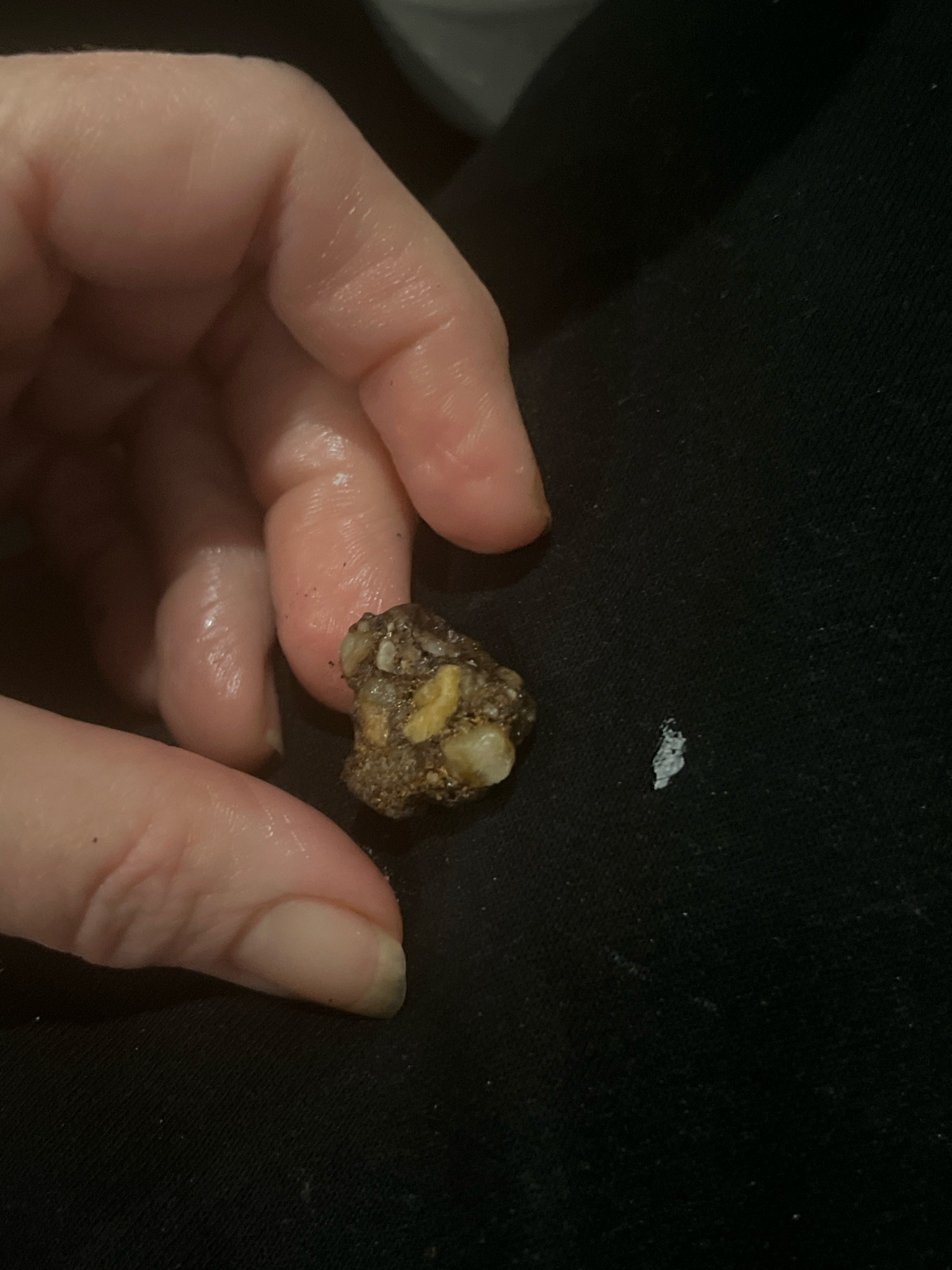
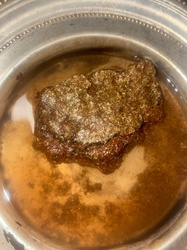
This item is a small, natural geological specimen measuring approximately 1 to 1.5 centimeters in width. It exhibits the characteristics of a conglomerate sedimentary rock, consisting of various smaller mineral fragments and rounded clasts naturally cemented together within a dark, fine-grained matrix. The colors ranging from dark brown and earthy chocolate tones in the sandy matrix to pale yellow, ivory, and translucent white within the larger, embedded inclusions. These inclusions appear to be weathered quartz or quartzite pebbles, displaying a semi-translucent quality and smooth, water-worn edges. The overall shape is irregular and sub-angular, indicating natural fragmentation rather than intentional lapidary shaping. The surface texture is rough and gritty where the matrix is exposed, contrasting with the smoother faces of the larger mineral grains. There are no man-made markings, signatures, or historical engravings visible. The condition appears stable with natural weathering and minor surface debris likely from its discovery site. Such specimens are typical of riverbed or glacial deposits where varied mineral materials are compressed over geological timescales. The craftsmanship is entirely natural, resulting from sedimentary processes rather than human intervention. There is a small white powdery residue visible on the background fabric nearby, though its relation to the rock cannot be confirmed without further chemical testing.
AI-Generated Appraisal Disclaimer
Estimated Value
$5.00 - $15.00
Basic Information
Category
Geological Specimens / Minerals
Appraised On
April 16, 2026
Estimated Value
$5.00 - $15.00
Item Description
This item is a small, natural geological specimen measuring approximately 1 to 1.5 centimeters in width. It exhibits the characteristics of a conglomerate sedimentary rock, consisting of various smaller mineral fragments and rounded clasts naturally cemented together within a dark, fine-grained matrix. The colors ranging from dark brown and earthy chocolate tones in the sandy matrix to pale yellow, ivory, and translucent white within the larger, embedded inclusions. These inclusions appear to be weathered quartz or quartzite pebbles, displaying a semi-translucent quality and smooth, water-worn edges. The overall shape is irregular and sub-angular, indicating natural fragmentation rather than intentional lapidary shaping. The surface texture is rough and gritty where the matrix is exposed, contrasting with the smoother faces of the larger mineral grains. There are no man-made markings, signatures, or historical engravings visible. The condition appears stable with natural weathering and minor surface debris likely from its discovery site. Such specimens are typical of riverbed or glacial deposits where varied mineral materials are compressed over geological timescales. The craftsmanship is entirely natural, resulting from sedimentary processes rather than human intervention. There is a small white powdery residue visible on the background fabric nearby, though its relation to the rock cannot be confirmed without further chemical testing.
Get Your Items Appraised
Instant estimates of your treasures with AI-powered instant appraisals