AI Appraisal Estimate

AI-generated estimates · not official valuations

From the user

What was submitted

Photo and notes provided by the user — not generated by AI

Submitted item photo
Submitted photo · June 6, 2026

User's notes

Unmarked gold earrings

AI analysis below

AI appraisal

AI analysis & estimate

AI-Generated · Verify before acting

Everything below is generated by AI for informational purposes only. AI can make mistakes — the AI may misidentify items or misattribute them (artist, maker, brand, designer, origin, era). This is not an official valuation and should not be used for insurance, sale, tax, estate, legal, or lending purposes — or any decision requiring a certified appraisal. It is not an authoritative claim about any person, brand, or rights holder — do not share or rely on it as a factual statement about a third party. Always consult qualified professionals before making financial decisions.

Note

This analysis also relies on unverified notes provided by the user, which may be incomplete or inaccurate and could affect the result.

Read the full disclaimer

AI Identification

·Not independently authenticated·Verify before acting

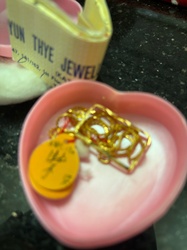
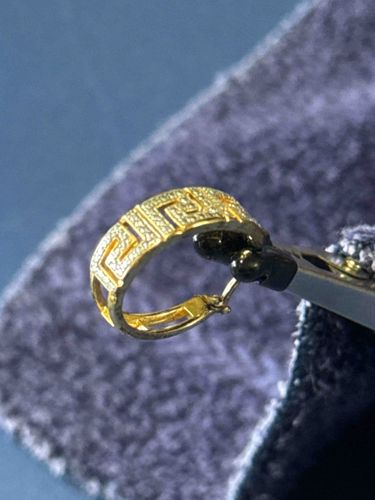
Gold-Tone Greek Key Hoop Earring with Pavé-Set Stones

Jewelry

AI Estimated Value

·Not an official valuation·Verify before acting

$40-150

As of June 6, 2026

AI Item Analysis

·AI can make mistakes·Verify before acting
This is a single gold-colored hoop earring, likely made of gold or gold-plated metal given the 'Unmarked gold earrings' context. The earring features a prominent Greek Key (or Meander) pattern, which is intricately detailed across its visible surface. The pattern is created by sections of polished, bright yellow metal interspersed with sections that appear to be pavé-set with small, clear stones, possibly diamonds or cubic zirconia, giving a high-contrast, reflective quality. The total width of the hoop appears to be approximately 5-7 millimeters, with a diameter that suggests it is suitable for an earlobe piercing. The construction indicates a hinged closure at the bottom, typical of a huggie or small hoop earring, designed for ease of wear and security. There are no visible maker's marks or hallmarks in the provided image, consistent with the 'unmarked' description. The overall condition appears good, with no obvious signs of significant wear, damage, or repairs, maintaining a bright metallic luster. The setting of the stones appears secure, and the engraving or casting of the Greek Key pattern is sharp, indicative of good craftsmanship. Based on the style, it likely dates from the late 20th century to contemporary, as the Greek Key motif has been a recurring trend in jewelry design.
AI Appraisal Report

·AI can make mistakes·Verify before acting
Upon visual examination of this single hoop earring, I am presented with a well-crafted piece featuring a classic Greek Key or Meander motif. The design alternates between polished yellow metal and sections that are pavé-set with small, clear stones. The overall condition appears to be very good; the metal retains a bright luster, and the pattern is sharp, suggesting quality manufacturing. The settings for the stones seem secure, with no visible signs of damage or loss. The primary factor limiting this appraisal is the inability to confirm the earring's material composition from images alone. The description states 'unmarked gold,' which presents a significant valuation challenge. Without hallmarks, it could be anything from solid gold (e.g., 10k, 14k, 18k) to gold-plating over a base metal like sterling silver or brass. Similarly, the stones cannot be positively identified; they could be diamonds, cubic zirconia, or even glass. A definitive valuation hinges on these unknown factors. Market comparables for unmarked, gold-tone Greek Key earrings are broad. Similar-looking gold-plated or sterling silver pieces typically sell for $30-$100. However, if this earring were confirmed to be solid 14k gold with genuine diamonds, its value would increase substantially, likely into the $200-$400 range for a single earring, depending on total gram weight and diamond quality. For full authentication, a physical inspection is required to test the metal's karat purity, identify the gemstones using a thermal conductivity tester, and determine the item's precise weight.

Get your items appraised

Instant estimates of your treasures with AI-powered appraisals

Browse More Appraisals