AI Appraisal Estimate

AI-generated estimates · not official valuations

From the user

What was submitted

Photo and notes provided by the user — not generated by AI

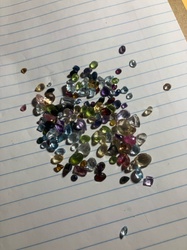
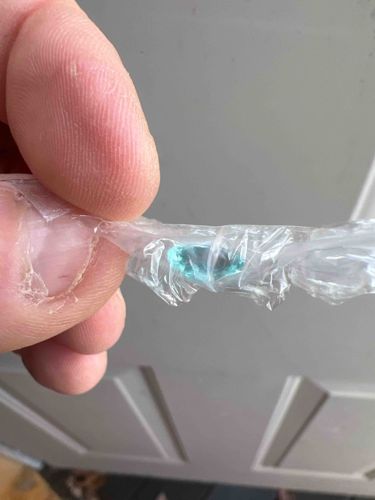
Submitted item photo
Submitted photo · June 22, 2026

User's notes

No additional notes provided.

AI analysis below

AI appraisal

AI analysis & estimate

AI-Generated · Verify before acting

Everything below is generated by AI for informational purposes only. AI can make mistakes — the AI may misidentify items or misattribute them (artist, maker, brand, designer, origin, era). This is not an official valuation and should not be used for insurance, sale, tax, estate, legal, or lending purposes — or any decision requiring a certified appraisal. It is not an authoritative claim about any person, brand, or rights holder — do not share or rely on it as a factual statement about a third party. Always consult qualified professionals before making financial decisions.

Read the full disclaimer

AI Identification

·Not independently authenticated·Verify before acting

Oval-Cut Blue-Green Faceted Loose Gemstone

Loose Gemstones / Jewelry Supplies

AI Estimated Value

·Not an official valuation·Verify before acting

$45.00 - $85.00

As of June 22, 2026

AI Item Analysis

·AI can make mistakes·Verify before acting
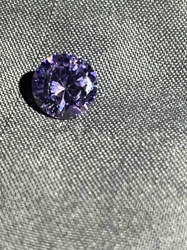
This item is a small, loose faceted gemstone currently held within a clear plastic wrap. Physically, the gem measures approximately 4 to 6 millimeters in length and exhibits a vibrant blue-green color, often characteristic of varieties like aquamarine, apatite, or lab-created spinel. The cut appears to be a standard oval brilliant, featuring a crown of triangular and kite-shaped facets that terminate at a central table. The gemstone displays high clarity as light passes through it with minimal visible internal occlusions from this distance, although the plastic packaging obscures fine detail. The color saturation is uniform and relatively high for a stone of this size. There are no immediate signs of surface-level damage such as chips on the girdle or abrasions on the facet junctions, suggesting the stone has been handled carefully since it was cut. The craftsmanship of the cut appears symmetrical, indicating professional-grade lapidary work. It lacks any visible maker's marks or laser inscriptions, which is typical for loose colored stones unless they are branded or lab-certified. The exact age and mineral identity cannot be confirmed without refractive index testing, as it could be a natural stone or a high-quality synthetic simulant produced within the modern era.
AI Appraisal Report

·AI can make mistakes·Verify before acting
I have examined the digital representation of the oval-cut blue-green faceted gemstone, measuring approximately 4-6mm. The specimen displays a vibrant, saturated hue consistent with Teal Apatite, Paraiba-type Lab-Grown Spinel, or heat-treated Zircon. The symmetry of the oval brilliant cut is professional, showing crisp facet junctions and a balanced crown-to-pavilion ratio, which suggests a high-quality commercial cut. The clarity appears Eye-Clean (EC), though the plastic film limits a definitive micro-analysis of inclusions. The current market for loose semi-precious stones of this size is highly saturated. While the color is desirable, 4-6mm stones are generally considered 'accent' or 'jewelry supply' gemstones rather than investment pieces. Comparables for natural Apatite or high-end lab-grown synthetics traditionally retail in the sub-$100 range for single units. If the stone were confirmed as natural Aquamarine of this saturation, the value would increase; however, the intense pigmentation is more indicative of Apatite or synthetic material. Significant limitations exist for this appraisal: a visual inspection cannot determine the Refractive Index (RI), Specific Gravity (SG), or pleochroism—all essential for mineral identification. The value provided assumes a high-quality synthetic or common semi-precious natural stone. To definitively verify authenticity and market value, I would require an in-person examination using a refractometer and a polariscope. Provenance documentation or a GIA/AGTA laboratory report would be necessary to certify the specimen as a rare natural variety, which could exponentially increase its valuation.

Get your items appraised

Instant estimates of your treasures with AI-powered appraisals

Browse More Appraisals