AI estimate as of October 26, 2025 · verify with a professional before acting
AI-Generated · Verify before acting
Everything on this page is generated by AI for informational purposes only. AI can make mistakes — the AI may misidentify items or misattribute them (artist, maker, brand, designer, origin, era). This is not an official valuation and should not be used for insurance, sale, tax, estate, legal, or lending purposes — or any decision requiring a certified appraisal. It is not an authoritative claim about any person, brand, or rights holder — do not share or rely on it as a factual statement about a third party. Always consult qualified professionals before making financial decisions.
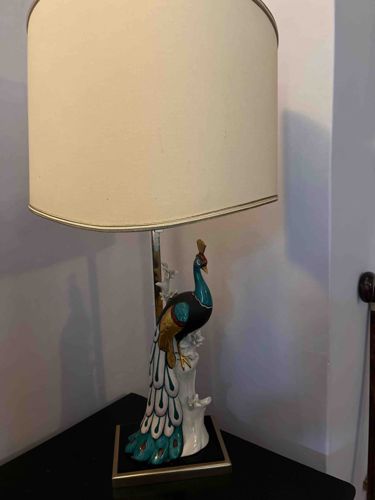
This is a vintage table lamp featuring a figural ceramic peacock as its base, mounted on a square metallic plinth. The peacock sculpture is highly stylized and hand-painted, showcasing vibrant colors. The body of the peacock is primarily a deep teal or blue-green, with accents of iridescent gold on the wings and chest. The long tail feathers are intricately detailed with layered segments, featuring shades of light blue, teal, and a subtle pinkish-purple outline, creating a fanned effect. The peacock is depicted perched on a white, textured ceramic tree stump or decorative base. The overall style suggests a mid-20th-century aesthetic, possibly from the 1960s or 1970s, characterized by its decorative and somewhat kitsch appeal. The lamp's stem, which rises from behind the peacock, appears to be polished brass or a similar gold-toned metal. It is topped with a simple, cream or off-white fabric drum or oval lampshade, featuring a thin, metallic trim around its top and bottom edges. The fabric of the shade appears to be in good condition, showing minimal signs of wear or discoloration, though a few specks or light marks are visible upon close inspection, consistent with age and use. The ceramic peacock appears to be in excellent condition, with no visible chips, cracks, or significant paint loss. The metallic plinth at the base is gold-toned and has a black insert, showing minor signs of wear or oxidation on the metal frame. The craftsmanship of the ceramic peacock is moderately detailed, with hand-painted elements indicating an artisan touch, though it is likely mass-produced vintage decorative lighting.
AI Appraisal Report
Upon visual examination of the provided image, this vintage ceramic peacock table lamp appears to be in overall good condition, consistent with its likely age from the mid-20th century (1960s-1970s). The ceramic peacock figure seems free from visible chips, cracks, or significant paint loss, which is a major positive for its aesthetic value. The fabric lampshade exhibits minor wear and discoloration, typical for vintage fabric, but nothing that drastically detracts. The metallic plinth shows minor oxidation. Authenticity, based solely on imagery, points to a mass-produced vintage decorative lighting piece rather than a unique art object. The stylized design and hand-painted elements, while suggesting an artisan touch, are characteristic of the era's decorative trends.
Market conditions for vintage decorative lamps of this style are generally stable. Comparable sales for similar vintage ceramic animal-figure lamps, particularly peacocks, typically fall within the low to mid-hundreds range. Demand for well-preserved, whimsical vintage lighting is moderate, driven by collectors interested in period decor or unique accent pieces. Rarity is not a significant factor here; while uncommon to find in perfect condition, these types of lamps were mass-produced. The good condition of the ceramic and the overall completeness of the lamp positively impact its value.
Limitations in authenticity verification are significant without physical inspection. I cannot confirm the material composition of the ceramic, the integrity of the internal wiring, or the presence of any maker's marks or labels that would aid in definitive dating or origin. An in-person examination would allow for inspection for repairs, internal electrical safety verification, and a thorough assessment of the ceramic and metal components for any subtle imperfections not visible in the image. Provenance documentation, such as original sales receipts or family history, would also strengthen its authenticity and potential valuation.