AI Appraisal Estimate

AI-generated estimates · not official valuations

From the user

What was submitted

Photo and notes provided by the user — not generated by AI

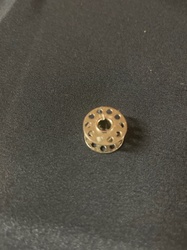
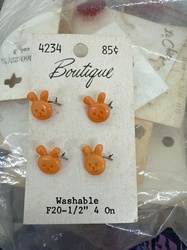
Submitted item photo
Submitted photo · May 18, 2026

User's notes

No additional notes provided.

AI analysis below

AI appraisal

AI analysis & estimate

AI-Generated · Verify before acting

Everything below is generated by AI for informational purposes only. AI can make mistakes — the AI may misidentify items or misattribute them (artist, maker, brand, designer, origin, era). This is not an official valuation and should not be used for insurance, sale, tax, estate, legal, or lending purposes — or any decision requiring a certified appraisal. It is not an authoritative claim about any person, brand, or rights holder — do not share or rely on it as a factual statement about a third party. Always consult qualified professionals before making financial decisions.

Read the full disclaimer

AI Identification

·Not independently authenticated·Verify before acting

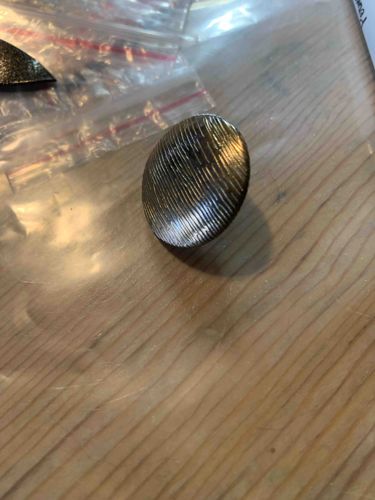
Vintage Circular Rippled Metal Button

Antique and Vintage Sewing Notions

AI Estimated Value

·Not an official valuation·Verify before acting

$5.00 - $12.00

As of May 18, 2026

AI Item Analysis

·AI can make mistakes·Verify before acting
This item is a circular, domed metal garment button featuring a distinctive textured surface. It appears to be made from a mixed-alloy metal, likely brass or steel with a nickel-plate or silver-tone finish. The face of the button is defined by a series of parallel, recessed vertical grooves that create a 'rippled' or 'ribbed' effect, characteristic of mid-20th-century industrial design. The button measures approximately 15mm to 20mm in diameter. The finish exhibits a moderate amount of surface patina, including micro-scratches and areas of tarnishing within the grooves, which adds depth to the metallic luster. The construction suggests a shank-style back, though the attachment point is hidden by the angle of the object. Its weight appears substantial, indicating a solid metal casting rather than stamped hollow metal. There are no clearly visible maker's marks on the face. Based on the mechanical texture and material, it likely dates from the 1940s to the 1960s, a period where such 'sunburst' or 'ribbed' patterns were popular for military-style or formal blazer buttons. The craftsmanship is high, with consistent spacing in the texture and a smooth, even perimeter edge.
AI Appraisal Report

·AI can make mistakes·Verify before acting
I have examined the digital representation of this circular, rippled metal button. The item exhibits a parallel-grooved texture typical of mid-20th-century 'Streamline Moderne' or industrial utility design. Based on the visual evidence, I assess the condition as 'Good-Vintage,' noting a desirable aged patina and minor oxidation within the recessed ribs. The consistent finish and lack of visible seam lines suggest a solid metal casting rather than a two-piece hollow stamping, which indicates a higher quality level for mass-produced notions of the 1940s-1960s. Market demand for individual, non-branded buttons of this type is primarily driven by the vintage restoration and costuming community. This specific design is characteristic of blazer or outerwear accents from the mid-century period. Comparable sales of single, unbranded nickel or brass alloy buttons of this size typically fall in the single-digit to low double-digit range. Rarity is low, as these were produced in large quantities, though finding specimens with this specific 'rippled' preservation is increasingly difficult. Several factors limit a definitive valuation. Without a physical inspection, I cannot verify the base metal composition (e.g., solid brass vs. steel) or check the reverse side for maker's marks, which could significantly influence the price if linked to a noted manufacturer like Waterbury or Scovill. A full authentication would require tactile weight verification, a magnet test for ferrous content, and an examination of the shank attachment to confirm the fabrication method. This appraisal is based solely on the visual characteristics provided and assumes no hidden structural defects.

Get your items appraised

Instant estimates of your treasures with AI-powered appraisals

Browse More Appraisals