AI Appraisal Estimate

AI-generated estimates · not official valuations

From the user

What was submitted

Photo and notes provided by the user — not generated by AI

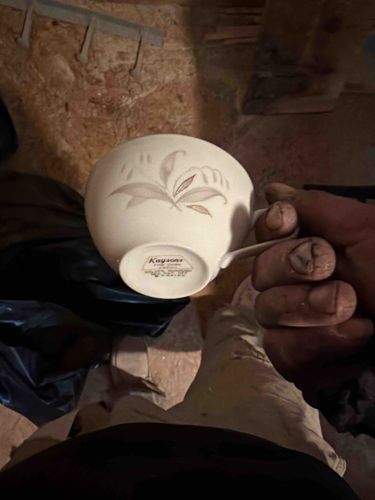
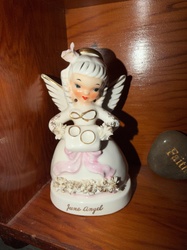
Submitted item photo
Submitted photo · May 22, 2026

User's notes

No additional notes provided.

AI analysis below

AI appraisal

AI analysis & estimate

AI-Generated · Verify before acting

Everything below is generated by AI for informational purposes only. AI can make mistakes — the AI may misidentify items or misattribute them (artist, maker, brand, designer, origin, era). This is not an official valuation and should not be used for insurance, sale, tax, estate, legal, or lending purposes — or any decision requiring a certified appraisal. It is not an authoritative claim about any person, brand, or rights holder — do not share or rely on it as a factual statement about a third party. Always consult qualified professionals before making financial decisions.

Read the full disclaimer

AI Identification

·Not independently authenticated·Verify before acting

Kaysons Fine China Teacup - Golden Rhapsody Pattern

Vintage Collectible Ceramics

AI Estimated Value

·Not an official valuation·Verify before acting

$15.00 - $25.00

As of May 22, 2026

AI Item Analysis

·AI can make mistakes·Verify before acting
This is a vintage ceramic teacup manufactured by Kaysons Fine China in Japan, featuring the 'Golden Rhapsody' pattern popular during the mid-20th century, approximately the 1950s or 1960s. The cup is crafted from translucent porcelain with a smooth, off-white or cream-colored glaze. The side of the cup is adorned with a delicate botanical motif consisting of stylized leaves and wheat-like stems in muted tones of tan, grey, and accented with metallic gold-tone highlights. The cup possesses a standard rounded bowl shape with an integrated loop handle. On the bottom of the vessel, there is a clear manufacturer's mark in black and gold text that reads 'Kaysons Fine China Japan' along with 'Golden Rhapsody', which is a hallmark of authenticity and quality for this specific production period. Regarding condition, the cup appears structurally sound without visible cracks or large chips in the main body, though the environment suggests it may require careful cleaning to remove surface dust. The gold accents remain visible, which is a key quality indicator as these often wear away with heavy use or aggressive washing. The craftsmanship is typical of mid-century Japanese export china, intended for the American market, characterized by refined thinning of the porcelain walls and elegant, understated decorative motifs.
AI Appraisal Report

·AI can make mistakes·Verify before acting
I have examined the digital images of the Kaysons Fine China teacup in the 'Golden Rhapsody' pattern. The piece exhibits the characteristic mid-century Japanese export aesthetic, featuring the refined translucent porcelain and stylized wheat motif typical of the 1950s-60s. The presence of the clear manufacturer's mark on the base confirms its origin and period of production. Visually, the cup appears to be in good vintage condition, with the metallic gold accents remaining largely intact, suggesting minimal abrasive cleaning or wear. However, the market for mid-century Japanese fine china is currently saturated. While Kaysons produced high-quality wares for the American market, they were mass-produced in significant quantities. This specific pattern is relatively common on the secondary market. Current demand is primarily driven by collectors looking to replace broken pieces in existing sets rather than by high-end investors. Factors limiting the value include the lack of the accompanying saucer and the common nature of the 'Golden Rhapsody' line. Please note that this appraisal is based solely on digital images. A definitive valuation would require an in-person physical inspection to detect microscopic 'flea bites,' structural stress fractures, or professional restorations that are invisible in photographs. Verification of authenticity is based on the visible hallmark; however, physical examination of the porcelain's weight and resonance, along with provenance documentation such as original purchase receipts or family records, would be necessary for a certified authentication.

Get your items appraised

Instant estimates of your treasures with AI-powered appraisals

Browse More Appraisals