AI Appraisal Estimate

AI-generated estimates · not official valuations

From the user

What was submitted

Photo and notes provided by the user — not generated by AI

Submitted item photo
Submitted photo · July 17, 2026

User's notes

No additional notes provided.

AI analysis below

AI appraisal

AI analysis & estimate

AI-Generated · Verify before acting

Everything below is generated by AI for informational purposes only. AI can make mistakes — the AI may misidentify items or misattribute them (artist, maker, brand, designer, origin, era). This is not an official valuation and should not be used for insurance, sale, tax, estate, legal, or lending purposes — or any decision requiring a certified appraisal. It is not an authoritative claim about any person, brand, or rights holder — do not share or rely on it as a factual statement about a third party. Always consult qualified professionals before making financial decisions.

Read the full disclaimer

AI Identification

·Not independently authenticated·Verify before acting

Glazed ceramic tile in the Spanish or Portuguese 'Azulejo' style

Ceramic Tiles

AI Estimated Value

·Not an official valuation·Verify before acting

$150 - $350

As of July 17, 2026

AI Item Analysis

·AI can make mistakes·Verify before acting
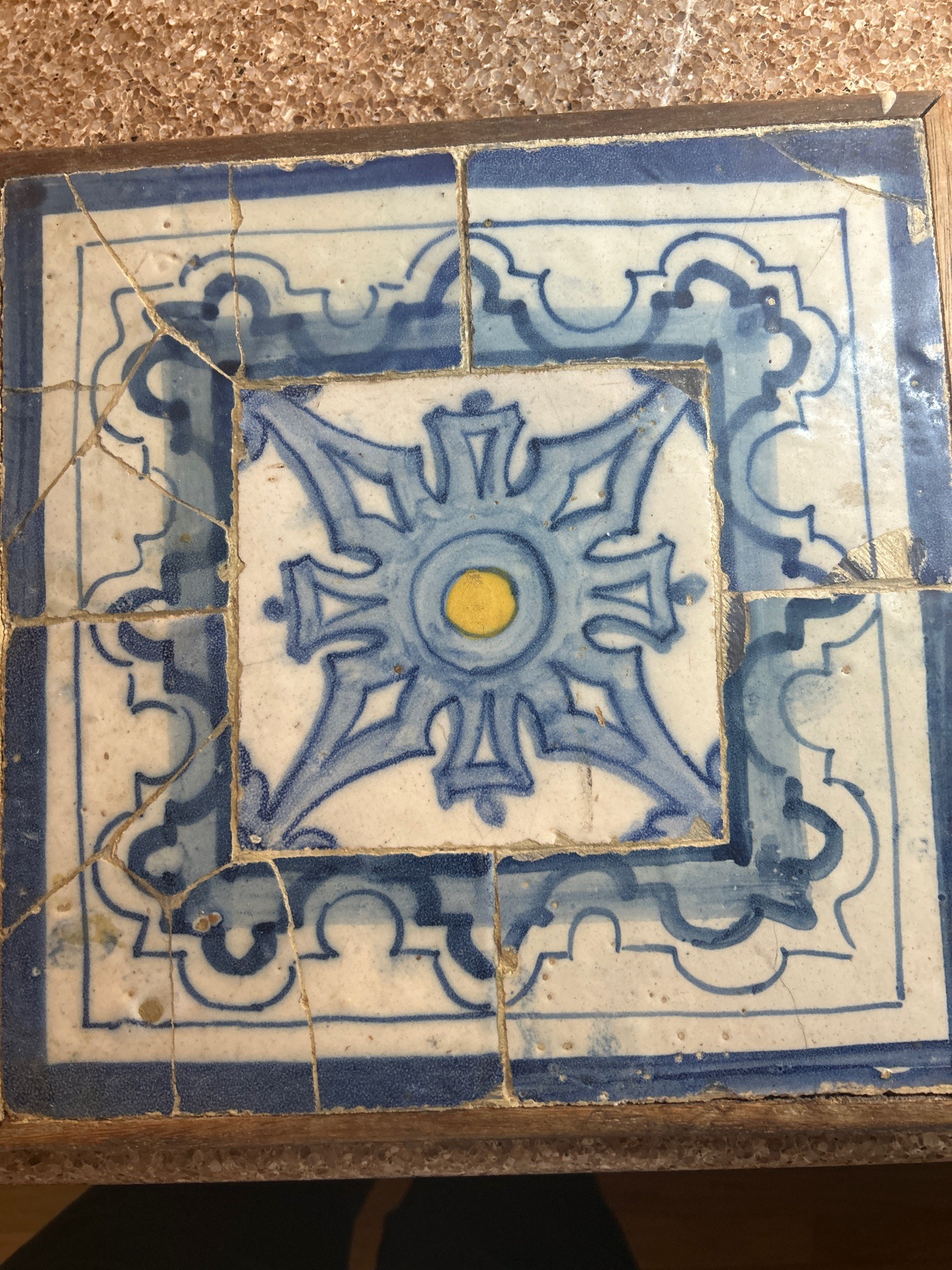
This object is a square ceramic tile, or a composite of multiple fragments joined together, featuring a hand-painted tin-glazed decoration. The color palette is predominantly blue on a white or cream-colored ground, with a single yellow circular accent in the center of the design. The central motif is a stylized four-pointed star or cross-like shape with foliate or geometric flourishes, surrounded by a complex border of interlocking scrolls and fretwork. The design is stylistically consistent with 17th or 18th-century Iberian ceramic traditions, such as Spanish Talavera or Portuguese Azulejos, though it may also be a later 19th or 20th-century revival piece. The item exhibits significant condition issues, including multiple fractures and repairs. Large cracks run horizontally and vertically across the surface, suggesting the piece may have been reassembled from several broken shards. There are visible losses to the glaze along the edges and near the center, revealing the underlying earthenware body. Bubbling and pitting in the glaze are visible under magnification, which is common in older tin-glaze production. No maker’s marks, signatures, or factory stamps are visible in the image to provide a specific attribution; the identification is based entirely on decorative and stylistic features.

AI Appraisal Report

·AI can make mistakes·Verify before acting
Based on my visual examination of the provided image, I have analyzed this ceramic tile as a work consistent with 17th or 18th-century Iberian decorative traditions, possibly of Spanish or Portuguese origin. The tin-glazed 'Azulejo' style, featuring a blue-on-white foliate design with a central yellow accent, suggests a hypothesis of early production; however, I cannot verify from a photo whether this is a period piece or a high-quality 19th-century revival. The value estimate is heavily influenced by the significant condition issues observed. The surface exhibits multiple fractures and visible reassembly, suggesting the tile was likely reconstructed from shards. I also note glaze losses and pitting, which are common in earthenware of this age but detract from the marketability for some collectors. This estimate assumes the piece is an antique of the postulated period; if physical inspection were to reveal it is a modern 20th-century decorative reproduction, the value would likely fall below $50. Conversely, if it were documented as a rare 17th-century specimen from a notable workshop, the value could exceed the current range despite the damage. To confirm the age and origin, an in-person examination by a ceramics specialist is necessary to inspect the clay body porosity, determine the chemical composition of the glaze, and check for any diagnostic marks on the reverse. Market demand for early Iberian ceramics remains stable for documented pieces, though the heavy restoration seen here typically limits interest to collectors of architectural fragments or study pieces.

Related Tags

Explore similar items and categories

Get your items appraised

Instant estimates of your treasures with AI-powered appraisals

Browse More Appraisals