These notes were written by the person who submitted this item. Appraiser.AI has not verified them, and the AI's identification and estimate may rely on them.
AI Estimated Value
Not an official valuation
$5 - $15
AI estimate as of August 11, 2025 · verify with a professional before acting
AI-Generated · Verify before acting
Everything on this page is generated by AI for informational purposes only. AI can make mistakes — the AI may misidentify items or misattribute them (artist, maker, brand, designer, origin, era). This is not an official valuation and should not be used for insurance, sale, tax, estate, legal, or lending purposes — or any decision requiring a certified appraisal. It is not an authoritative claim about any person, brand, or rights holder — do not share or rely on it as a factual statement about a third party. Always consult qualified professionals before making financial decisions.
This analysis also relies on unverified notes provided by the user, which may be incomplete or inaccurate and could affect the result.
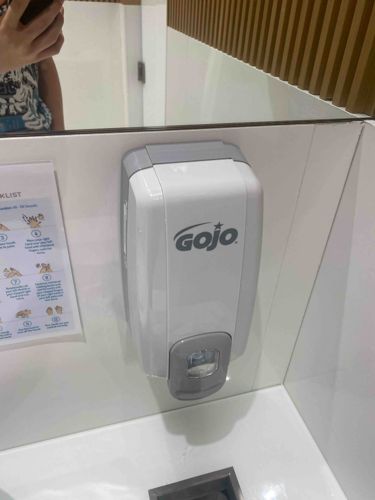
This item is a wall-mounted soap dispenser, specifically a Gojo brand refillable or bag-in-box system. Its primary construction material appears to be durable plastic, with a predominantly white body accented by light gray elements on the top and the dispensing mechanism at the bottom. The dispenser has a rectangular, box-like form with softened, rounded edges, giving it a somewhat contemporary and functional aesthetic. The 'Gojo' logo is prominently displayed in dark grey lettering on the front, indicating the manufacturer. The dispensing mechanism is a push-bar or lever located at the bottom, designed for manual activation, likely to dispense liquid or foam soap. A small, clear window or aperture is visible within the dispensing area, presumably to allow users to see the soap level. The surface appears clean with no visible significant condition issues such as cracks, chips, or deep scratches, indicating it is well-maintained or relatively new. There are no obvious signs of repair or heavy wear, suggesting good craftsmanship for its intended commercial or institutional use. The design is utilitarian, typical of dispensers found in public restrooms or commercial settings, and does not exhibit any unique decorative features beyond its two-tone color scheme. Given its modern design and material, it likely dates from the late 20th or early 21st century.
AI Appraisal Report
Based on my visual examination of the provided image, this Gojo Manual Wall-Mounted Soap Dispenser appears to be in excellent condition. The surface is clean, and there are no visible chips, cracks, or significant scratches, indicating minimal wear or careful maintenance. The 'Gojo' logo is clear, and the two-tone white and light gray plastics seem unfaded, suggesting good preservation. Its authenticity as a Gojo product is strongly supported by the prominent branding.
From a market perspective, these types of commercial restroom dispensers are highly utilitarian. They are mass-produced and designed for functionality and durability rather than aesthetic or collectible value. New similar Gojo manual dispensers typically retail for approximately $20 to $50, depending on the model and dispenser capacity. Used units, even in excellent condition, generally see a significant depreciation due to their common availability and the preference in commercial settings for new, warrantied equipment, or newer models with advanced features like touchless operation.
There is no rarity associated with this standard Gojo model; it's a widely manufactured and distributed item. Demand is primarily from businesses or institutions needing functional soap dispensing solutions, not from collectors. The factors significantly impacting its value are its utilitarian nature, high availability, and the lack of unique or historical significance. Factors that also contribute to its low appraisal value include the fact that it is not new, which means it lacks a manufacturer's warranty, and potential hygiene considerations often lead buyers to prefer new dispensers. Therefore, its value is largely limited to its practical application as a working dispenser.
Limitations in authenticity verification from images alone exist. While the logo appears genuine, a physical inspection would allow for tactile assessment of material quality, verification of internal components for functionality, and confirmation of any hidden damage or repairs not visible externally. Provenance documentation, such as original purchase receipts, would further confirm its newness if claiming 'never used.' However, for a utilitarian item like this, such detailed authentication is rarely necessary or cost-effective for a full appraisal.