AI Appraisal Estimate

AI-generated estimates · not official valuations

From the user

What was submitted

Photo and notes provided by the user — not generated by AI

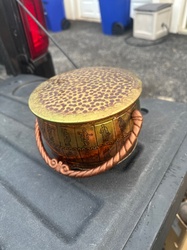
Submitted item photo
Submitted photo · May 22, 2026

User's notes

Wax cast bell

AI analysis below

AI appraisal

AI analysis & estimate

AI-Generated · Verify before acting

Everything below is generated by AI for informational purposes only. AI can make mistakes — the AI may misidentify items or misattribute them (artist, maker, brand, designer, origin, era). This is not an official valuation and should not be used for insurance, sale, tax, estate, legal, or lending purposes — or any decision requiring a certified appraisal. It is not an authoritative claim about any person, brand, or rights holder — do not share or rely on it as a factual statement about a third party. Always consult qualified professionals before making financial decisions.

Note

This analysis also relies on unverified notes provided by the user, which may be incomplete or inaccurate and could affect the result.

Read the full disclaimer

AI Identification

·Not independently authenticated·Verify before acting

Brass-toned figural bell in West African stylistic manner

Decorative Metalware

AI Estimated Value

·Not an official valuation·Verify before acting

$40 - $120

As of May 22, 2026

AI Item Analysis

·AI can make mistakes·Verify before acting
This object is a handheld decorative bell featuring a stylized human figure as the handle. The piece is constructed from a metallic alloy, appearing brass or bronze in tone with a yellowish-gold luster and dark recessed patina. The handle depicts a standing figure with elongated proportions, prominent almond-shaped eyes, and rhythmic textured patterns on the lower body, consistent with the stylistic traditions of West African metalwork, particularly those from the Benin or Ashanti regions. The owner identifies this as a wax cast bell, which is a claim consistent with the visible grainy surface texture and slight casting imperfections often associated with the lost-wax (cire perdue) process, though this manufacturing method remains unverified without physical inspection. The bell body itself is decorated with geometric incisions including a band of almond shapes and diagonal hatching. Condition-wise, the object shows surface wear, minor pitting, and oxidation consistent with age or simulated aging. No maker's marks or signatures are visible in the provided image; thus, any specific cultural or chronological attribution remains a hypothesis subject to expert verification.
AI Appraisal Report

·AI can make mistakes·Verify before acting
Based on my visual analysis of the provided image, this object appears to be a handheld decorative bell cast in a copper alloy, possibly brass or bronze, featuring stylized characteristics associated with West African metalworking traditions. I can observe surface textures and casting imperfections that are often consistent with the lost-wax (cire perdue) technique, though I cannot verify this manufacturing method without a physical inspection. The elongated proportions of the handle and geometric incisions on the bell body suggest a stylistic hypothesis pointing toward the Benin or Ashanti regions. Per user submission, the item is identified as a wax cast bell. My estimate of $40 to $120 reflects the current market interest for decorative West African style metalware as interior accents. I cannot determine from a photo whether this is a 20th-century piece produced for the export market or an older ethnographic object. The value is highly dependent on this distinction; if physical inspection and provenance documentation were to suggest significant age or specific cultural use, the value could increase. Conversely, if it is confirmed to be a modern mass-produced souvenir, the value would likely fall at the lower end of the range. To potentially increase the value or confirm the origin, I would recommend an in-person examination by a specialist in African art to evaluate the alloy composition, actual wear patterns versus simulated aging, and the internal clapper assembly. Without such verification, this must be treated as a decorative object 'in the style of' West African traditions.

Get your items appraised

Instant estimates of your treasures with AI-powered appraisals

Browse More Appraisals