Lower Paleolithic Acheulean Petrified Wood Bifacial Scraper Hand Axe
Archaeological Artifacts and Lithic Tools

Lower Paleolithic Acheulean Petrified Wood Bifacial Scraper Hand Axe

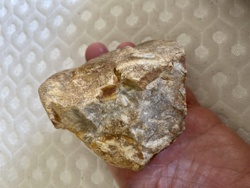
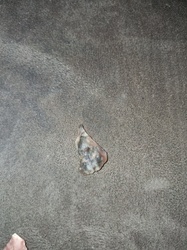
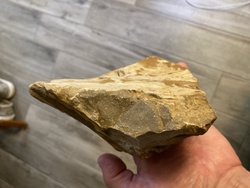
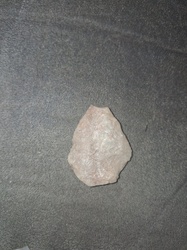
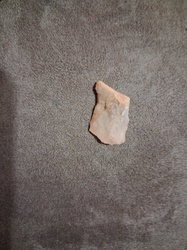
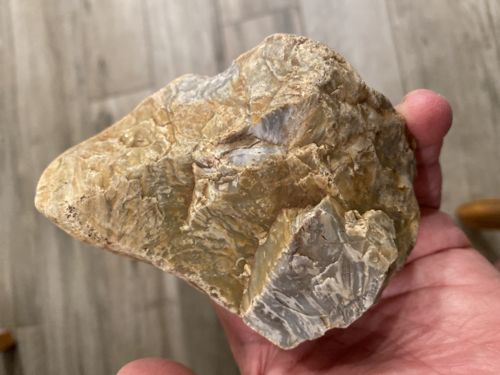
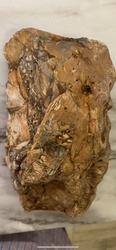
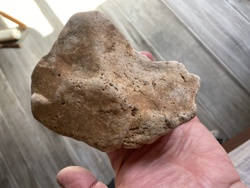
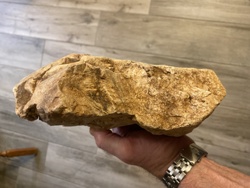
This specimen is a bifacial hand axe measuring approximately 4 inches by 4.5 inches, crafted from silicified or petrified wood found in Guthrie, Oklahoma. The artifact exhibits characteristic Acheulean lithic technology with clear evidence of percussion flaking on both faces to create a tapered, triangular working edge and a stout base intended for handheld use. The material shows a beautiful transition of colors from ocher and tan to translucent grayish-white, highlighting the fossilized wood grain structure. The construction features crude but deliberate flake scars that have been softened by millennia of environmental exposure and chemical weathering. In terms of condition, there is significant natural patina and desert varnish across the surface, along with minor step fracturing and rounding of the edges consistent with use-wear and age. While no maker's marks are present (consistent with Paleolithic tools), the symmetry and intentional knapping reveal a high level of primitive craftsmanship. This piece is a significant example of early hominin tool-making, utilizing local fossilized materials rather than traditional flint or chert, providing a unique geological and archaeological intersection of the Lower Paleolithic period.
Estimated Value

$350 - $600

Basic Information

Category

Archaeological Artifacts and Lithic Tools

Appraised On

March 1, 2026

Estimated Value

$350 - $600

Additional Details Provided By Owner

User Provided Information

Lower Paleolithic Acheulean petrified wood bi facial scraper hand axe found in Guthrie, OK measuring 4" x 4.50

Item Description

This specimen is a bifacial hand axe measuring approximately 4 inches by 4.5 inches, crafted from silicified or petrified wood found in Guthrie, Oklahoma. The artifact exhibits characteristic Acheulean lithic technology with clear evidence of percussion flaking on both faces to create a tapered, triangular working edge and a stout base intended for handheld use. The material shows a beautiful transition of colors from ocher and tan to translucent grayish-white, highlighting the fossilized wood grain structure. The construction features crude but deliberate flake scars that have been softened by millennia of environmental exposure and chemical weathering. In terms of condition, there is significant natural patina and desert varnish across the surface, along with minor step fracturing and rounding of the edges consistent with use-wear and age. While no maker's marks are present (consistent with Paleolithic tools), the symmetry and intentional knapping reveal a high level of primitive craftsmanship. This piece is a significant example of early hominin tool-making, utilizing local fossilized materials rather than traditional flint or chert, providing a unique geological and archaeological intersection of the Lower Paleolithic period.
Get Your Items Appraised

Instant estimates of your treasures with AI-powered instant appraisals

Browse More Appraisals