AI estimate as of August 21, 2025 · verify with a professional before acting
AI-Generated · Verify before acting
Everything on this page is generated by AI for informational purposes only. AI can make mistakes — the AI may misidentify items or misattribute them (artist, maker, brand, designer, origin, era). This is not an official valuation and should not be used for insurance, sale, tax, estate, legal, or lending purposes — or any decision requiring a certified appraisal. It is not an authoritative claim about any person, brand, or rights holder — do not share or rely on it as a factual statement about a third party. Always consult qualified professionals before making financial decisions.
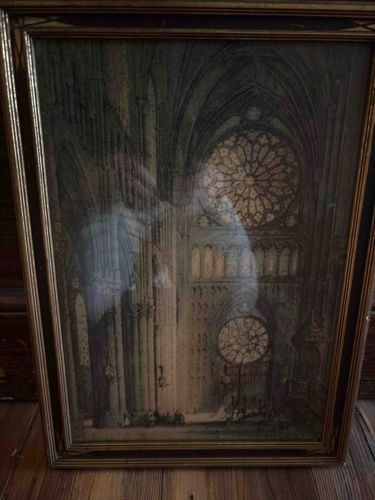
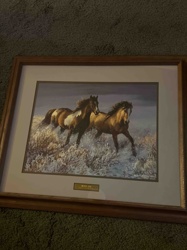
This item is a framed art print depicting the interior of a large Gothic cathedral or church, likely a European landmark such as Notre Dame given the prominent rose windows and vaulted ceilings. The print is presented in a wooden frame with a dark, perhaps walnut or mahogany, finish, accented by a narrow, beaded or reeded gold inner liner that provides a subtle contrast and highlights the image. The print itself appears to be a chromolithograph or a similar quality reproduction, characterized by its somewhat muted color palette predominantly featuring somber browns, grays, and deep blues with hints of ochre and red from the stained glass. The image clearly shows towering architectural elements, including ribbed vaults, massive pillars, and intricate tracery of large rose windows. The upper rose window is particularly prominent, while a smaller one is visible below. Small figures of people are discernible at the bottom, providing a sense of scale to the colossal structure.
Visible condition issues include significant glare on the protective glass, which obscures some details. There are also noticeable vertical streaks or marks on the surface of the print, possibly indicative of moisture damage, rubbing, or a deteriorating finish on the print itself. The frame shows minor wear consistent with age, particularly on the gold inner liner and edges of the wooden frame, suggesting an antique or vintage piece. The overall craftsmanship of the frame appears functional rather than highly ornate, typical of decorative art from the late 19th to mid-20th century. Without discernible maker's marks or signatures, the exact age is difficult to pinpoint, but the style of the print and frame suggests it could be from the early to mid-20th century. The quality of the print reproduction, while detailed, does not suggest an original artwork, making it primarily a decorative item.
AI Appraisal Report
Upon examining the provided image of this Framed Gothic Cathedral Interior Art Print, I assess it as a decorative print, likely a chromolithograph, dating from the early to mid-20th century. The subject matter, a grand European cathedral interior, is classic and generally appealing. The dark wooden frame with its subtle gold inner liner complements the print well, indicative of the period.
Condition-wise, significant glare on the protective glass obstructs full detail assessment, which is a common limitation with image-based appraisals. More concerning are the visible vertical streaks/marks on the print itself, suggesting potential moisture damage or degradation of the print's surface. This directly affects its aesthetic appeal and value. The frame shows minor wear consistent with its age.
This item's value is primarily decorative. It is not an original artwork, nor does it appear to be a rare or limited-edition print. Comparables for mass-produced vintage decorative prints of this type, with condition issues, typically fetch modest prices in secondary markets, such as online auctions or antique shops. There's moderate demand for vintage architectural prints, but the condition issues here significantly suppress its marketability. Its lack of signature, specific maker's marks, or documented provenance also limits its collectibility.
Key factors impacting value here are the condition of the print (the streaks) and its common decorative nature. Without a physical examination, I cannot definitively ascertain the exact nature of the print's surface damage (e.g., if it's on the print, glass, or a non-permanent surface application). An in-person inspection would allow for a closer look at the print's surface integrity, confirm the printing technique, and assess the frame's true condition. Provenance (if any) would also be crucial, but there's no indication of any provided. Without these, it remains a charming but damaged decorative item.