AI estimate as of August 14, 2025 · verify with a professional before acting
AI-Generated · Verify before acting
Everything on this page is generated by AI for informational purposes only. AI can make mistakes — the AI may misidentify items or misattribute them (artist, maker, brand, designer, origin, era). This is not an official valuation and should not be used for insurance, sale, tax, estate, legal, or lending purposes — or any decision requiring a certified appraisal. It is not an authoritative claim about any person, brand, or rights holder — do not share or rely on it as a factual statement about a third party. Always consult qualified professionals before making financial decisions.
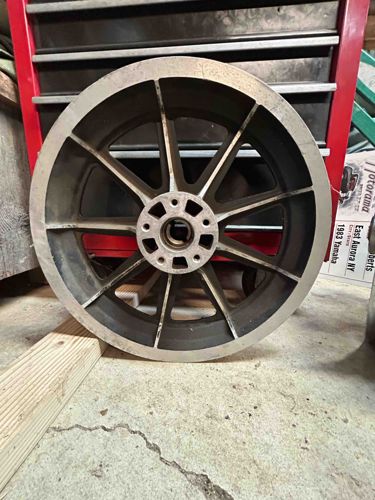
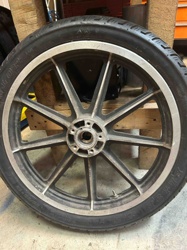
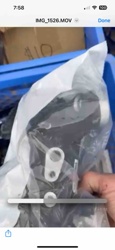
This is a single cast aluminum wheel, likely for a motorcycle, characterized by its multi-spoke design. The wheel features a central hub with eight bolt holes concentrically arranged around a larger central bearing aperture, indicating it is designed to mount onto an axle and incorporate a brake rotor or sprocket. The spokes radiate outwards from this hub, tapering slightly as they extend towards the rim. There are eight primary spokes, each appearing to be relatively thick and robust, contributing to the structural integrity of the wheel. The finish of the wheel is a two-tone appearance, with the outer rim and the face of the spokes being a polished or brushed aluminum, exhibiting some scuffs and light scratches consistent with use and handling. The recessed areas between the spokes and within the hub assembly show a darker, possibly black or dark grey, finish that appears somewhat oxidized or dirty, suggesting either a painted finish that has worn or simply accumulated grime. The overall condition shows signs of wear appropriate for a used vehicle part; there are no immediately obvious signs of major cracks, bends, or severe damage, though surface wear, minor pitting, and discoloration are present, particularly in the darker areas. The construction suggests it's a solid, single-piece casting, indicative of quality manufacturing for durability and performance. Given its appearance and common designs from the era, it likely dates from the late 20th century, possibly 1980s or 1990s, often seen on cruisers or certain sport bikes of that period.
AI Appraisal Report
Based on my visual examination of the provided image of this motorcycle cast aluminum wheel, its condition is consistent with a used vehicle part. The multi-spoke design and two-tone finish (polished/brushed aluminum with darker recessed areas) are typical for motorcycle wheels from the late 20th century, likely the 1980s or 1990s. I observe surface wear, scuffs, light scratches, and some discoloration/oxidation in the darker areas, which is expected for an item of this age and intended use. Crucially, there are no immediately apparent signs of major structural damage such as cracks, severe bends, or significant impact damage. The eight bolt holes and central bearing aperture suggest a common fitment.
In terms of market conditions, cast aluminum wheels for motorcycles from this era generally fall within a broad price range depending on make, model specificity, and overall condition. Replacements for popular models or more aesthetically unique designs tend to command higher prices. This specific wheel appears to be a robust, single-piece casting, indicative of durable manufacturing. Demand for such wheels is primarily driven by classic motorcycle restoration projects, custom bike builds, or as replacements for damaged original parts. Rarity is moderate; while not unique, finding an exact match in good usable condition can be challenging for specific vintage models.
Factors significantly impacting value include the absence of major damage, which is a primary concern for wheels. The cosmetic imperfections are less critical but do prevent it from being a pristine, concourse-quality part. Its specific fitment (which I cannot determine from the image alone) is paramount; a wheel for a highly sought-after model will fetch more than one for a less popular or generic application.
Limitations in authenticity verification are significant based solely on images. I cannot definitively verify the authenticity of the material (e.g., specific aluminum alloy), internal structural integrity (e.g., hidden cracks), or precise fitment specifications (e.g., wheel size, bolt pattern diameter, bearing size). An in-person examination would allow for precise measurements, a tap test for hidden cracks, magnetic particle inspection or dye penetrant testing, and a comprehensive assessment of bearing seat integrity and runout. Provenance documentation, such as original vehicle information or model numbers stamped on the wheel, would be crucial for full authentication and establishing its original application, which directly impacts its market niche and value.