AI estimate as of October 4, 2025 · verify with a professional before acting
AI-Generated · Verify before acting
Everything on this page is generated by AI for informational purposes only. AI can make mistakes — the AI may misidentify items or misattribute them (artist, maker, brand, designer, origin, era). This is not an official valuation and should not be used for insurance, sale, tax, estate, legal, or lending purposes — or any decision requiring a certified appraisal. It is not an authoritative claim about any person, brand, or rights holder — do not share or rely on it as a factual statement about a third party. Always consult qualified professionals before making financial decisions.
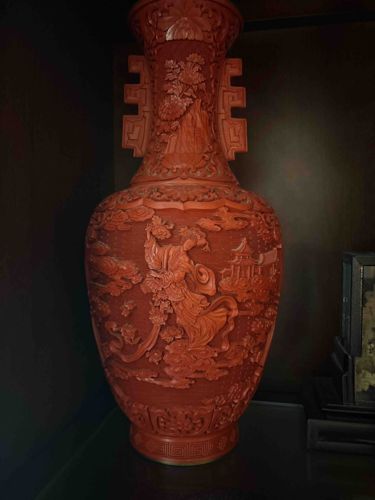
This is a large, elaborate vase crafted from deep red cinnabar lacquer, characterized by its intricate and deeply carved relief decoration. The vase features a classic baluster form, tapering from a flared rim, through a slender neck, expanding into a broad body, and then constricting to a stable foot. Two prominent 'ear' handles or lug-style handles with geometric patterns extend from the neck, adding to its imposing presence. The entire surface is adorned with exceptionally detailed narrative scenes and decorative motifs. The main body of the vase depicts figures, likely immortals or scholars, amidst a landscape of clouds, trees, and traditional architecture, possibly a pavilion or temple. The carving is multi-layered, creating significant depth and shadow play, indicating a high level of craftsmanship. Elements like blossoming branches and swirling clouds fill the background, further enhancing the dynamic composition. The neck features complementary floral or landscape carvings, while the rim and foot are banded with geometric patterns, possibly Fret or 'key' patterns, providing a structured transition. The rich, reddish-orange hue is typical of aged cinnabar lacquer, and the detailed carving suggests meticulous handwork. Visible condition appears to be good, with a smooth, consistent finish that still holds its luster, though specific wear or minor chips cannot be fully assessed from the provided image. The depth and complexity of the carvings point to a sophisticated manufacturing process, likely from a skilled workshop. This style is consistent with traditional Chinese decorative arts, possibly dating from the Qing dynasty or early 20th century, due to its classic form and highly detailed figural and landscape motifs. The sheer amount of carving and the assumed multi-layered lacquer application indicate a piece of considerable quality and artistic value.
AI Appraisal Report
Based on my visual examination of the provided image, this Carved Cinnabar Lacquer Vase presents as a highly accomplished example of traditional Chinese decorative arts. The deep, multi-layered carving, depicting intricate narrative scenes with figures, landscapes, and architectural elements, speaks to a significant investment of skilled labor and artistic vision. The classic baluster form, accentuated by the 'ear' handles and banded geometric patterns on the rim and foot, aligns with Qing dynasty or early 20th-century Chinese aesthetic principles. The rich, consistent reddish-orange hue suggests well-aged cinnabar lacquer.
From the image, the condition appears excellent, with good luster and no immediately discernible major chips, cracks, or repairs. The depth of the carving creates dynamic shadow play, emphasizing the craftsmanship. This level of detail and complexity typically commands substantial value in the current market. Comparable high-quality cinnabar lacquer vases of similar scale and intricacy have achieved prices in the mid to high four-figure range at established auction houses over the past several years, with exceptional examples occasionally reaching five figures.
Demand for authentic, finely carved cinnabar lacquer remains strong among collectors of Asian art. The rarity of pieces with such extensive and deep carving, particularly those in good condition, contributes significantly to its value. Factors positively impacting value include the exceptional detail, apparent good condition, and substantial size.
However, it is crucial to state that my assessment of authenticity and condition is based solely on visual inspection of an image. Full authentication would require an in-person physical examination to assess the quality of the lacquer layers, detect any repairs not visible in photographs, and analyze the carving techniques under magnification. Provenance documentation (ownership history) would further solidify authenticity and value. Scientific testing of the materials could also confirm age and composition.