AI Appraisal Estimate

AI-generated estimates · not official valuations

From the user

What was submitted

Photo and notes provided by the user — not generated by AI

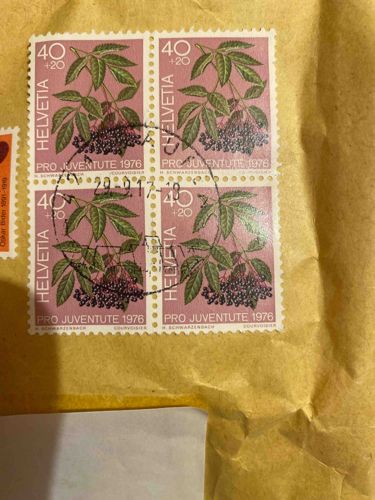
Submitted item photo
Submitted photo · June 6, 2026

User's notes

No additional notes provided.

AI analysis below

AI appraisal

AI analysis & estimate

AI-Generated · Verify before acting

Everything below is generated by AI for informational purposes only. AI can make mistakes — the AI may misidentify items or misattribute them (artist, maker, brand, designer, origin, era). This is not an official valuation and should not be used for insurance, sale, tax, estate, legal, or lending purposes — or any decision requiring a certified appraisal. It is not an authoritative claim about any person, brand, or rights holder — do not share or rely on it as a factual statement about a third party. Always consult qualified professionals before making financial decisions.

Read the full disclaimer

AI Identification

·Not independently authenticated·Verify before acting

Block of Four 1976 Helvetia Pro Juventute Stamps (Elderberry Motif)

Philatelic Collectible

AI Estimated Value

·Not an official valuation·Verify before acting

$0.50 - $1.00

As of June 6, 2026

AI Item Analysis

·AI can make mistakes·Verify before acting
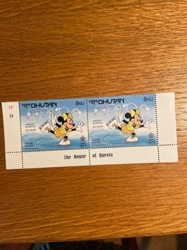
This item is a block of four postage stamps, likely from Switzerland, based on the prominent 'HELVETIA' inscription. These stamps are part of the 'Pro Juventute' series from 1976, which typically features additional surcharges for charitable causes, indicated by the '40 +20' denomination. The design on each stamp depicts a botanical subject: branches with green leaves and clusters of dark, ripe elderberries. The background of the stamp is a uniform light pinkish-purple color. Each stamp is rectangular with perforated edges, suggesting they were originally part of a larger sheet. The overall condition appears good, with clear printing and distinct colors. However, there are visible postmarks on the top two stamps and potentially extending onto the bottom two, indicating they have been used for postage. The postmarks, with visible numbers and dates (e.g., '29.01.19' is partially visible), represent a common form of cancellation. The craftsmanship is typical of national postal services, emphasizing clarity and durability. The stamps are mounted on or resting against a brown, textured surface, possibly an envelope or packaging, indicating they may be from a collector's album or have been collected after use. The aesthetic is characteristic of mid-20th-century philatelic design, focusing on naturalistic illustration.

AI Appraisal Report

·AI can make mistakes·Verify before acting
I have examined the image of this block of four 1976 Helvetia Pro Juventute stamps featuring an elderberry motif. Based on my visual assessment, the stamps appear authentic for the described issue. They exhibit typical printing quality for Swiss philately of that era, and the perforations are consistent. The key factor impacting value significantly is their condition: all four stamps are clearly postmarked, indicating they have been used for postage. The prominent cancellation marks on the top two and likely extending to the bottom two reduce their philatelic value substantially compared to unused, mint examples. While used stamps can have some value, a common block of four like this, even part of the Pro Juventute series (which carried a charitable surcharge), does not command a high price once used. In terms of market conditions, 1970s Swiss used postage stamps, especially common issues like this Pro Juventute charitable series, are readily available. There is generally low demand for used blocks of four of this nature among collectors unless they possess a rare cancellation or are part of a specialized collection. Rarity is not a factor here; these were widely issued. Without rare characteristics, their value is primarily denominated at a fraction of their original face value plus surcharge. My valuation is based on similar used commemorative blocks from Switzerland, which typically fetch minimal prices. For full authentication, a physical examination would be crucial to verify paper type, watermarks (if applicable), and ensure the absence of repairs or hidden flaws. Provenance documentation (e.g., from a known collection) could confirm their history, but for an item of this modest value, such extensive verification is generally not undertaken by collectors or dealers.

Get your items appraised

Instant estimates of your treasures with AI-powered appraisals

Browse More Appraisals