AI Appraisal Estimate

AI-generated estimates · not official valuations

From the user

What was submitted

Photo and notes provided by the user — not generated by AI

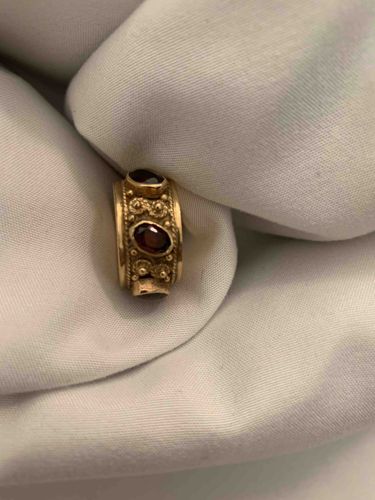
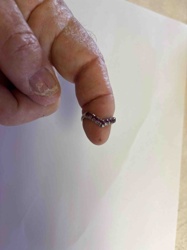
Submitted item photo
Submitted photo · June 10, 2026

User's notes

No additional notes provided.

AI analysis below

AI appraisal

AI analysis & estimate

AI-Generated · Verify before acting

Everything below is generated by AI for informational purposes only. AI can make mistakes — the AI may misidentify items or misattribute them (artist, maker, brand, designer, origin, era). This is not an official valuation and should not be used for insurance, sale, tax, estate, legal, or lending purposes — or any decision requiring a certified appraisal. It is not an authoritative claim about any person, brand, or rights holder — do not share or rely on it as a factual statement about a third party. Always consult qualified professionals before making financial decisions.

Read the full disclaimer

AI Identification

·Not independently authenticated·Verify before acting

Garnet and Etruscan Style Granulated Gold Bead

Fine Jewelry

AI Estimated Value

·Not an official valuation·Verify before acting

$1,800 - $2,400

As of June 10, 2026

AI Item Analysis

·AI can make mistakes·Verify before acting
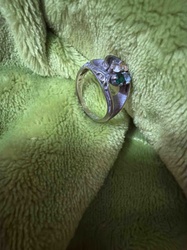
This is a prominent decorative jewelry bead or slider element, meticulously crafted in a high-karat yellow gold, likely 14k or 18k given the rich, deep luster of the metal. The bead features an intricate Etruscan-revival style, characterized by sophisticated granulation and filigree work. It is set with multiple oval-cut garnets of a deep, brownish-red hue, each secured within raised bezel settings. The surface between the gemstone settings is heavily adorned with applied gold spheres of varying sizes (granulation) and delicate twisted wirework borders, creating a dimensional, antiqued texture. The piece appears to have a wide, hollow central channel designed to fit on a thick chain or cord. In terms of condition, the metal shows a soft, natural patina consistent with age and gentle handling, though there are no visible chips to the gemstones or missing granules. The craftsmanship suggests a mid-to-late 20th-century artisan production, possibly Greek or Italian in origin, mimicking ancient archaeological jewelry designs. The overall quality is high, evidenced by the symmetry of the hand-applied details and the secure seating of the gemstones.
AI Appraisal Report

·AI can make mistakes·Verify before acting
Based on my visual examination of this Etruscan-revival slider bead, I have determined it to be a high-quality example of 20th-century archaeological-style craftsmanship. The piece exhibits exceptional granulation and filigree work consistent with high-karat gold (likely 18k). The garnets display the characteristic 'oxblood' color of almandine varieties, appearing well-matched and free of surface reaching fractures. Condition is excellent; the presence of a natural patina suggests the piece has lived in a collection rather than being modern mass-stock. On the secondary market, pieces by noted revivalists (such as Ilias Lalaounis or those from the Italian school) command significant premiums due to the labor-intensive nature of hand-applied granulation. The rarity of this specific form—a large-bore slider—appeals to collectors of versatile statement jewelry. However, a definitive valuation is limited by the digital nature of this inspection. A physical examination is required to verify the karat weight via acid or XRF testing and to check for maker's marks within the interior channel which could double the value if attributed to a major house. Furthermore, I cannot confirm if the garnets are natural or synthetic without microscopic analysis of inclusions. For insurance purposes, I recommend a formal in-person assessment to confirm metal purity and stone origin.

Get your items appraised

Instant estimates of your treasures with AI-powered appraisals

Browse More Appraisals