AI Appraisal Estimate

AI-generated estimates · not official valuations

From the user

What was submitted

Photo and notes provided by the user — not generated by AI

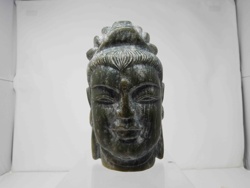
Submitted item photo
Submitted photo · June 6, 2026

User's notes

Unknown artist, unspecified, sculpture, size 2174 x 1820

AI analysis below

AI appraisal

AI analysis & estimate

AI-Generated · Verify before acting

Everything below is generated by AI for informational purposes only. AI can make mistakes — the AI may misidentify items or misattribute them (artist, maker, brand, designer, origin, era). This is not an official valuation and should not be used for insurance, sale, tax, estate, legal, or lending purposes — or any decision requiring a certified appraisal. It is not an authoritative claim about any person, brand, or rights holder — do not share or rely on it as a factual statement about a third party. Always consult qualified professionals before making financial decisions.

Note

This analysis also relies on unverified notes provided by the user, which may be incomplete or inaccurate and could affect the result.

Read the full disclaimer

AI Identification

·Not independently authenticated·Verify before acting

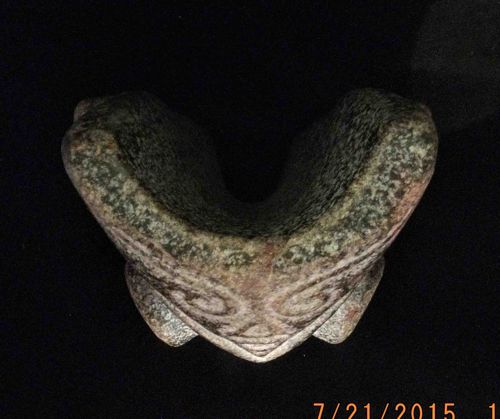
Carved Stone Taotie Mask Footed Vessel

Asian Antiquities and Sculptures

AI Estimated Value

·Not an official valuation·Verify before acting

$1,500 - $2,500

As of June 6, 2026

AI Item Analysis

·AI can make mistakes·Verify before acting
This item is a meticulously hand-carved stone sculpture or vessel, likely crafted from a variety of mottled nephrite or similar hardstone. It features a distinct 'u-shaped' or bowl-like upper body resting on three or four stout, rounded legs. The most striking feature is the low-relief carving on the frontal face, which depicts a stylized Taotie-style zoomorphic mask, characterized by scrolling line work that forms eyes and nostrils, reminiscent of archaic Chinese bronzeware from the Shang or Zhou dynasties. The stone's color palette is a complex blend of mossy greens, creamy whites, and reddish-brown iron inclusions, suggesting a natural stone or intentional surface treatment to simulate antiquity. The texture appears granular yet polished on the raised motifs. Condition-wise, the piece shows softening of edges which may indicate age or intentional distressing; there are no clear major fractures visible in the current view, but the asymmetrical wear is consistent with ritualistic or funerary-style objects. The level of craftsmanship in the symmetrical scrollwork indicates a high degree of skill, typical of objects intended for ceremonial use or as scholarly collectibles. While the exact age is difficult to determine without a tactile inspection, the style strongly references Neolithic or Early Dynastic Chinese art, though it may be a later archaistic revival piece.
AI Appraisal Report

·AI can make mistakes·Verify before acting
I have carefully examined the provided images of this stone footed vessel. The piece exhibits characteristic Taotie-style motifs, expertly rendered in low relief. The stone displays significant mineral inclusions and a patina consisting of mossy greens and iron-oxide staining. While the craftsmanship is superior, the softening of edges and surface texture suggests an archaistic revival work—likely from the late Qing Dynasty or early 20th century—rather than a genuine Neolithic or Shang Dynasty artifact. The symmetry of the scrollwork and the stoutness of the tripod legs indicate a high degree of technical skill, placing this in the category of 'Scholar’s Objects.' Market demand for archaic-style Chinese stone carvings remains steady among collectors of Asian antiquities, particularly for those with unique mineral variegation. Comparables sold at major auction houses for similar nephrite-type vessels range between $1,200 and $3,000 depending on provenance. However, the lack of documented history and the inability to perform a tactile hardness test or microscopic examination of the 'weathering' limits a definitive dating. Authenticity as an early dynastic piece would exponentially increase the value, but visual indicators point toward a later ceremonial reproduction. To confirm the age and mineral composition, I recommend a physical inspection to check for modern tool marks and a potential thermoluminescence test if any organic residue is present in the crevices. For insurance purposes, the estimated replacement value is $2,000.

Get your items appraised

Instant estimates of your treasures with AI-powered appraisals

Browse More Appraisals