AI estimate as of July 29, 2025 · verify with a professional before acting
AI-Generated · Verify before acting
Everything on this page is generated by AI for informational purposes only. AI can make mistakes — the AI may misidentify items or misattribute them (artist, maker, brand, designer, origin, era). This is not an official valuation and should not be used for insurance, sale, tax, estate, legal, or lending purposes — or any decision requiring a certified appraisal. It is not an authoritative claim about any person, brand, or rights holder — do not share or rely on it as a factual statement about a third party. Always consult qualified professionals before making financial decisions.
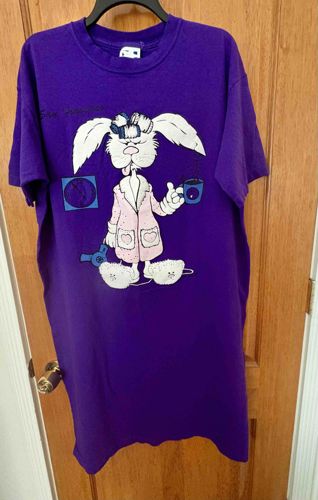
This is a vintage-style, potentially 1980s or 1990s, purple short-sleeved t-shirt. The shirt features a large graphic print on the front depicting a white, anthropomorphic rabbit character dressed in a light pink bathrobe with heart-shaped pockets and white, fluffy slippers. The rabbit has a white eye patch over one eye and appears to be holding a blue coffee mug from which steam is rising. To the left of the rabbit, there is a distinct blue square with a circular outline and a diagonal line crossing through it, possibly indicating a 'no' or 'do not' symbol. Below the rabbit's feet, there is what appears to be a blue hairdryer. The artistic style is somewhat whimsical and cartoonish. The vibrant purple color of the shirt suggests it might be made of cotton or a cotton blend fabric, typical for casual wear t-shirts. The shirt is displayed hanging, showing its standard crew neck and short sleeve construction. There are no visible rips, tears, or major stains, but the age of the item implies potential minor fading or general wear consistent with its vintage nature. The print itself appears to be in good condition with no significant cracking or peeling visible. The overall craftsmanship seems to be standard for mass-produced apparel of its era.
AI Appraisal Report
Based on my visual examination of the 'Sleepy Bunny' Graphic T-Shirt, its condition appears to be very good given its likely vintage age (1980s-1990s). There are no noticeable rips, tears, or major stains, and the graphic print shows minimal cracking or peeling. This suggests it has been well-preserved. Authenticity, based purely on imagery, points towards a mass-produced item of its era, not a high-end designer piece. The whimsical, cartoonish style is consistent with popular culture merchandise from those decades.
Market conditions for vintage graphic tees are highly dependent on the desirability of the graphic, brand recognition (if any), and overall condition. While the 'Sleepy Bunny' graphic is unique and charming, it does not appear to be associated with a widely recognized franchise or designer, which limits its broader market appeal. Comparables for generic vintage graphic tees in good condition typically range from $20 to $60.
Demand for this specific design is likely niche, appealing to collectors of quirky vintage apparel or those with a nostalgic connection. Its rarity is difficult to ascertain without knowing production numbers, but it's not a common design I've encountered consistently in the market. The purple color is a positive factor, as vibrant vintage colors often attract buyers.
Factors significantly impacting value are the unknown brand, the lack of a known pop culture association, and its generic apparel construction.
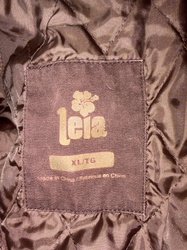
It is crucial to note that authenticity verification from images alone is limited. A physical, in-person examination would be necessary to assess fabric composition, precise print type, examine internal tags (for brand, care instructions, and country of origin), and thoroughly check for any subtle flaws not visible in photographs. Provenance documentation (e.g., original purchase receipts, prior ownership history) would be invaluable for full authentication and could increase its value if it had a notable history. Scientific testing, like dating the fabric or print materials, is generally not cost-effective for an item of this likely value but could provide definitive dating.