AI identification & appraisal estimate

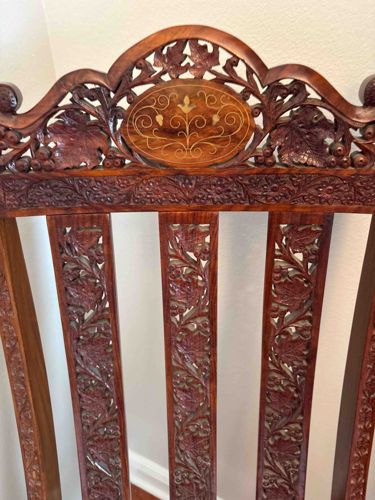
Hand-Carved Rocking Chair Back Detail

Submitted photo of Hand-Carved Rocking Chair Back Detail
Photo submitted by the user — not generated by AI

User's notes

Hand carved 53 inch rocking chair. Purchased in Saudi Arabia in 1967.

These notes were written by the person who submitted this item. Appraiser.AI has not verified them, and the AI's identification and estimate may rely on them.

AI Estimated Value

Not an official valuation

$1,800-2,500

AI estimate as of June 21, 2025 · verify with a professional before acting

AI-Generated · Verify before acting

Everything on this page is generated by AI for informational purposes only. AI can make mistakes — the AI may misidentify items or misattribute them (artist, maker, brand, designer, origin, era). This is not an official valuation and should not be used for insurance, sale, tax, estate, legal, or lending purposes — or any decision requiring a certified appraisal. It is not an authoritative claim about any person, brand, or rights holder — do not share or rely on it as a factual statement about a third party. Always consult qualified professionals before making financial decisions.

This analysis also relies on unverified notes provided by the user, which may be incomplete or inaccurate and could affect the result.

Read the full disclaimer

AI Item Analysis

This is a section of a hand-carved rocking chair, likely made from a dark tropical hardwood such as rosewood or mahogany, exhibiting a deep reddish-brown hue with a visible grain. The chair's back features a highly ornamental design that suggests an origin from the Middle East or South Asia, consistent with its stated purchase in Saudi Arabia in 1967. The top rail is intricately carved with an openwork pattern of what appears to be grapevine motifs, including stylized leaves and clusters of grapes, indicating a high level of craftsmanship. At the center of the top rail, a prominent oval-shaped inlaid panel of lighter wood, possibly a contrasting wood like maple, is adorned with delicate arabesque scrollwork in darker wood inlay. This inlay work showcases fine detail and precision. Below the top rail, the backrest features multiple vertical slats, each meticulously carved with an elaborate floral and foliate pattern. The carving style exhibits deep relief, creating a sense of dimension and texture, and the areas behind the carved elements appear to be cut through, allowing light to pass, which further enhances the intricate design. The overall condition appears good, with a smooth, polished finish and no obvious signs of significant damage, cracks, or repairs from the visible areas. The wood shows a rich, aged patina consistent with its reported age. The quality of the carving and inlay suggests skilled artisanry, indicating a piece of furniture made for decorative as well as functional purposes. The specific measurements of the chair are stated as 53 inches, signifying a substantial piece of furniture.

AI Appraisal Report

This hand-carved rocking chair, likely crafted from a dark tropical hardwood such as rosewood or mahogany, exhibits exceptional artistry and a high level of craftsmanship. The intricate openwork grapevine motifs on the top rail, the prominent inlaid panel with arabesque scrollwork, and the deeply carved floral and foliate patterns on the vertical slats all point to a labor-intensive creation by skilled artisans.The reported purchase in Saudi Arabia in 1967 aligns with the Middle Eastern or South Asian stylistic influences visible in the ornamentation. The overall condition, based on the image, appears to be very good; the wood displays a rich, aged patina consistent with its reported age, and there are no immediately apparent significant damages or repairs. The smooth, polished finish suggests it has been well-maintained.The market for finely carved, antique ethnic furniture can be specialized, but pieces of this quality and size (53 inches) generally command respectable values. Demand exists among collectors of unique, handcrafted furniture and those seeking statement pieces with historical and cultural significance. Its rarity is inherent in its hand-carved nature and specific regional style.Factors positively impacting its value include its excellent apparent condition, the intricacy and depth of the carving, the inlay work, and its substantial size. The provenance (purchased in Saudi Arabia in 1967) provides a good historical anchor.However, it is crucial to state the limitations of an appraisal based solely on images. While the visual evidence strongly suggests authenticity and quality, a full authentication would require an in-person examination to verify the wood type definitively, inspect construction techniques, detect any hidden repairs or restorations, and confirm the age. Scientific testing of the wood or finishes could further corroborate its age and origin. Without physical inspection, I cannot confirm the full extent of the chair's condition or definitively rule out any unapparent modifications.

Keep exploring

More furniture appraisals

Get your items appraised

Instant AI-powered appraisal estimates from a photo

Browse More Appraisals