AI Appraisal Estimate

AI-generated estimates · not official valuations

From the user

What was submitted

Photo and notes provided by the user — not generated by AI

Submitted item photo
Submitted photo · June 8, 2026

User's notes

No additional notes provided.

AI analysis below

AI appraisal

AI analysis & estimate

AI-Generated · Verify before acting

Everything below is generated by AI for informational purposes only. AI can make mistakes — the AI may misidentify items or misattribute them (artist, maker, brand, designer, origin, era). This is not an official valuation and should not be used for insurance, sale, tax, estate, legal, or lending purposes — or any decision requiring a certified appraisal. It is not an authoritative claim about any person, brand, or rights holder — do not share or rely on it as a factual statement about a third party. Always consult qualified professionals before making financial decisions.

Read the full disclaimer

AI Identification

·Not independently authenticated·Verify before acting

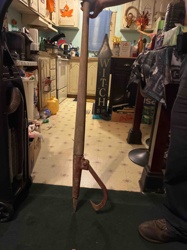
Sledging Hook (Timber Sledge Tool)

Logging Tool

AI Estimated Value

·Not an official valuation·Verify before acting

$75-125

As of June 8, 2026

AI Item Analysis

·AI can make mistakes·Verify before acting
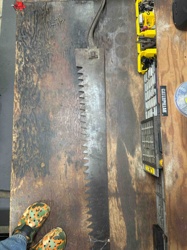
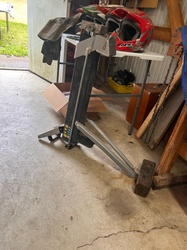
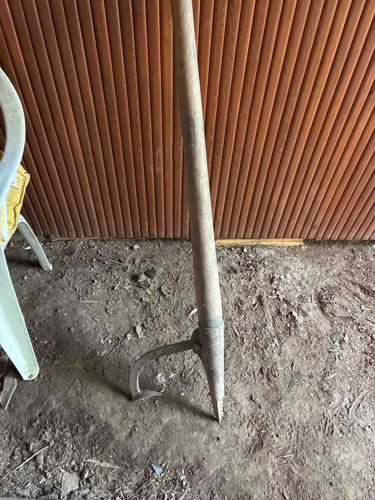
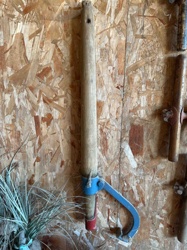
The item appears to be an aged sledging hook, also known as a timber sledge tool or 'cant hook' style implement, traditionally used for moving or levering logs and heavy timber. It consists of a long, straight wooden handle, likely hardwood given its apparent durability and the nature of its intended use. The handle has a weathered, natural wood appearance, suggesting years of exposure and use, with a light gray-brown patina. The lower section of the handle is tapered to a metal-reinforced point, indicating it's designed to be driven into the ground or potentially into timber for leverage. Attached to the handle, just above the sharpened point, is a robust metal hook or 'dog' that pivots or is rigidly fixed to engage with logs. This metal component shows signs of significant wear, surface rust, and possibly some pitting, which is consistent with an outdoor utility tool. The hook itself is curved with a pointed end, designed to grip timber effectively. The connection between the metal hook and the wooden handle appears sturdy, possibly utilizing a metal collar or ferrule to secure the hook to the wood, preventing splitting or loosening during heavy use. The overall condition suggests it is an older tool, likely from the mid-20th century or earlier, due to its construction and the visible wear patterns. Despite the wear and corrosion on the metal parts, the overall structure appears intact and functional, indicative of quality craftsmanship typical of tools made for demanding labor. No specific manufacturer's marks or signatures are visible in the provided images.
AI Appraisal Report

·AI can make mistakes·Verify before acting
Upon examining the provided image of this sledging hook, I've assessed it as an authentic vintage timber moving tool. The construction, materials (weathered hardwood handle, robust metal hook), and wear patterns are entirely consistent with tools of its type from the mid-20th century or earlier. The heavy patina on the wood and surface rust on the metal dog are expected signs of age and use in a demanding outdoor environment. While structurally sound, the cosmetic wear limits its value as a pristine collector's piece. The tapered, metal-reinforced handle tip and the sturdy attachment of the dog speak to functional design rather than decorative intent. Market conditions for these types of utility logging tools are generally stable but not highly speculative. Comparables found in antique tool markets or specialized auctions typically fetch between $50 and $150, depending on condition, size, and any identifiable maker’s marks. This particular example, lacking any visible branding, falls into the mid-to-lower end of that range due to its well-used but unexceptional condition. Demand is primarily from collectors of antique tools, rustic decorators, or re-enactors. It is not particularly rare, as many such tools were produced. The most significant factors impacting its value are its authenticity as a functional antique and its solid, though worn, condition. A physical examination would allow me to determine the integrity of the wood (checking for rot, deep cracks) and the stability of the hook's attachment, which is crucial for safety if it were to be used. Without physical inspection, I cannot confirm the absence of hidden structural weaknesses or if any repairs have been made. Furthermore, an in-person examination might reveal subtle maker's marks or forge details that are not visible in the images. Provenance documenting its use or origin would also add to its historical value, but none is available here.

Get your items appraised

Instant estimates of your treasures with AI-powered appraisals

Browse More Appraisals